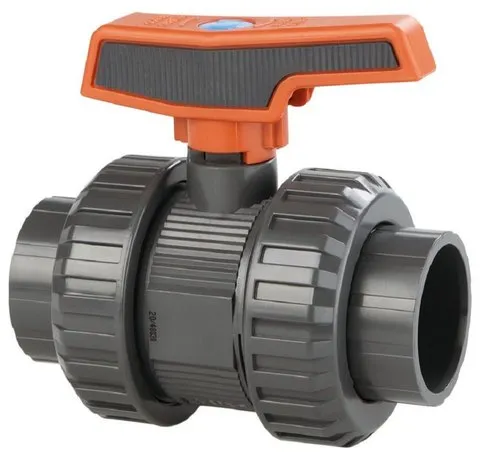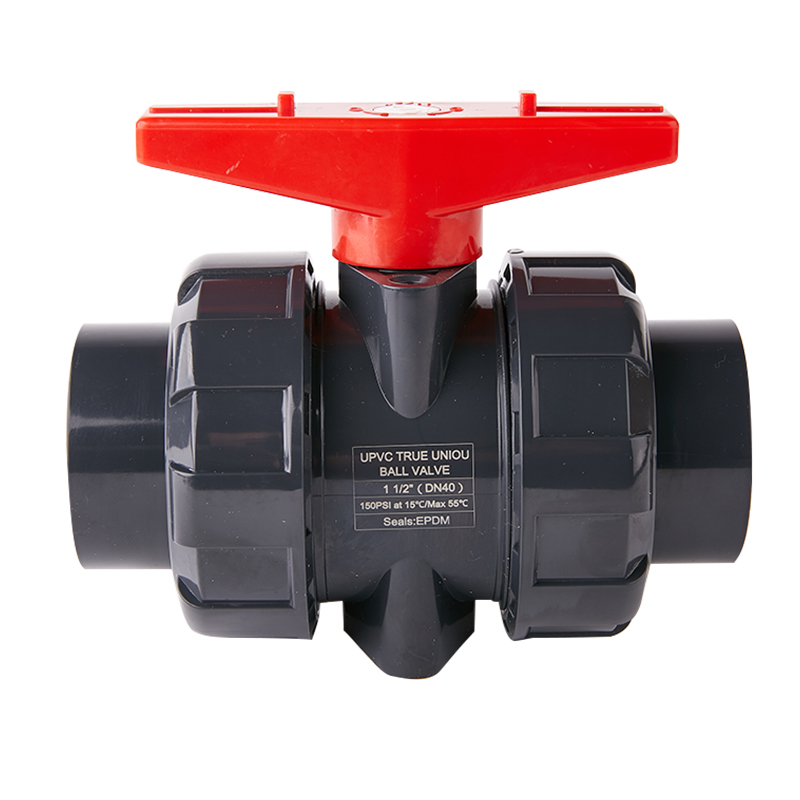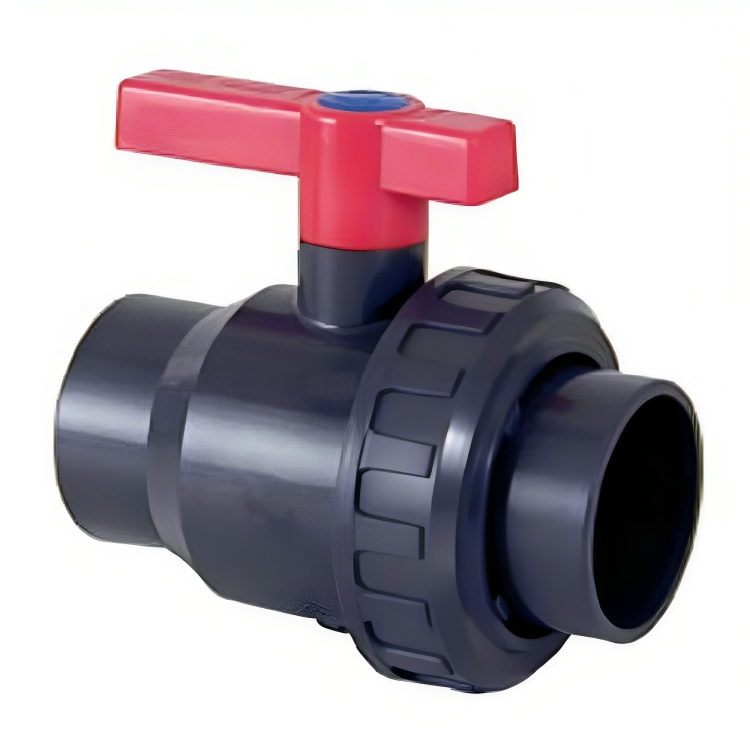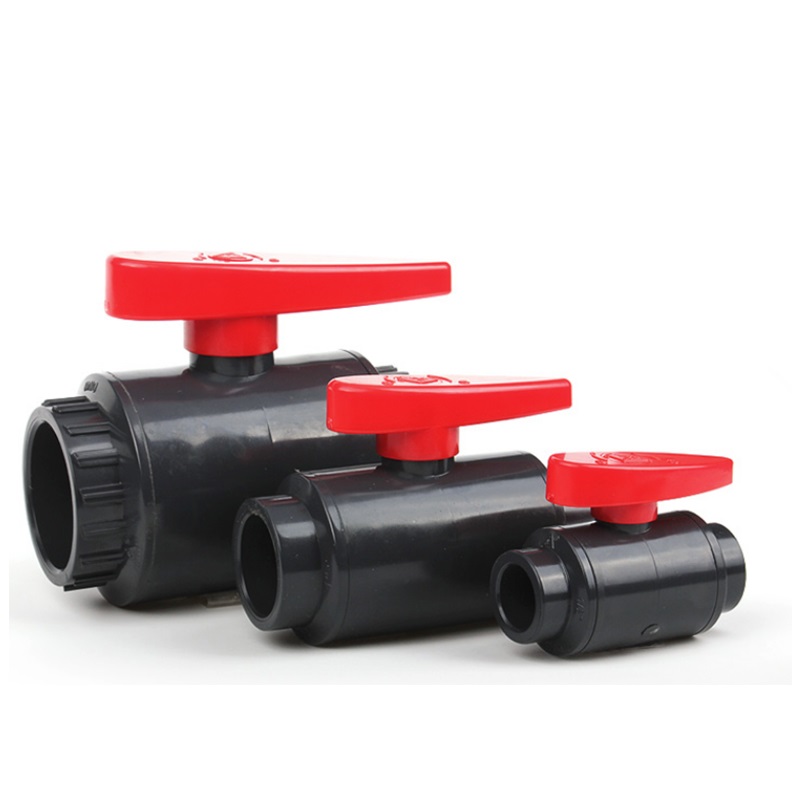
| FIG. | PARTS | MATERIAL | QTY |
| 1 | Handle Cap | ABS | 01 |
| 2 | Handle | ABS | 01 |
| 3 | Stem O Ring | EPDM | 01 |
| 4 | Stem Shaft | UPVC/CPVC/PPH/PVDF | 01 |
| 5 | Body | UPVC/CPVC/PPH/PVDF | 01 |
| 6 | Valve Seat | PTFE | 03 |
| 7 | O-Ring | EPDM/VITON/FKM | 03 |
| 8 | O-Ring | EPDM/VITON/FKM | 03 |
| 9 | Seat Retainer | UPVC/CPVC/PPH/PVDF | 03 |
| 10 | O-Ring | EPDM/VITON/FKM | 03 |
| 11 | Ring | UPVC/CPVC/PPH/PVDF | 03 |
| 12 | Ends | UPVC/CPVC/PPH/PVDF | 03 |
| 13 | Union | UPVC/CPVC/PPH/PVDF | 03 |
| 14 | Ball | UPVC/CPVC/PPH/PVDF | 01 |

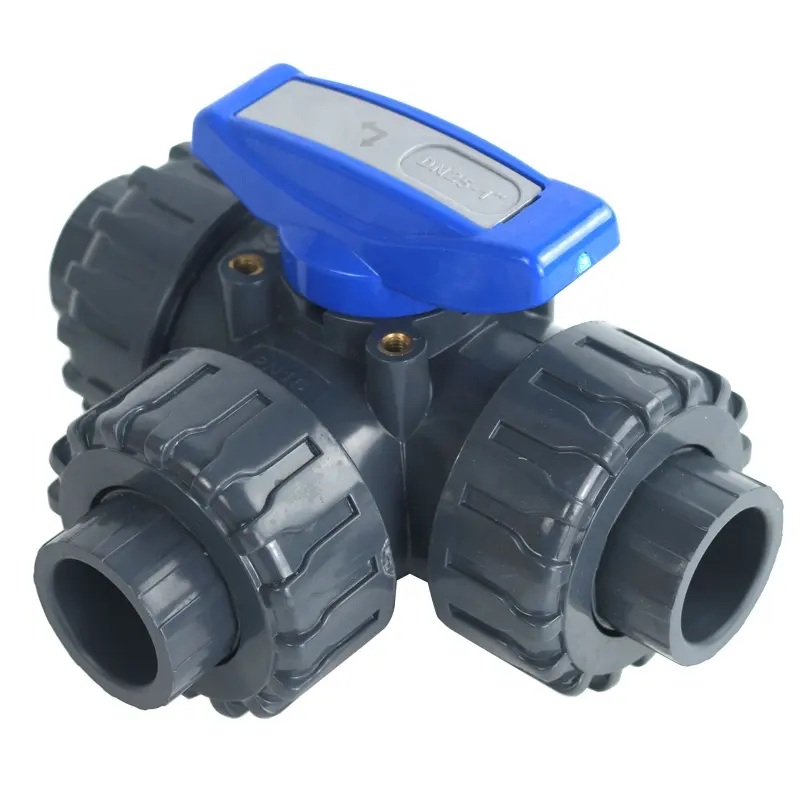
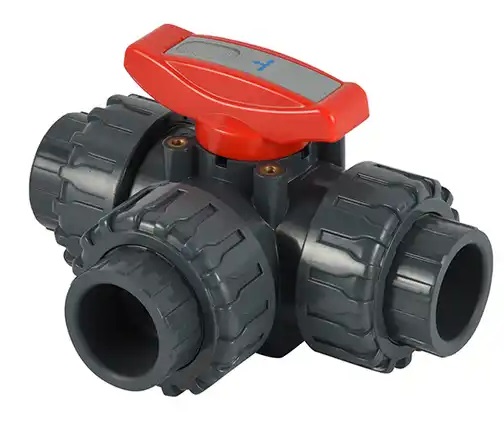
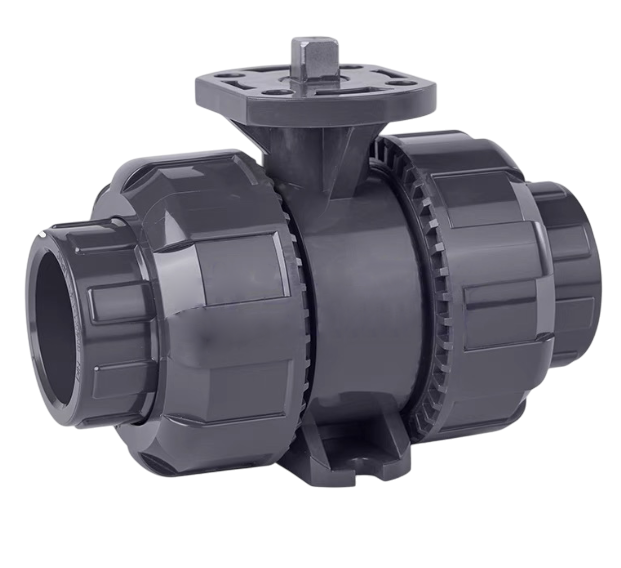
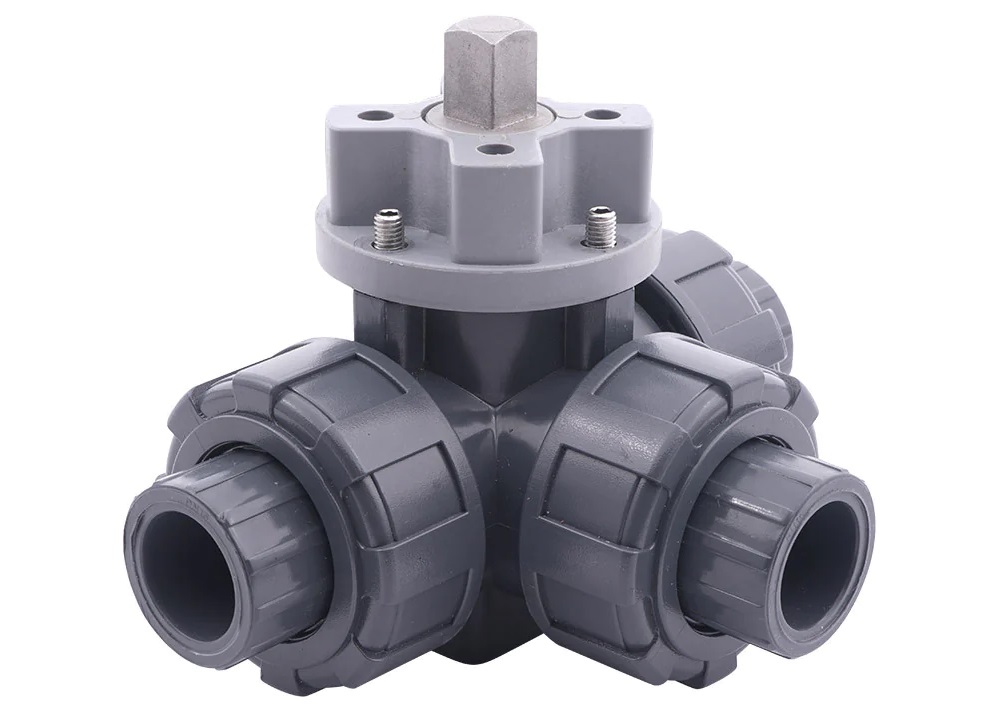
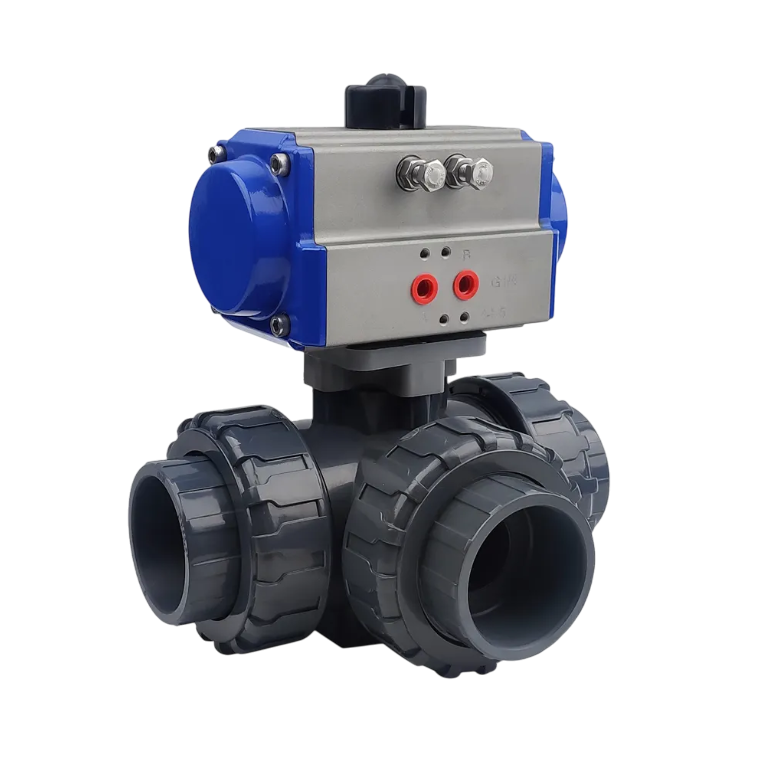
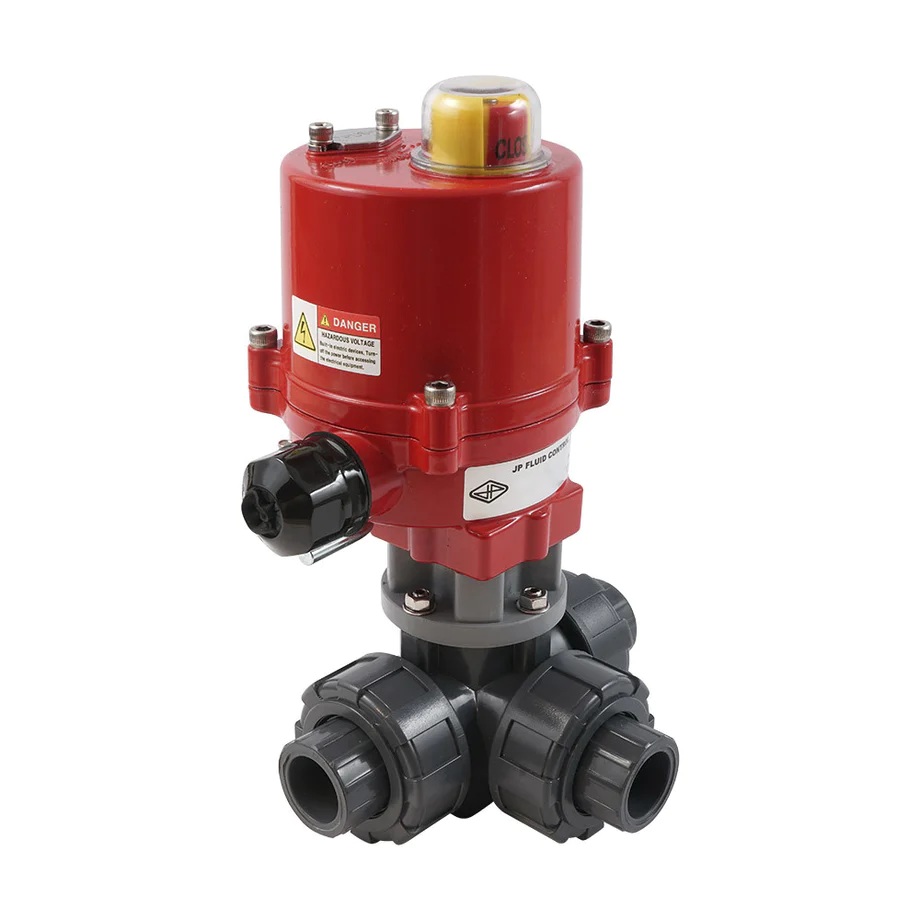
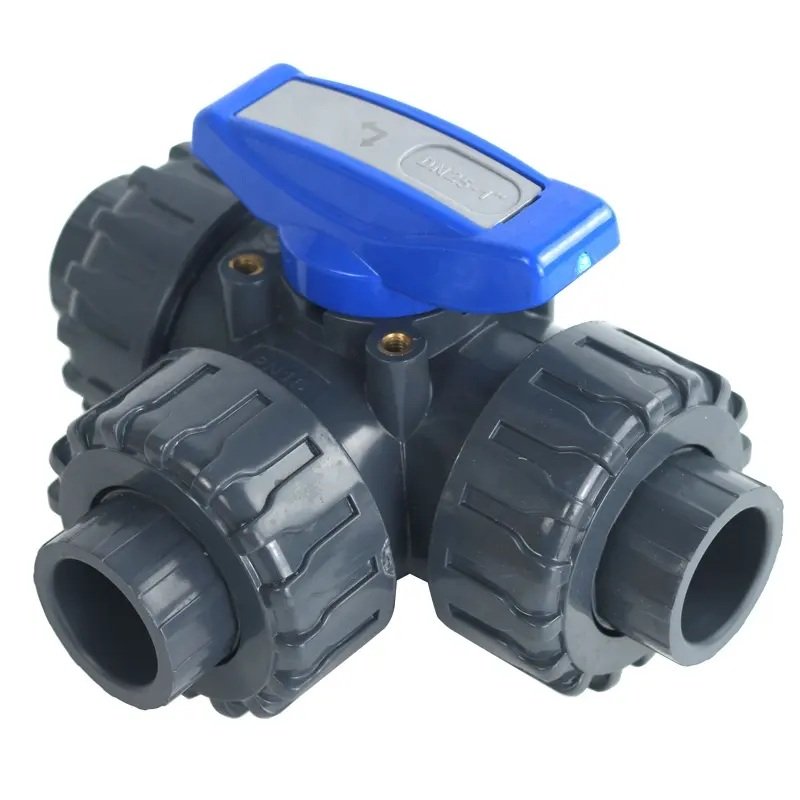
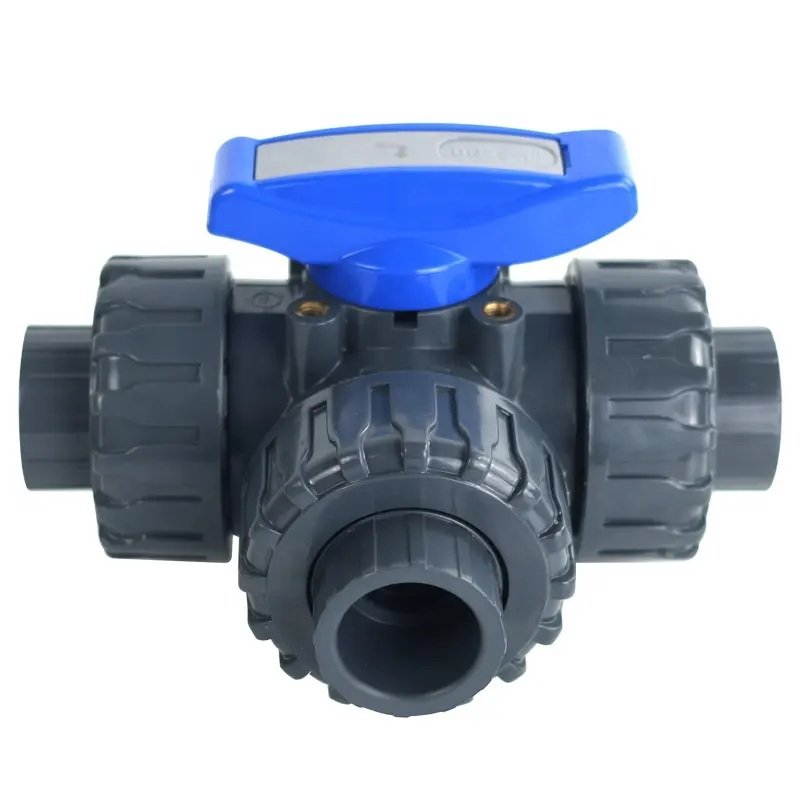
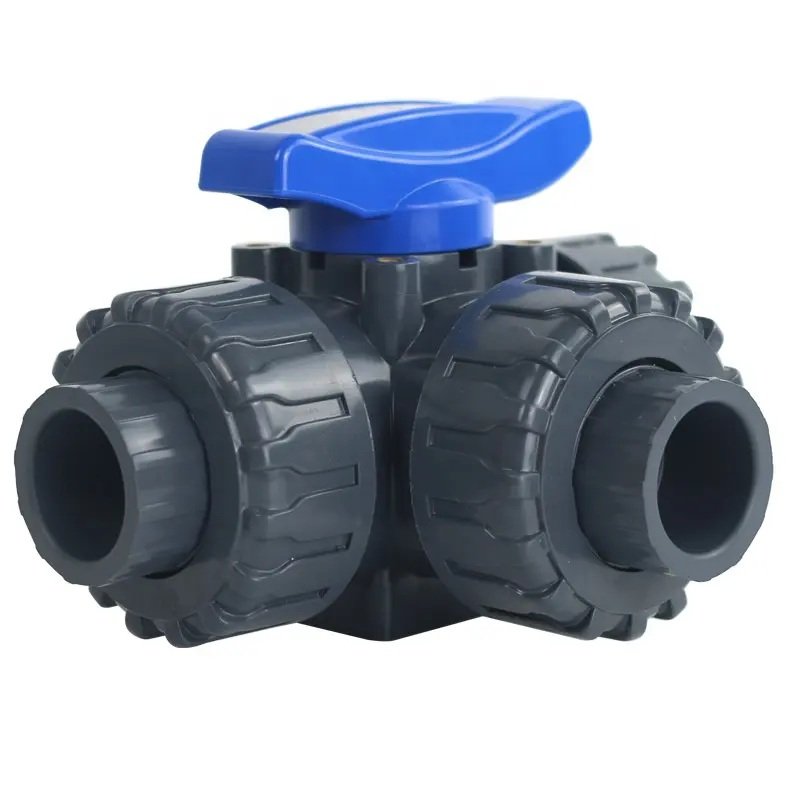
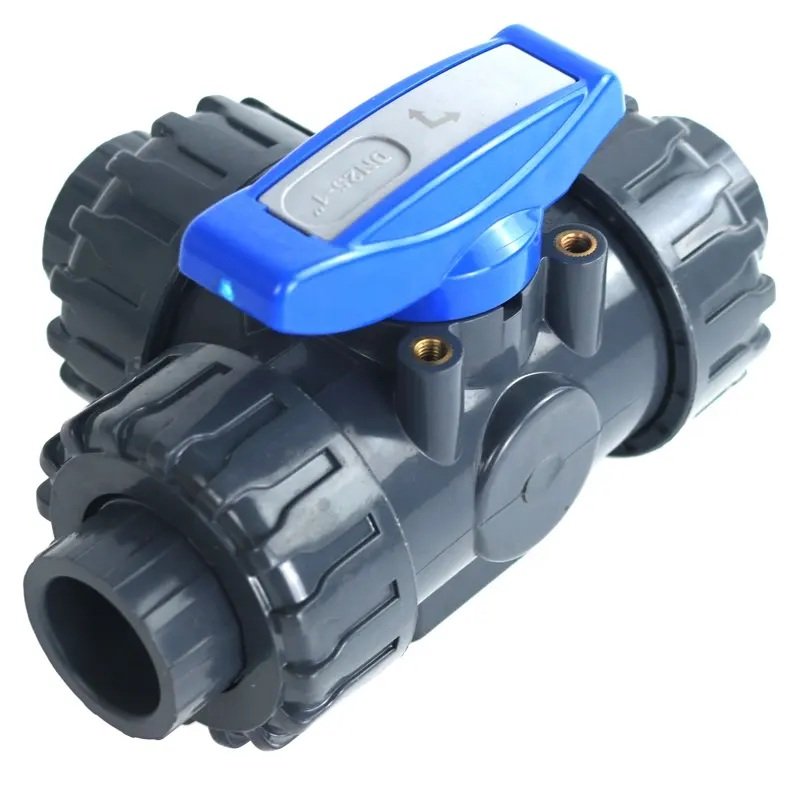
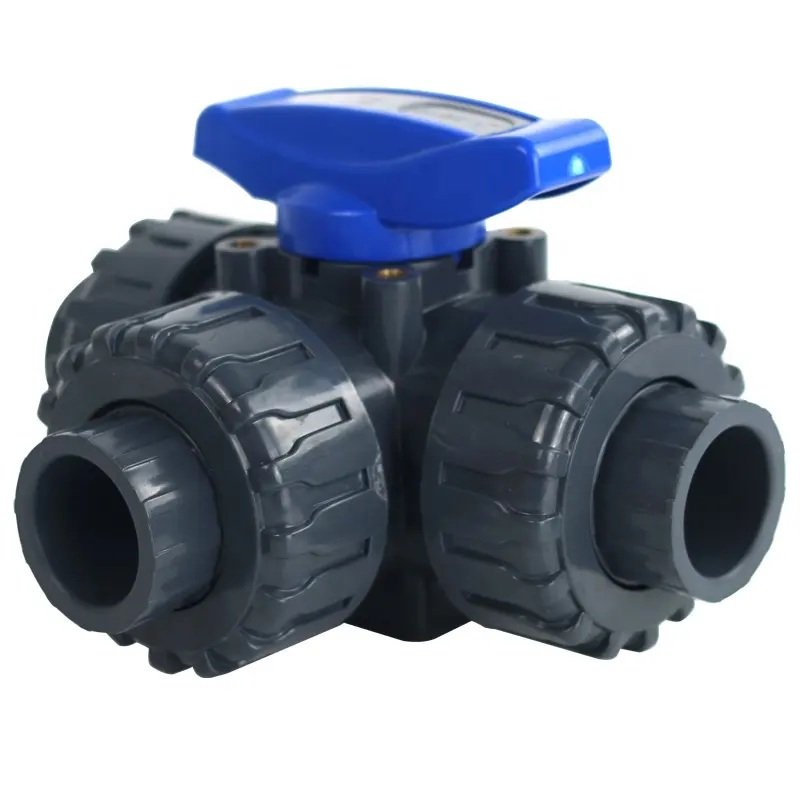
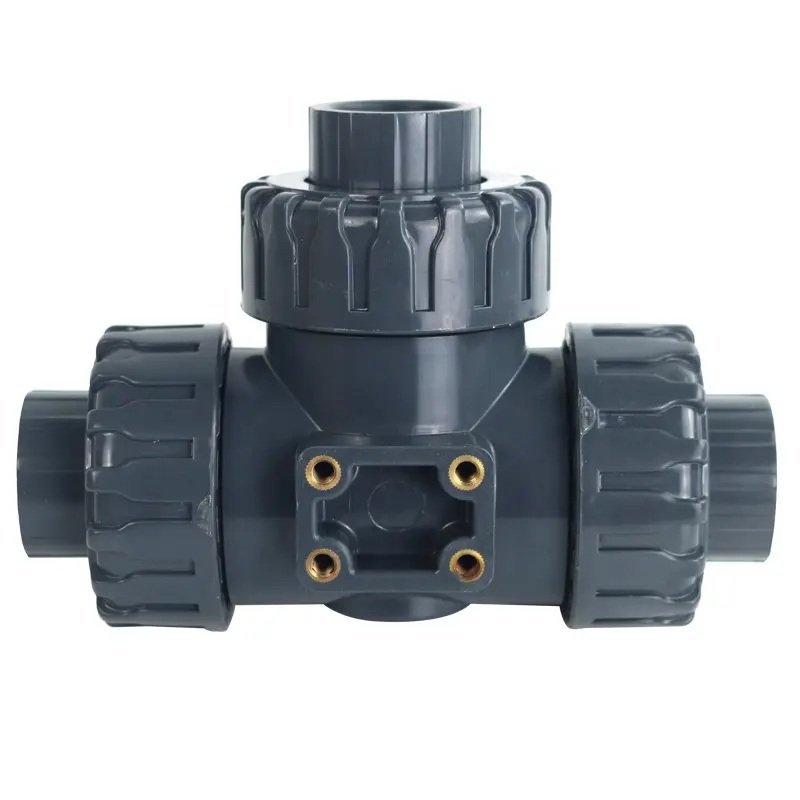
A UPVC three-way ball valve with an L-port is a fluid control device used to divert flow between two different outlets or shut off flow entirely. The valve's internal ball has an L-shaped bore that aligns with the three ports, controlling the fluid path with a simple quarter-turn (90-degree) rotation. The UPVC (unplasticized polyvinyl chloride) material makes it an ideal, cost-effective choice for corrosion-resistant applications involving water and other chemicals.
How it works
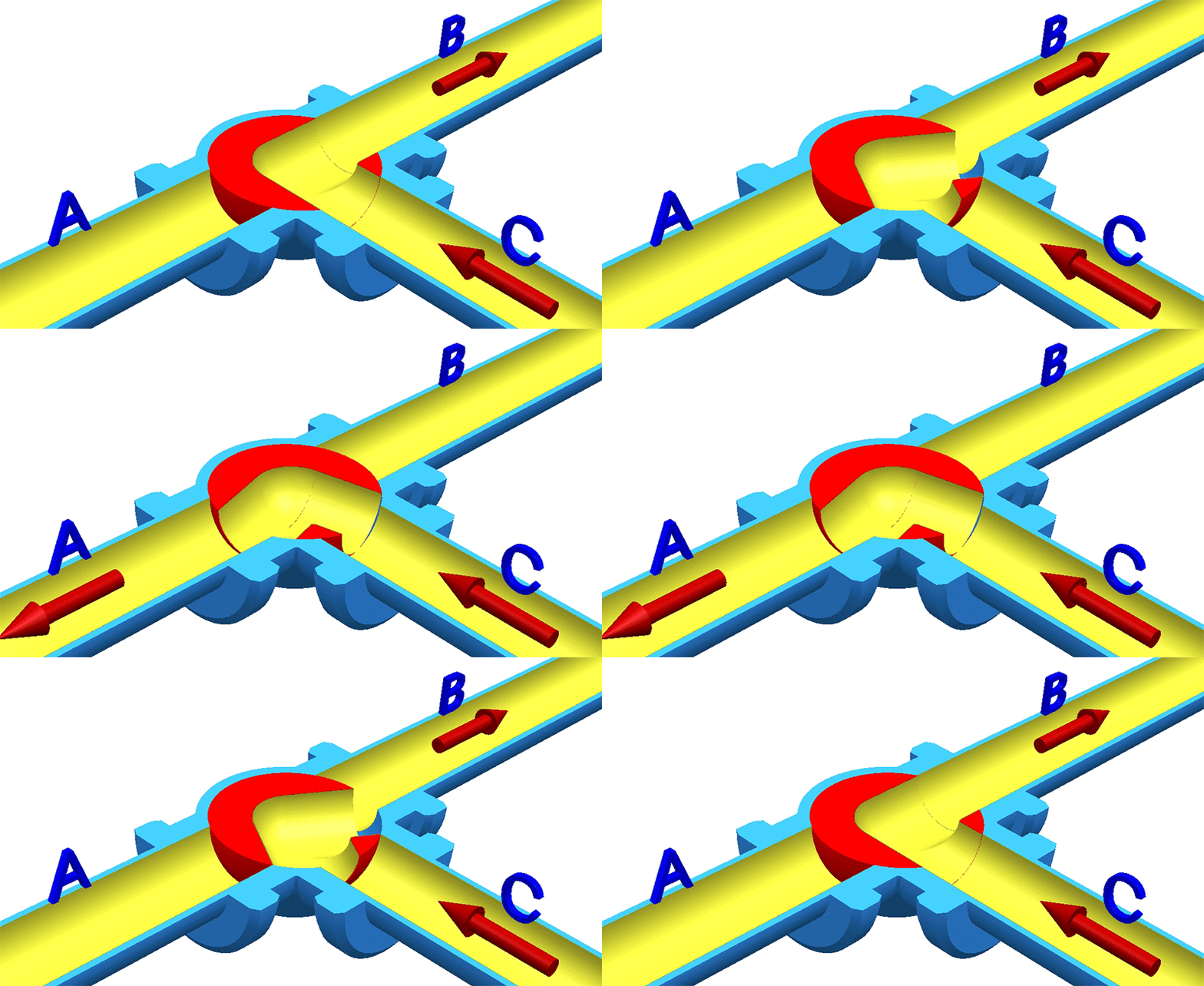
The L-port design enables two main flow patterns:
- Diverting flow: With a single inlet and two outlets, the handle's position can be rotated 90 degrees to divert the flow from the common inlet to either of the two outlets. The L-shaped bore connects the inlet to one of the side ports while blocking the other.
- Shutoff position: An L-port valve can also shut off the flow completely. When the handle is turned to a specific position (for example, 180 degrees from the initial diverting path), the L-shaped bore blocks all three ports.
Key features
- UPVC construction: Resistant to rust and corrosion from a wide range of chemicals, including acids and alkalis.
- Multi-port design: Its three ports allow one valve to perform the work of multiple two-way valves, reducing system complexity, leak points, and installation costs.
- Quarter-turn operation: The valve's full range of motion is achieved with a 90-degree turn of the handle, allowing for fast and efficient control of flow direction.
- Reduced bore: While a full-bore option is possible, many UPVC three-way ball valves have a reduced bore, where the ball's opening is smaller than the pipe's diameter. This results in a slight pressure drop but allows for a more compact and economical design.
Common applications
An L-port configuration is mainly used for diverting applications, such as:
- HVAC systems: Diverting hot or cold water to different areas of a building.
- Industrial processes: Switching flow between two different tanks or pump systems.
- Water management and irrigation: Controlling the flow of water between different lines or distribution zones.
- Chemical processing: Routing chemicals from a central source to one of two different destinations.
L-port vs. T-port configuration
When selecting a three-way ball valve, it is important to distinguish between L-port and T-port types, as they have different functionalities.
| Feature | L-Port Ball Valve | T-Port Ball Valve |
|---|---|---|
| Bore shape | The passage in the internal ball is shaped like a capital "L". | The passage in the internal ball is shaped like a capital "T". |
| Flow paths | Diverts flow between two orthogonal (perpendicular) paths. The flow can be directed from a common inlet to either of two outlets. | Can mix or divert flow between three different paths. Can mix two inlets into one outlet, or divide one inlet into two outlets. |
| Shutoff ability | Can completely shut off the flow. | Generally cannot shut off all three ports completely in a single turn. |
| Use case | Ideal for diverting flow, switching between two flow paths, and shutoff applications. | Ideal for mixing fluids from two sources or splitting flow from one source to two destinations. |