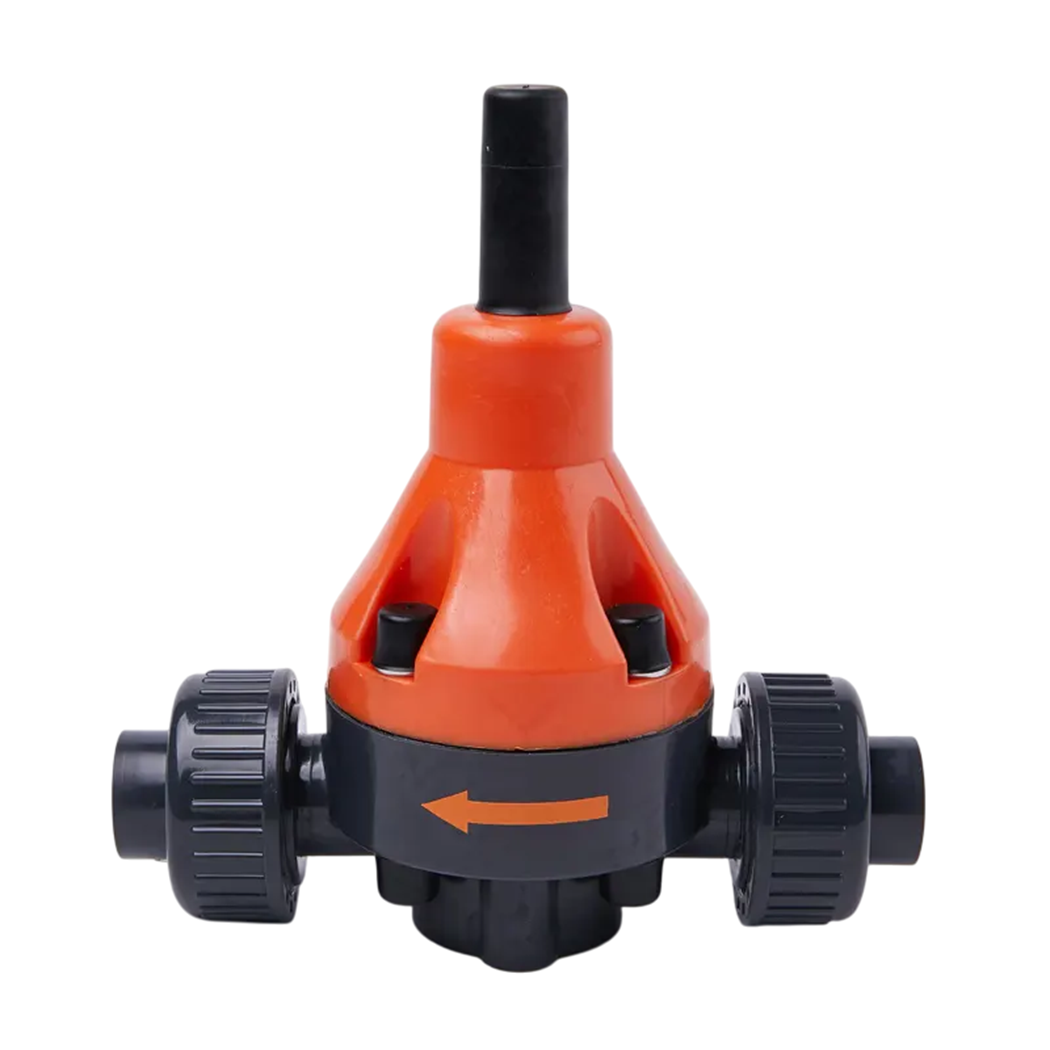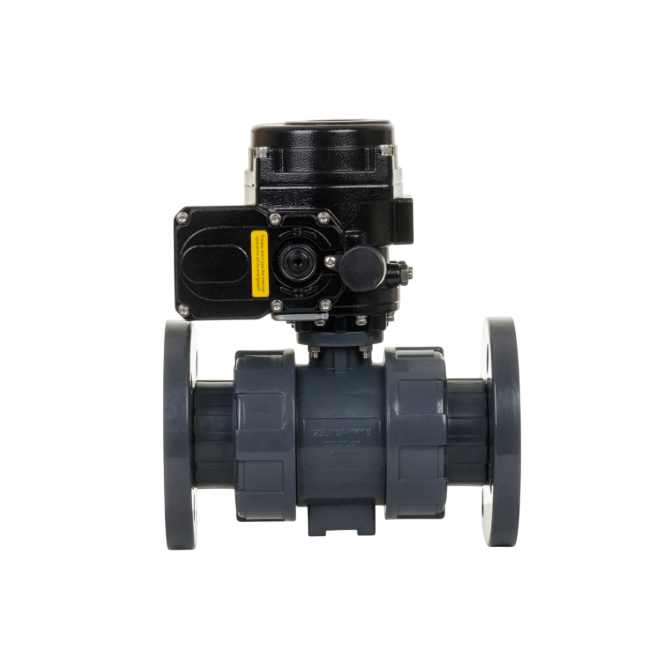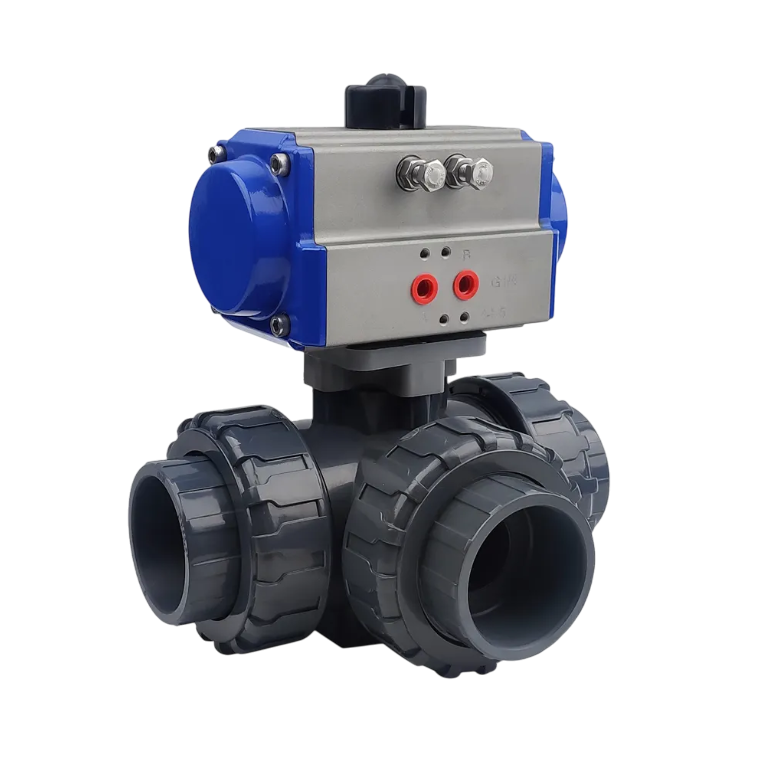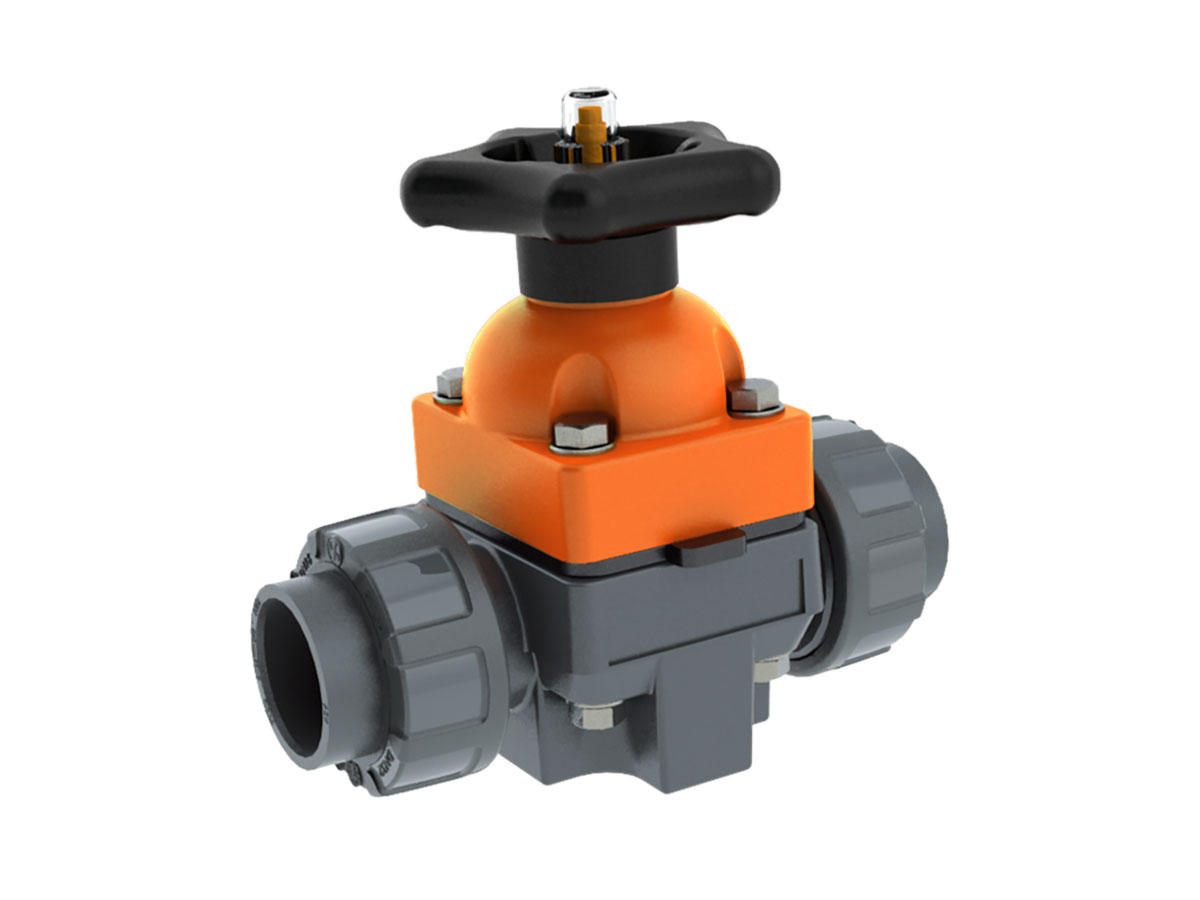
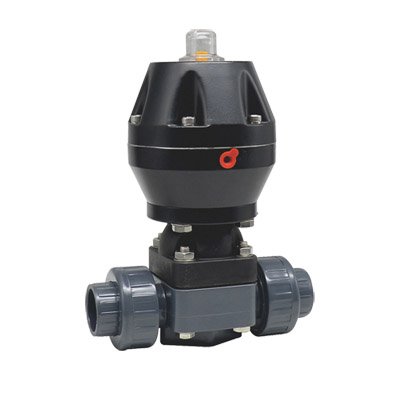
| FIG | PARTS | MATERIAL |
| 1 | Drive Shaft | PP |
| 2 | Drive Nut | PP |
| 3 | Diaphragm | EPDM/PTFE |
| 4 | Valve Body O-Ring | EPDM/FPM |
| 5 | Indicator Rod | PP |
| 6/7/8/9 | Bolt,Nut & Washer, Rubber Sleeve | SS |
| 10 | Fastening Cover | PP |
| 11 | Connector | UPVC |
| 12 | Diaphragm Body | UPVC |
| 13 | Actuator | Double or Single Acting |

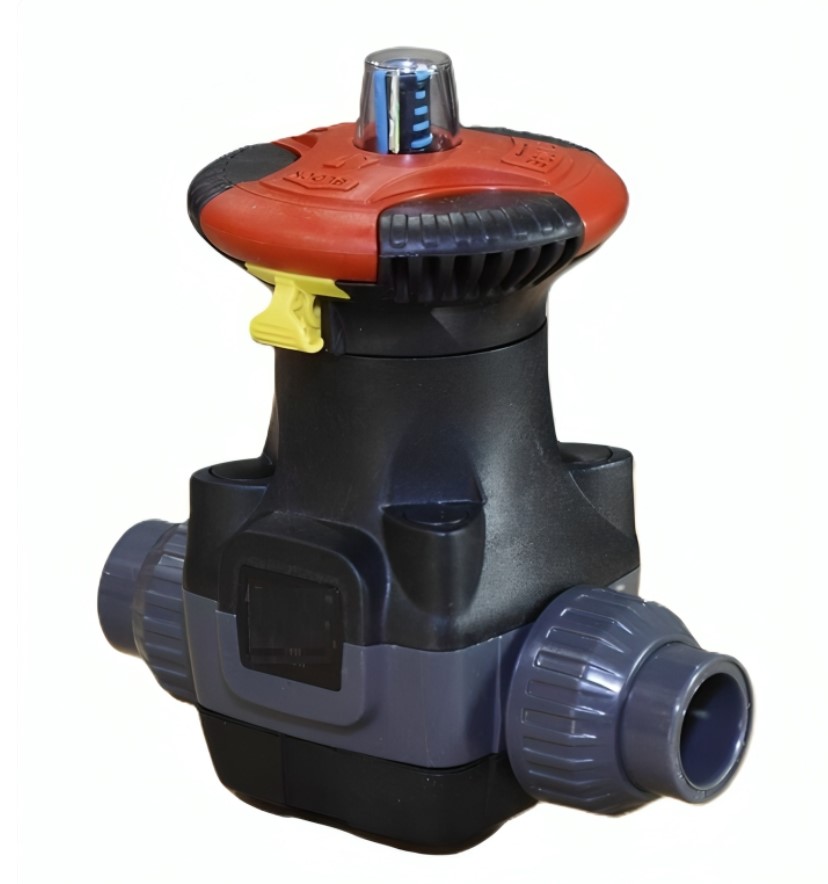
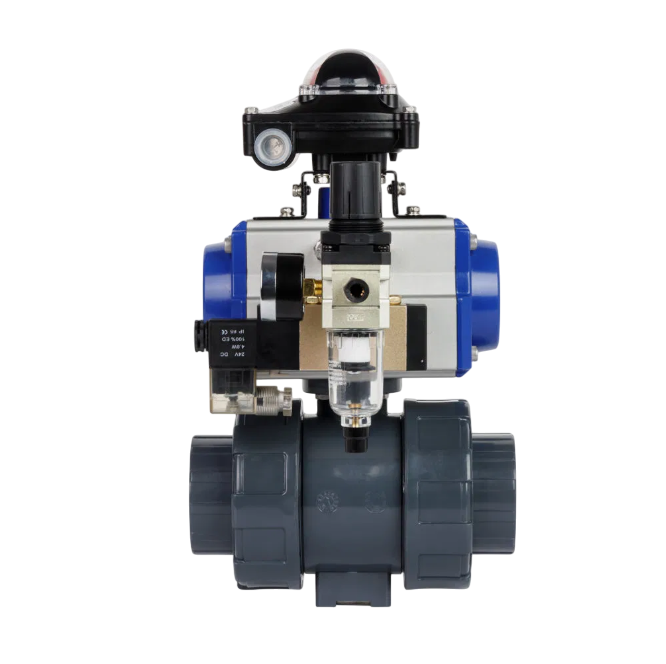
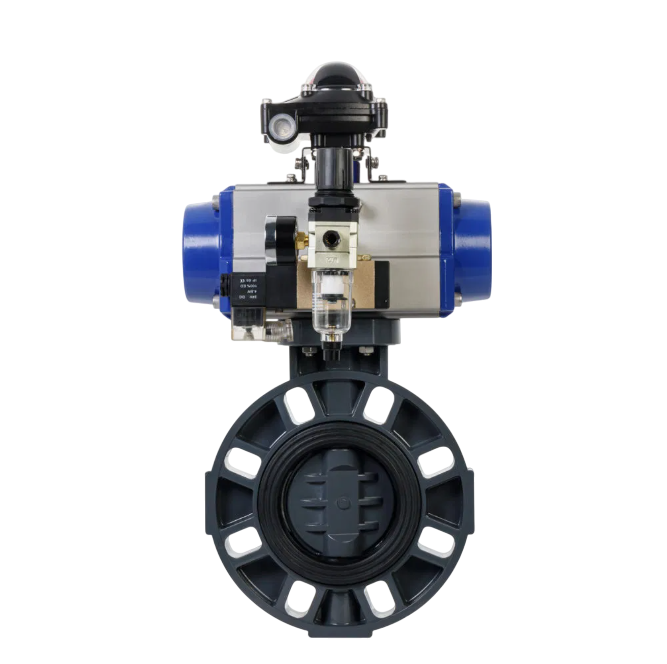
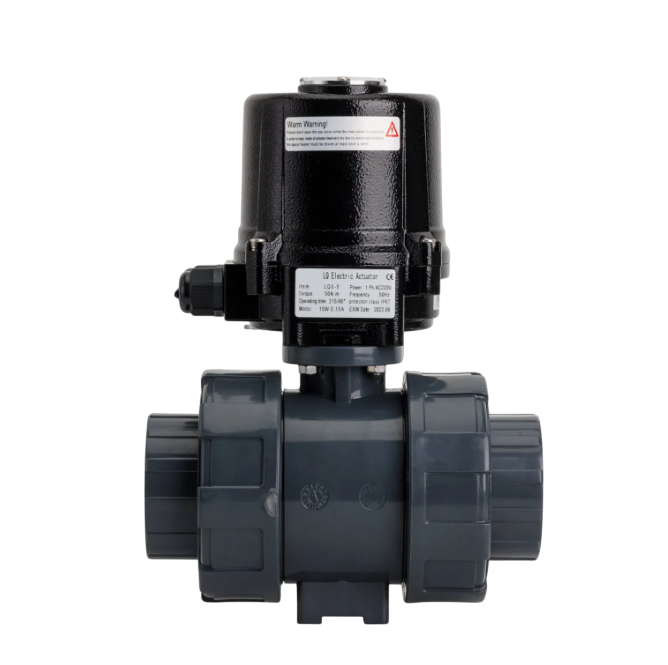
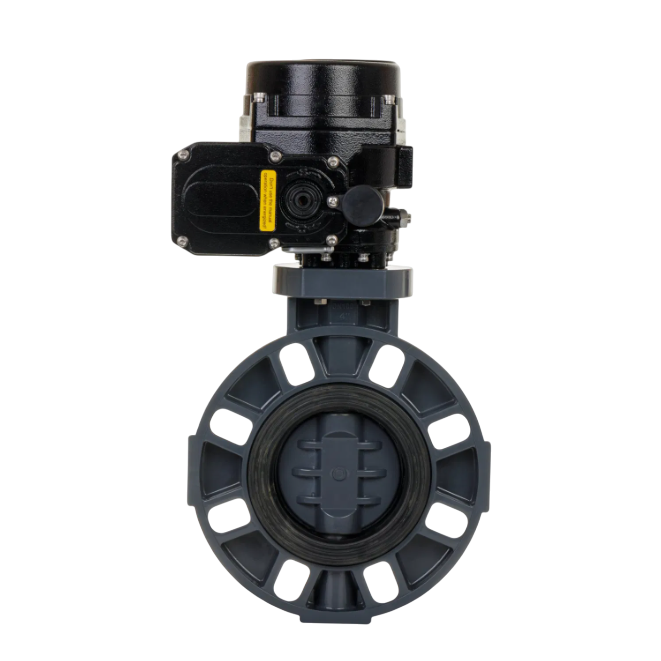
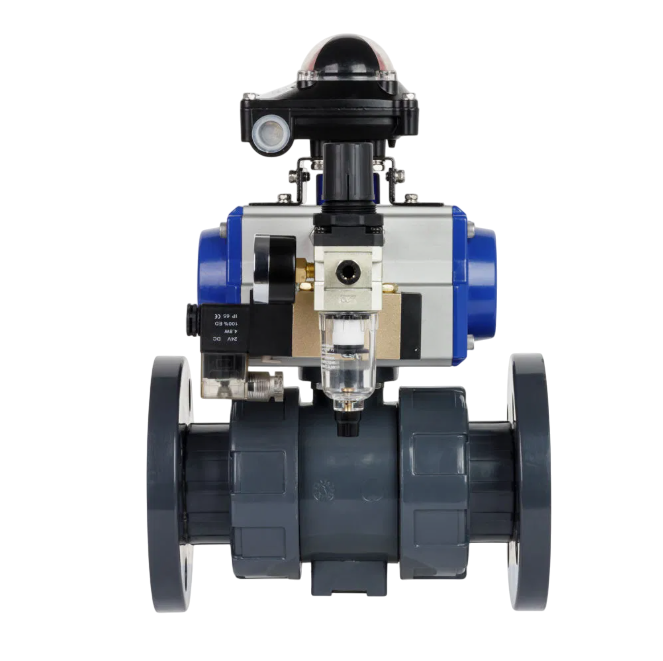
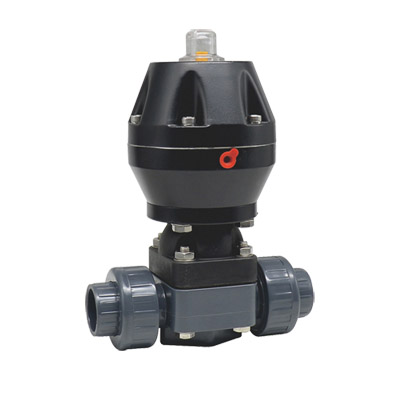
A UPVC pneumatic actuated diaphragm valve is an automated flow control device made from Unplasticized Polyvinyl Chloride (UPVC) that uses compressed air to operate. This combination of durable, corrosion-resistant materials and a remote-controlled power source makes it ideal for handling a wide range of fluids, especially in chemically harsh or sensitive environments.
Key components and function
- UPVC valve body: The main housing of the valve is made from UPVC, a plastic known for its excellent resistance to corrosion from chemicals, acids, and alkalis.
- Diaphragm: A flexible membrane, often made from materials like EPDM or FPM, separates the upper mechanism of the valve from the fluid. The diaphragm provides the sealing function, preventing leaks and isolating the working parts from the media.
- Pneumatic actuator: This component uses compressed air to push a piston, which in turn moves a rod connected to the diaphragm.
- Single-acting actuators use air pressure to open or close the valve and springs to perform the reverse action, providing fail-safe functionality.
- Double-acting actuators use air pressure for both the open and close functions, offering more precise control.
- Sealing mechanism: When the actuator forces the diaphragm down, it presses against a weir (seat) at the bottom of the valve body to stop the flow. When the diaphragm is lifted, the fluid is allowed to pass.
How it works
The operation is controlled by the flow of compressed air into the actuator.
- To close: Air pressure is supplied to the actuator, forcing the piston down. The piston pushes the diaphragm against the weir, shutting off the flow of fluid.
- To open: Air pressure is released from the actuator (or applied to the opposite side in a double-acting unit), allowing the diaphragm to lift and the fluid to flow.
Advantages and applications
The combination of UPVC and pneumatic actuation offers several benefits:
- Excellent chemical resistance: Suitable for use with corrosive media like acids, alkalis, and process chemicals.
- Fluid isolation: The diaphragm separates the fluid from the operating mechanism, preventing contamination and protecting the internal components from the media.
- Automated control: Remote operation allows for precise, automated control of flow, which is useful in large-scale industrial processes.
- Abrasion resistance: The diaphragm design is ideal for handling fluids with suspended solids or slurries, as it can seal tightly around particulates.
- Durability and low maintenance: The UPVC body is tough and long-lasting, while the design minimizes moving parts in contact with the media, reducing maintenance needs.
Applications
Pneumatic actuator UPVC diaphragm valves are used in many industries where automated, corrosion-resistant, and contamination-free flow control is required.
- Water treatment: Ideal for municipal water supply and wastewater treatment plants, as they are resistant to the chemicals used for disinfection.
- Chemical processing: Used for handling corrosive chemicals, acids, and bases in various chemical manufacturing processes.
- Food and beverage: Suitable for applications where hygiene is critical, as they prevent fluid contamination.
- Pharmaceutical and biotechnology: Their leak-free design and ability to prevent cross-contamination are critical for handling sensitive biological materials.
- Pulp and paper: Can handle slurries and viscous materials often encountered in the production process.
- Mining: Used for controlling fluids with suspended solid particulate matter.
- Semiconductor Manufacturing: Used in the production of ultra-pure water.