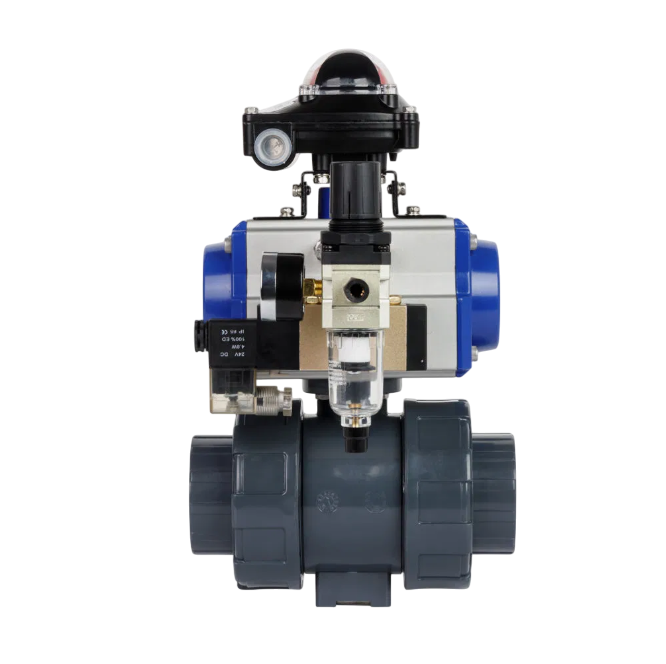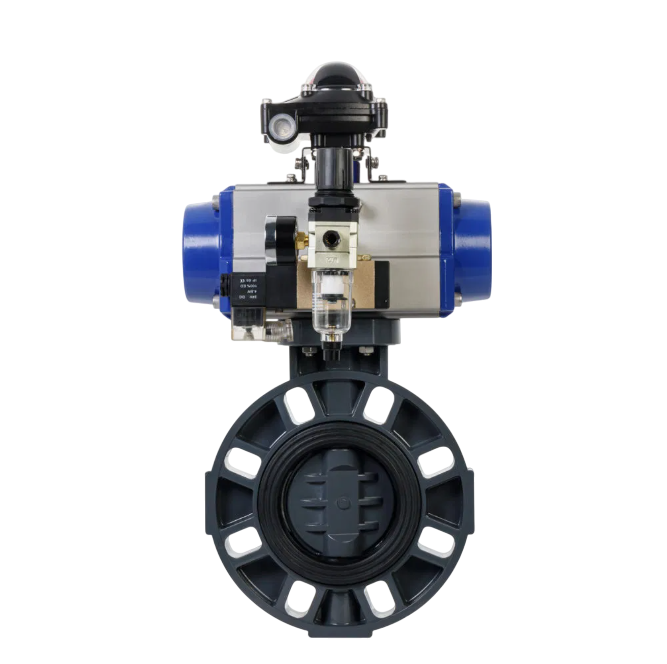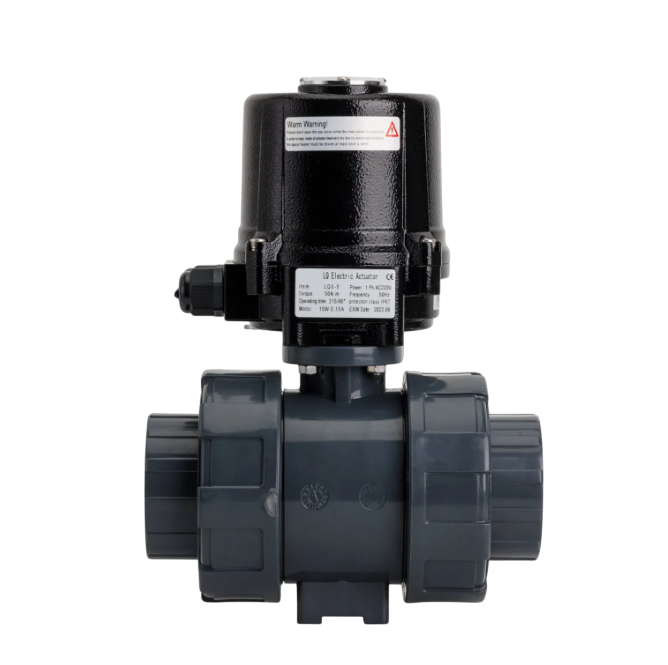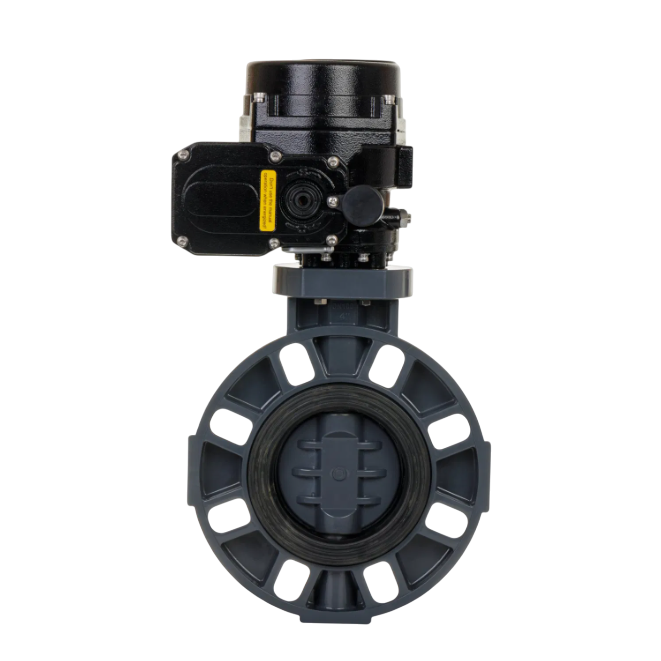
| FIG. | PARTS | MATERIAL | QTY |
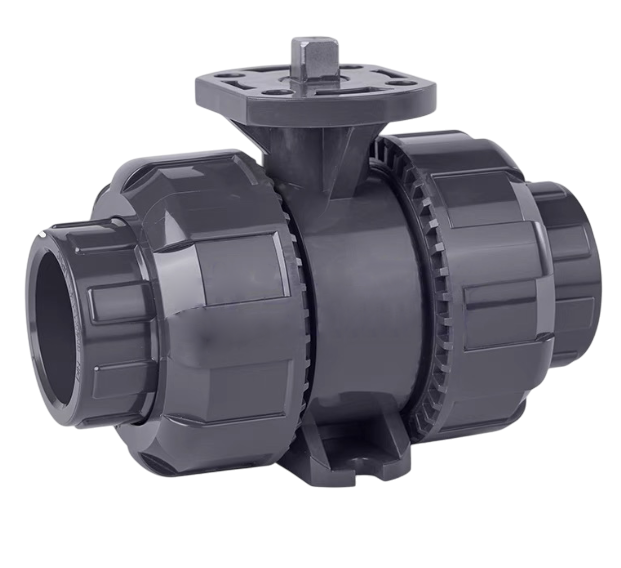
| 1 | Body | UPVC | 01 |
| 2 | Ball | UPVC | 01 |
| 3 | STEM | UPVC/SS | 01 |
| 4 | Ball Seat | PTFE | 02 |
| 5 | Body O Ring | EPDM/NBR | 03 |
| 6 | Body Connector O Ring | EPDM/NBR | 03 |
| 7 | Body Connector | UPVC | 03 |
| 8 | Connector | UPVC | 03 |
| 9 | Connector Nut | UPVC | 03 |
| 10 | Stem O Ring | EPDM/NBR | 01 |
| 11 | Body O Ring | EPDM/NBR | 01 |
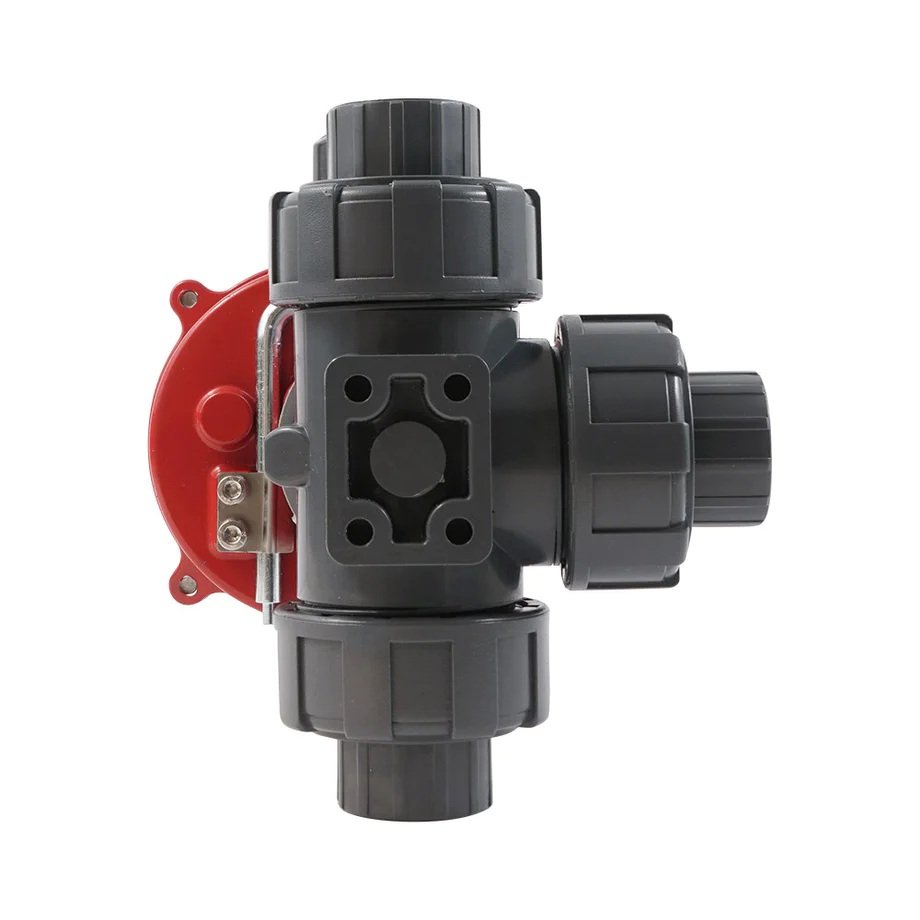
| 12 | Bracket Pad | ISO 5211 | 01 |
| 13 | Actuator | Electric | 01 |

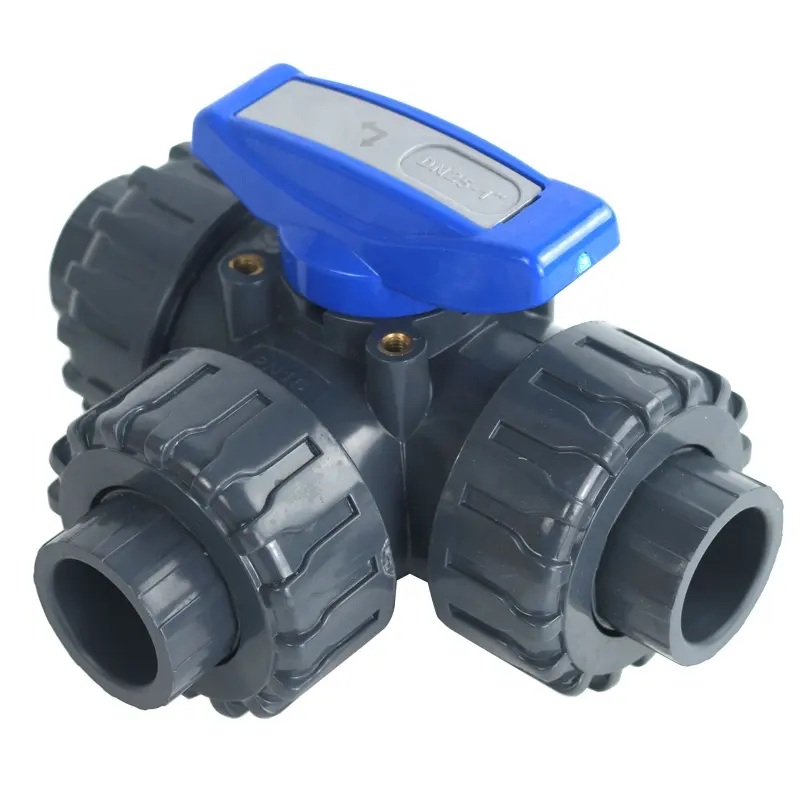
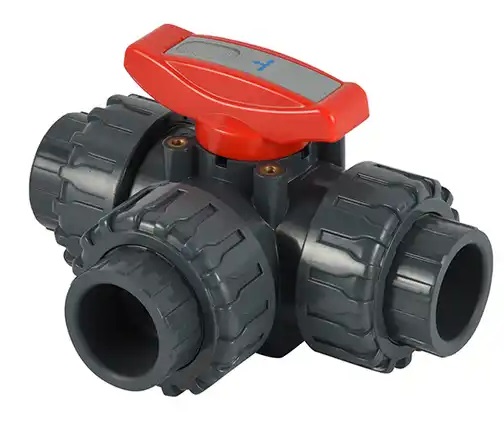
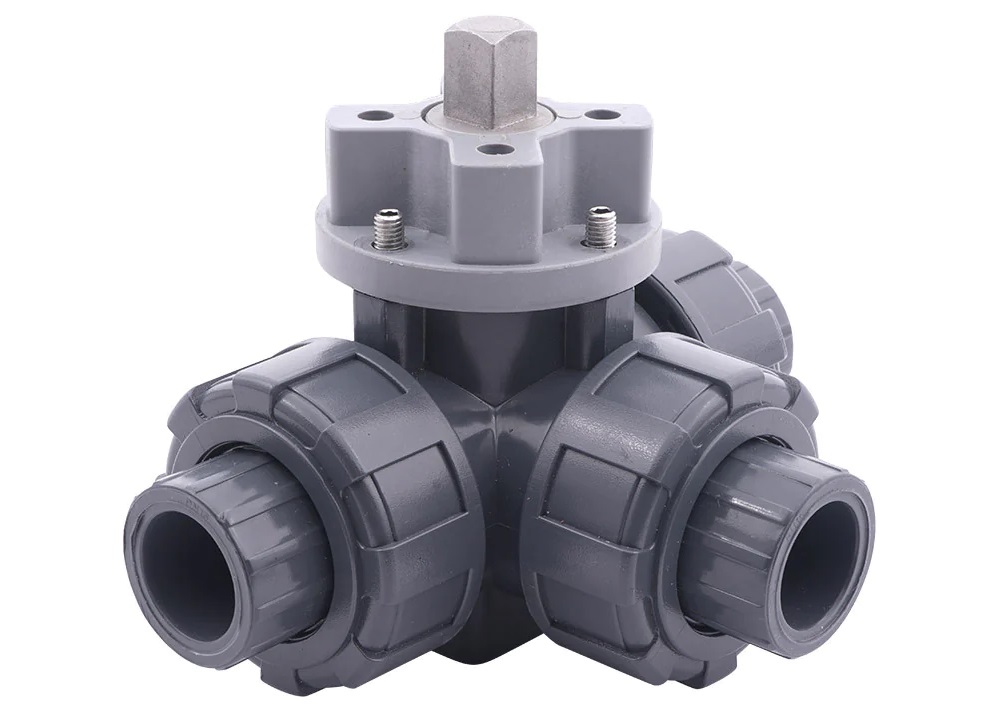
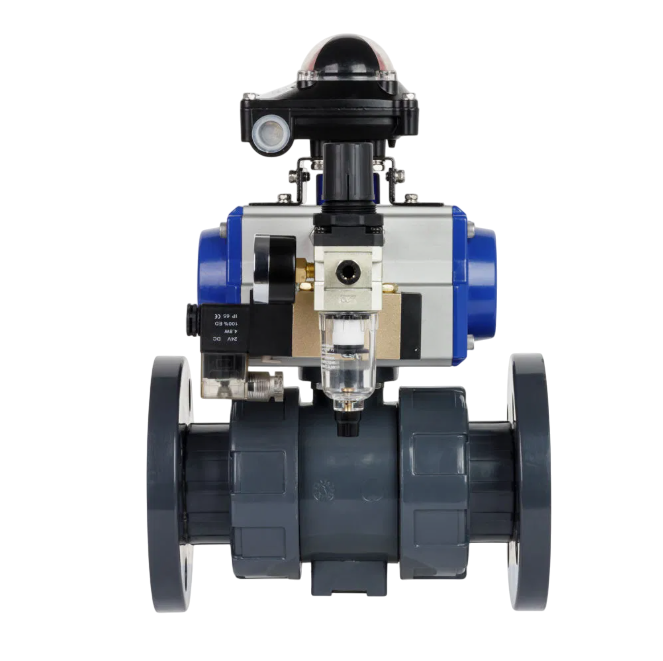
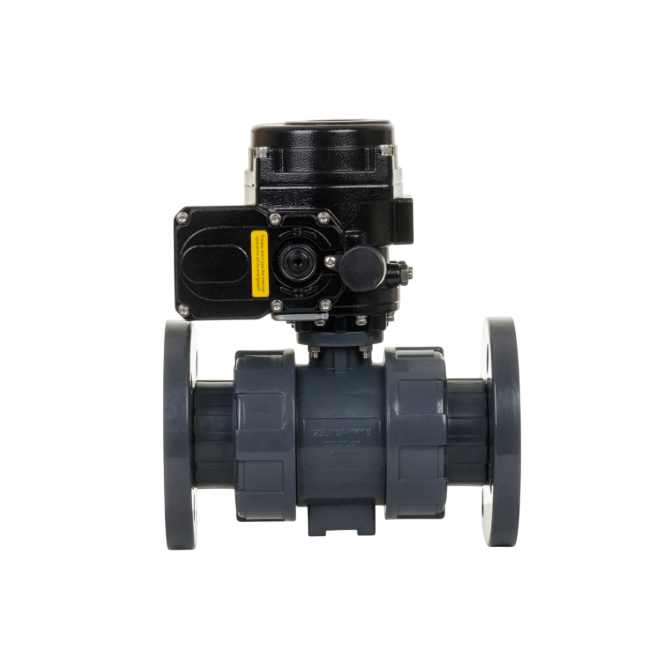
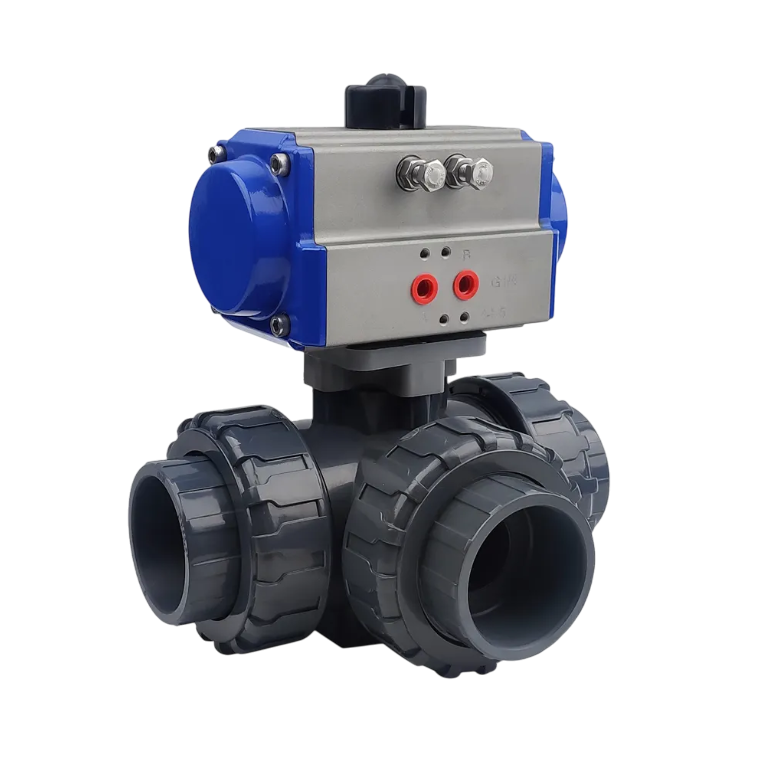
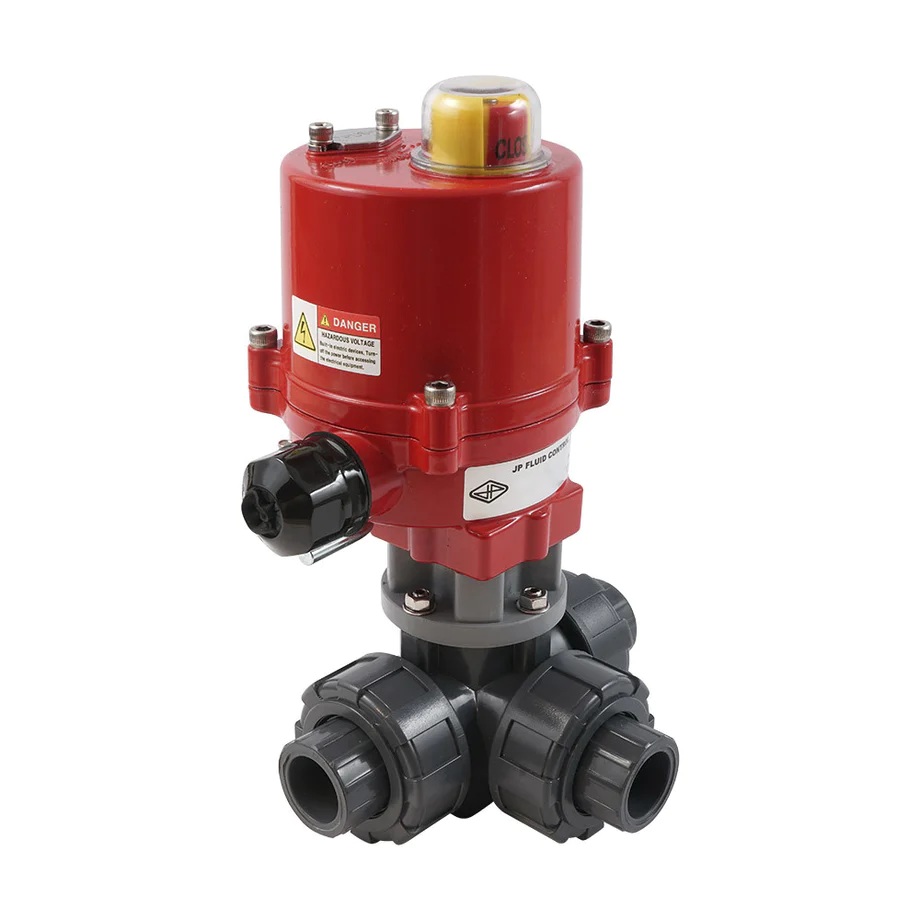
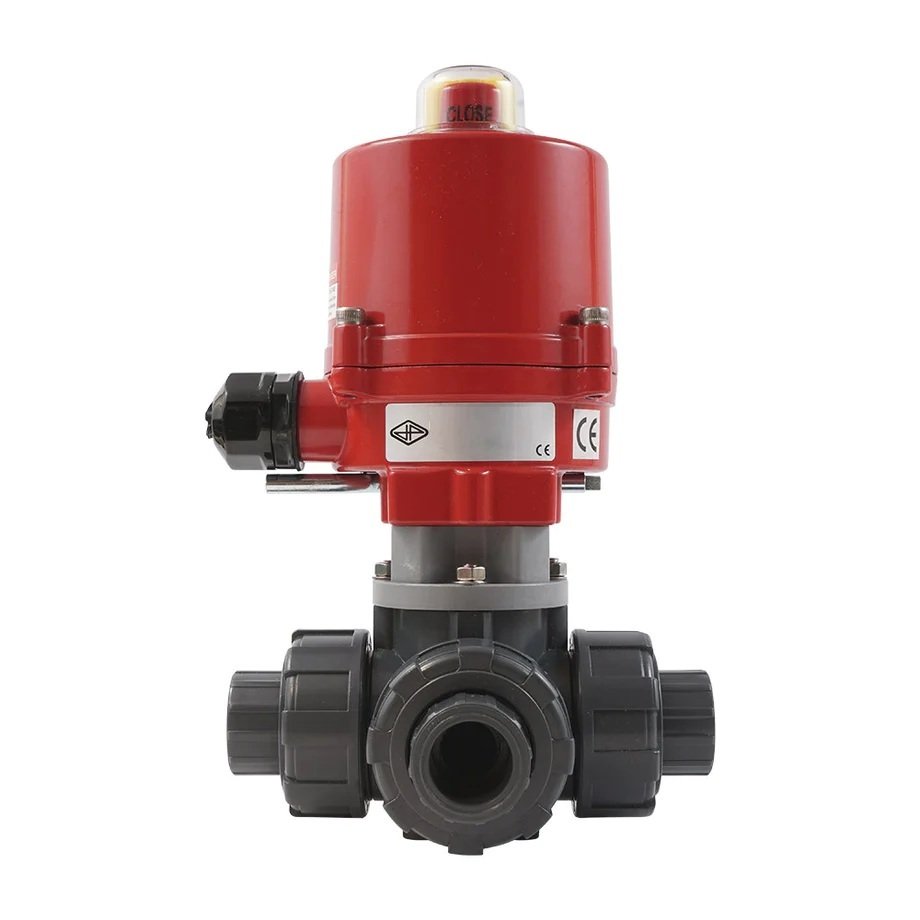
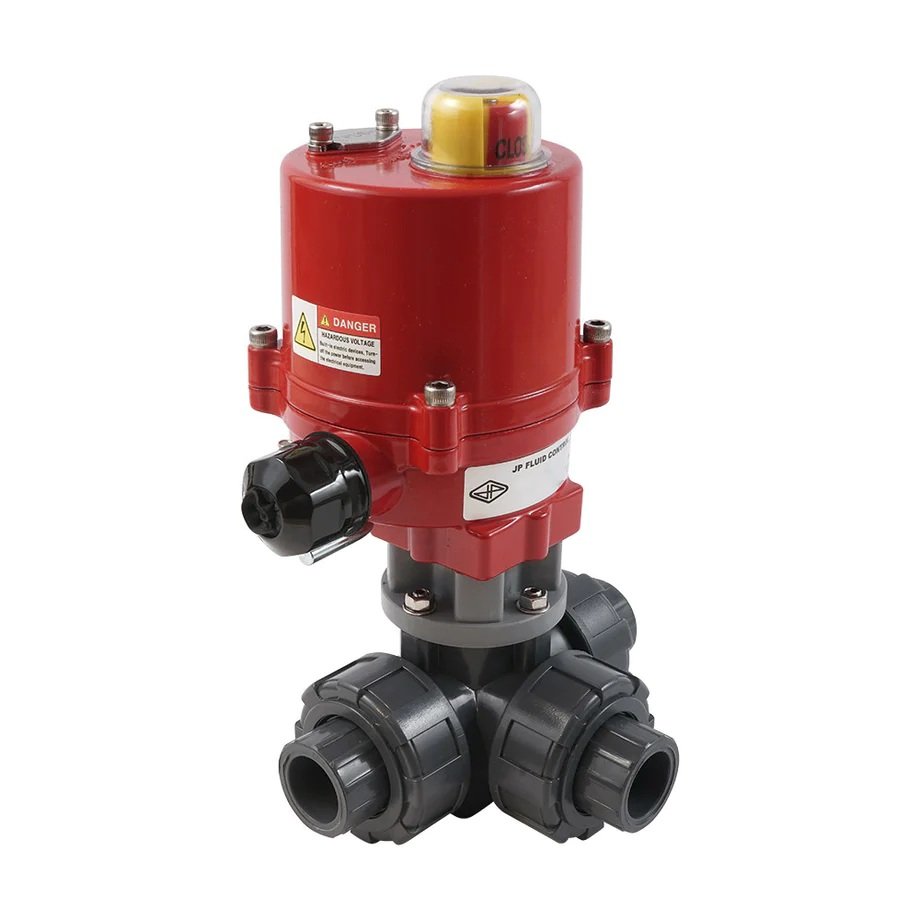
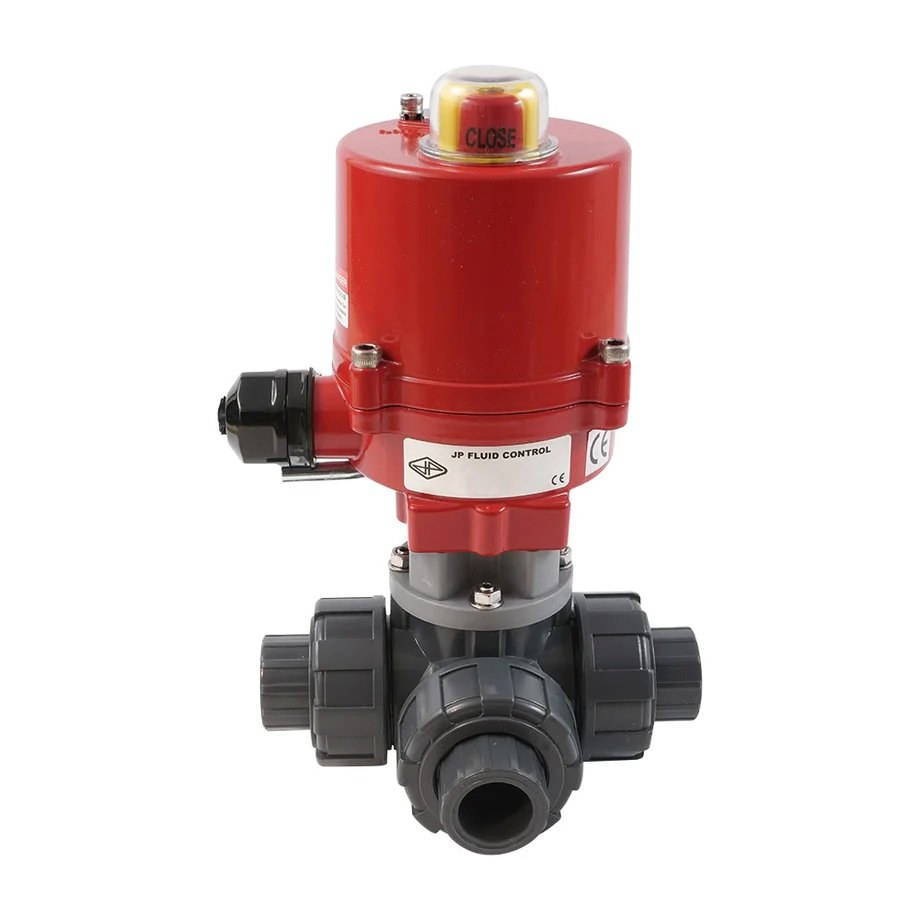
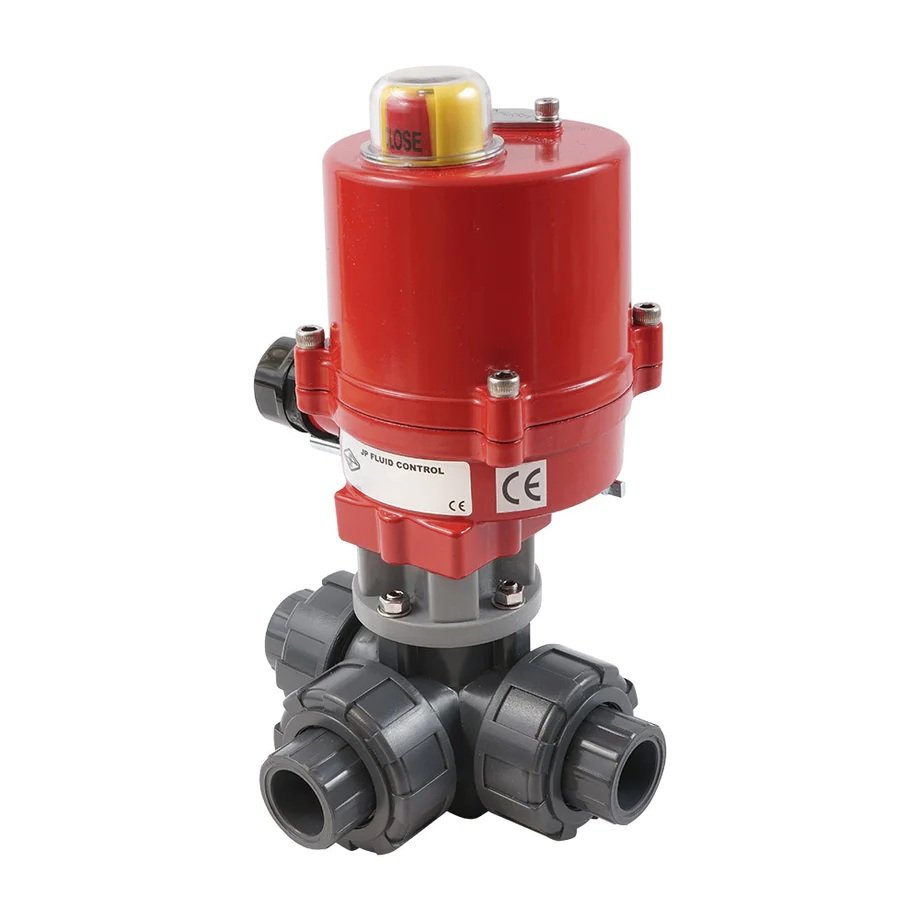
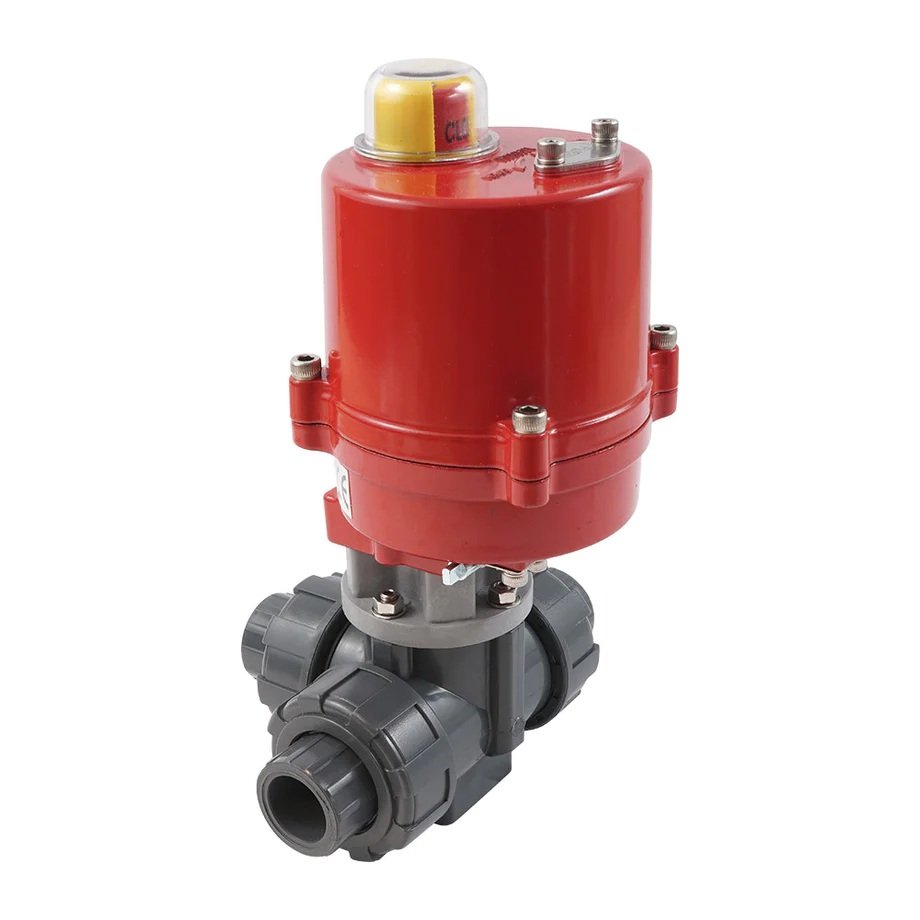
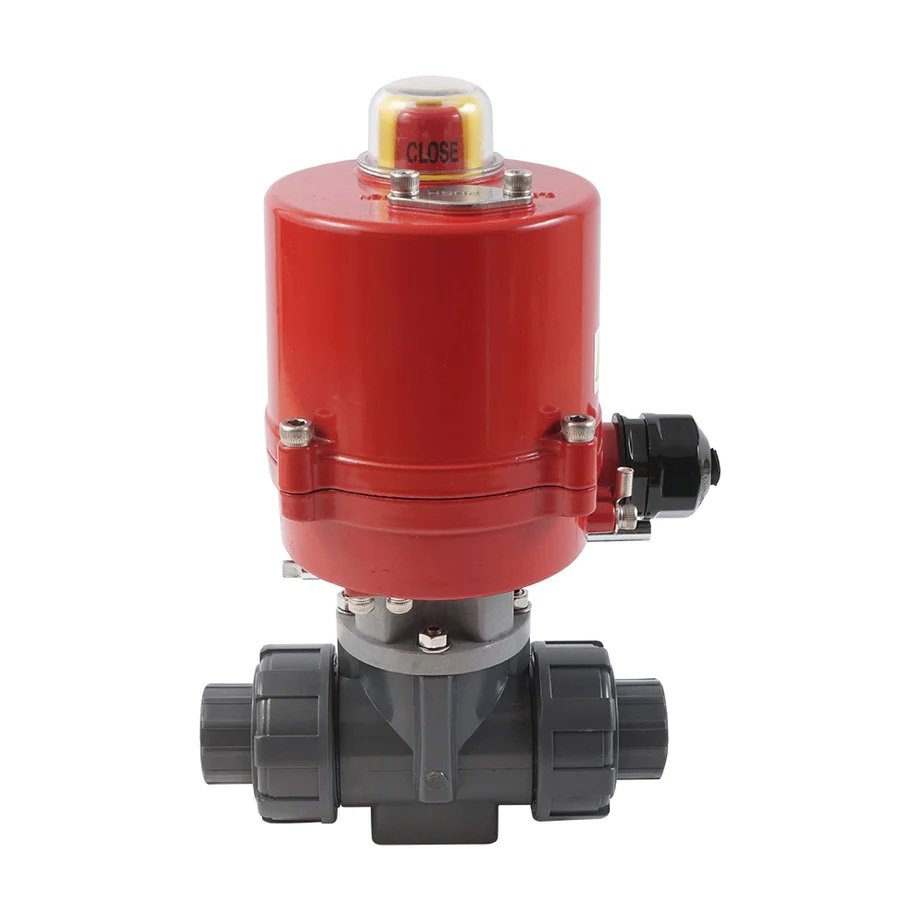
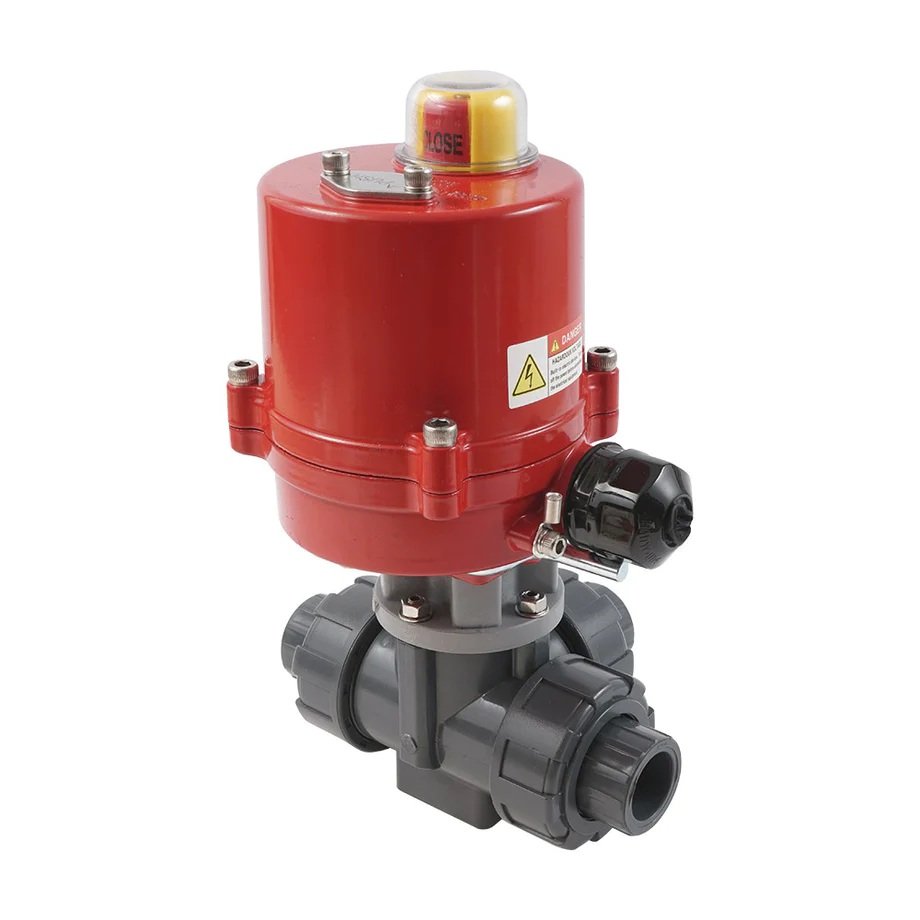
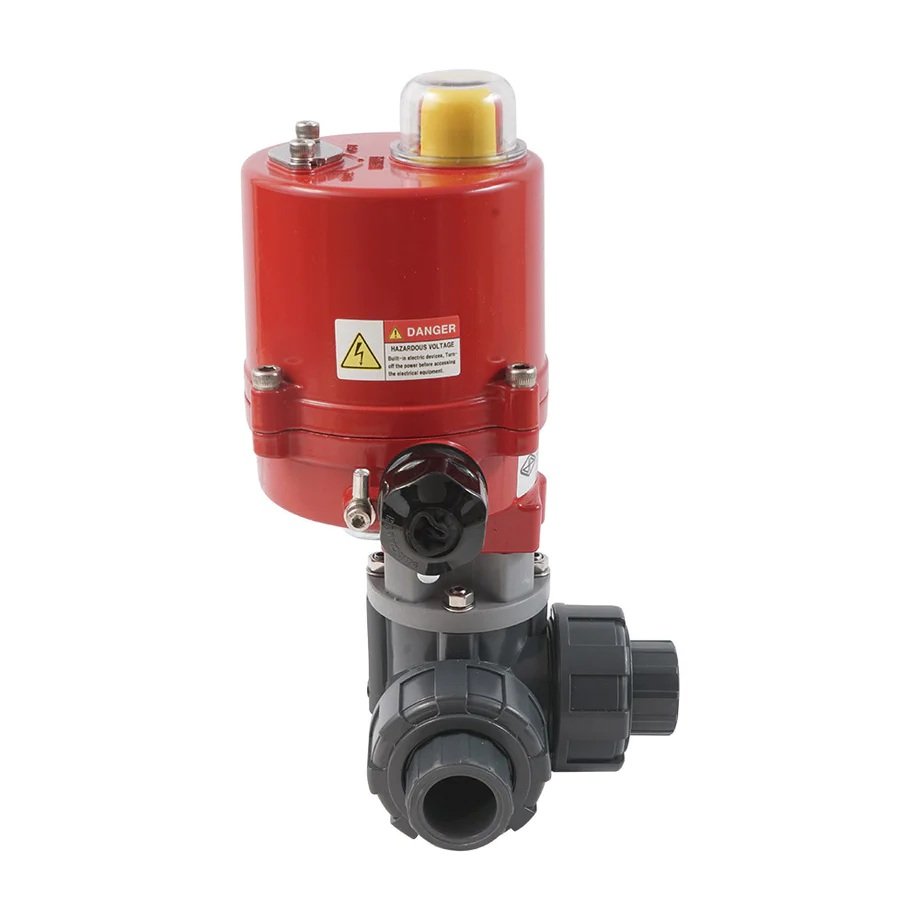
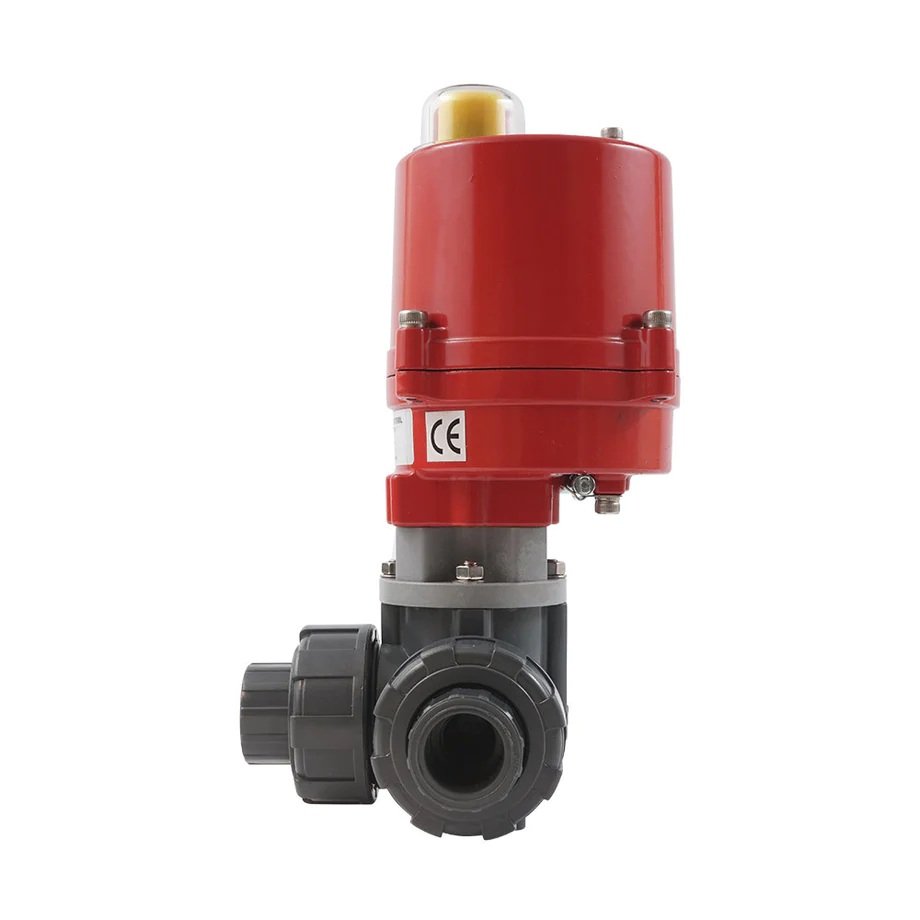
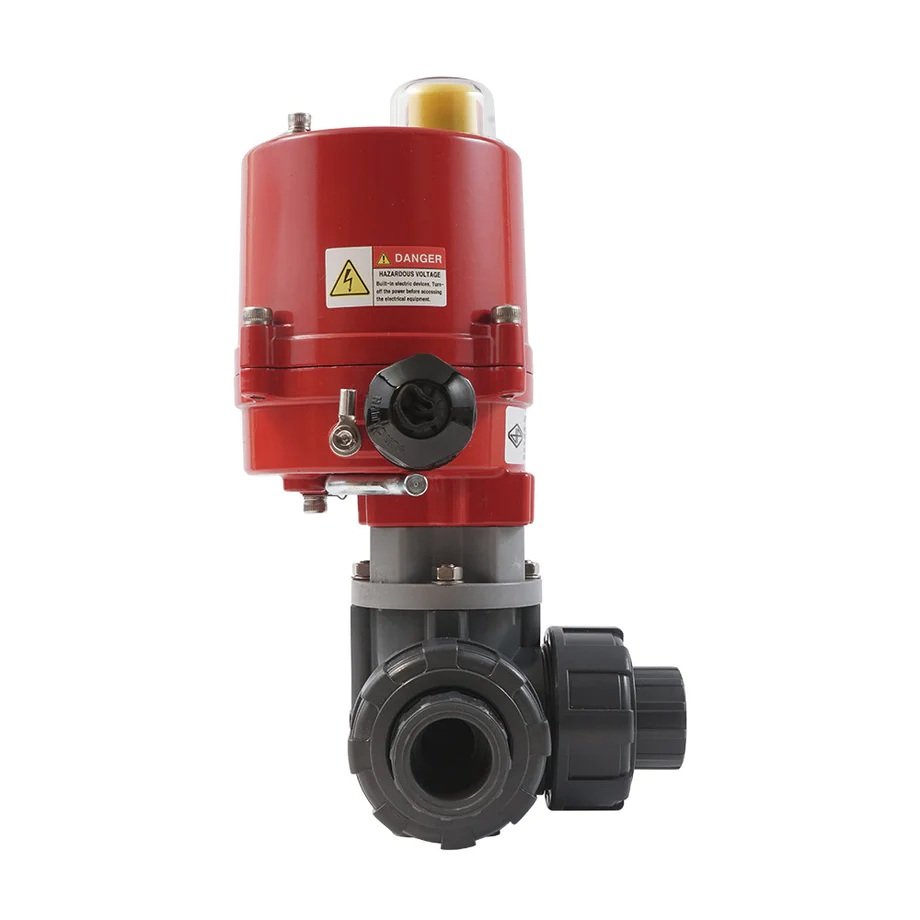
An electric actuator UPVC three-way ball valve is a motorized valve designed for automated, multi-directional fluid control in systems involving water and certain chemicals. The actuator uses an electric motor to turn an internal ball, allowing the valve to mix, divert, or shut off flow between three different ports.
How it works
The valve's operational function is determined by its porting design, which is the shape of the hole in the internal ball.
- L-port: The ball has an L-shaped channel. When the actuator rotates the ball, the L-port diverts flow from a central inlet to one of two side outlets. This is ideal for switching flow between two different destinations.
- T-port: The ball features a T-shaped channel. This allows the valve to divert fluid from one inlet to two outlets simultaneously or mix fluids from two inlets into a single outlet. A T-port can also completely block all three ports.
Key components
- UPVC Valve Body: The Unplasticized Polyvinyl Chloride (UPVC) construction provides excellent corrosion and chemical resistance, making it lightweight and durable for use in water treatment and industrial processes.
- Electric Actuator: This motorized component provides remote and automated control of the valve's operation, eliminating the need for manual intervention.
- Ball: The internal, rotating ball contains the L-port or T-port channel for routing fluid.
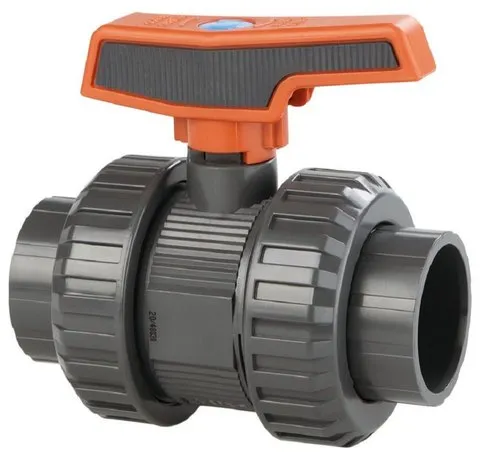
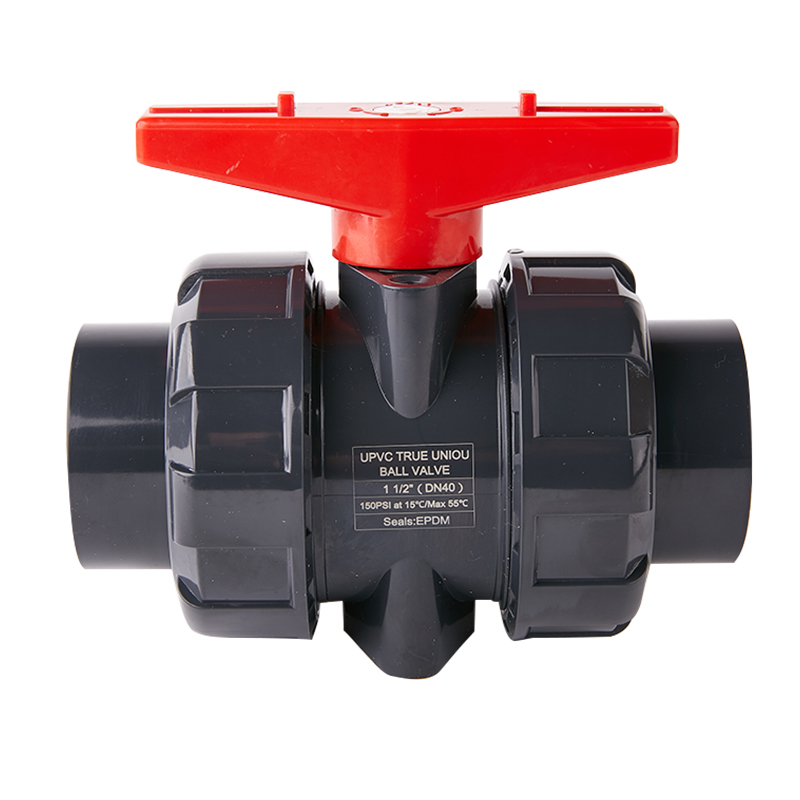
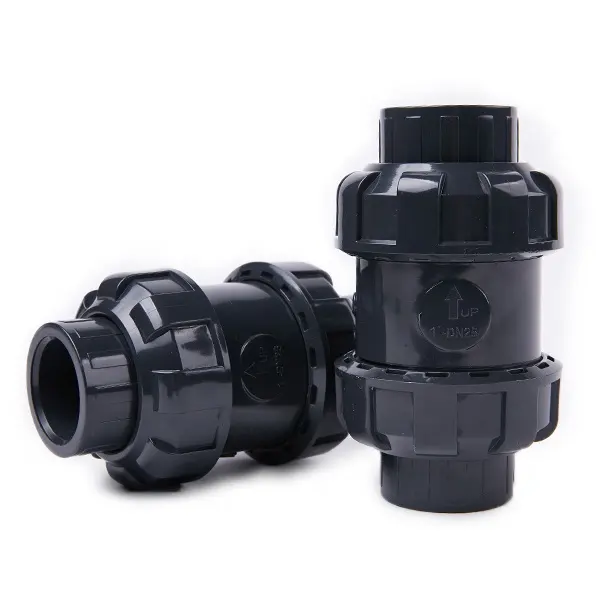
- True Union Design (optional): Some valves feature a "true union" design, which uses union nuts to connect the valve to the pipeline. This allows the valve to be easily removed for maintenance without cutting the piping.
Common applications
Electric actuator UPVC three-way ball valves
are used in industries where automated control of corrosive or clean fluids is required.
- Water Treatment: Used in RO water treatment plants and other water management systems for controlling flow and chemical dosage.
- Chemical Processing: Ideal for controlling fluids in industrial settings where corrosion is a concern.
- HVAC Systems: Used for mixing hot and cold water flows in heating and cooling systems.
- Agriculture and Irrigation: Enables automated control of water lines for farm automation.
- Building Automation: Used in domestic water management where low-pressure flow needs to be diverted automatically.
Advantages
- Versatility: The three-way design allows a single valve to perform the functions of mixing, diverting, or shutting off flow.
- Automation: Electrical actuation enables remote operation and integration into automated control systems, improving efficiency and reducing manual labor.
- Corrosion Resistance: The UPVC material is highly resistant to a wide range of chemicals and corrosive media.
- Low Maintenance: The UPVC body is easy to clean and lubricate, and its durable construction ensures long-term reliability.
- Cost-Effective: Using one three-way valve can be more economical than installing multiple two-way valves and fittings to achieve the same flow control.
Installation and maintenance
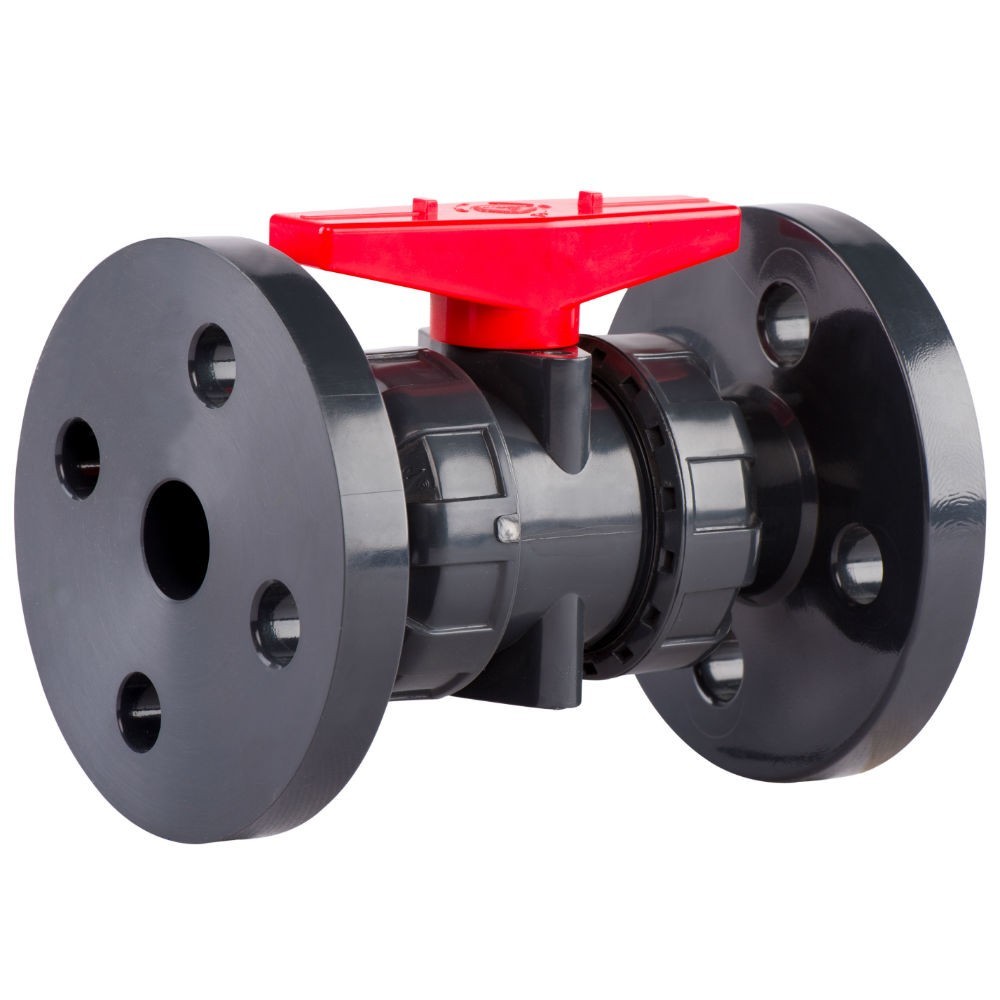
- Installation: For true union valves, the union connection allows for easy removal and installation. Connections can also be threaded, socket-welded, or flanged.
- Maintenance: Maintenance is straightforward. Key tasks include:
- Regular inspections for leaks or wear and tear.
- Lubricating the valve with a compatible, silicone-based lubricant every 6 to 12 months, or as needed, to ensure smooth operation.
- Checking actuator wiring and bolts for tightness.