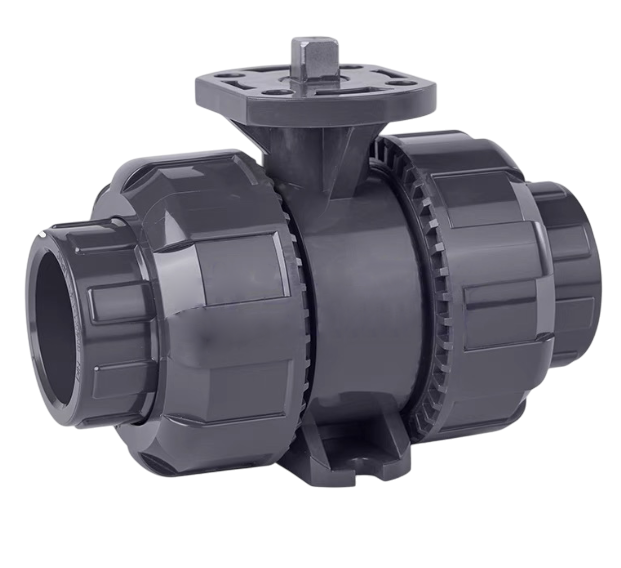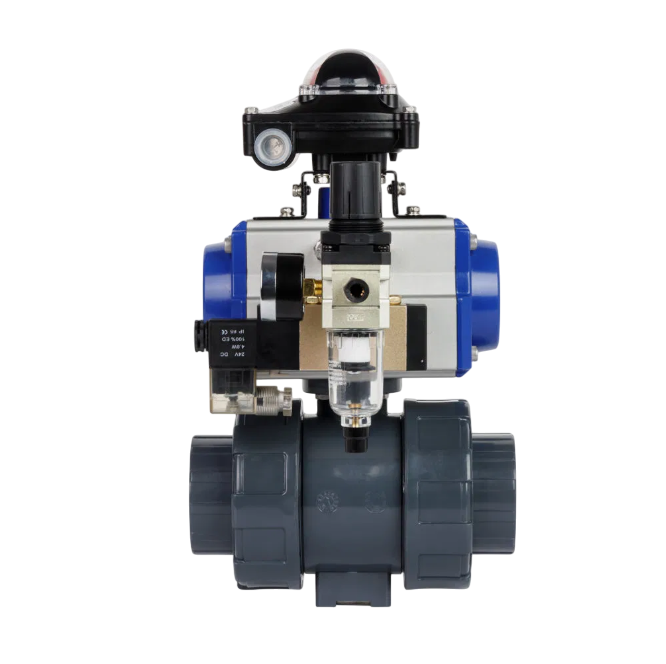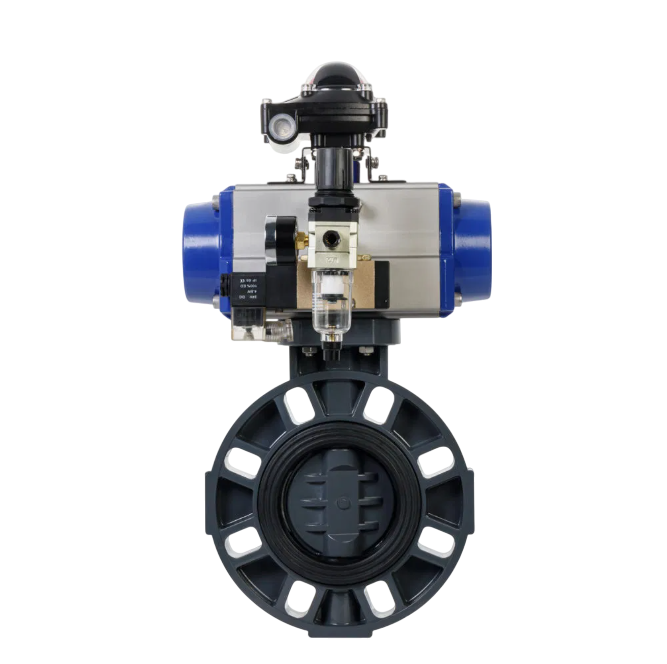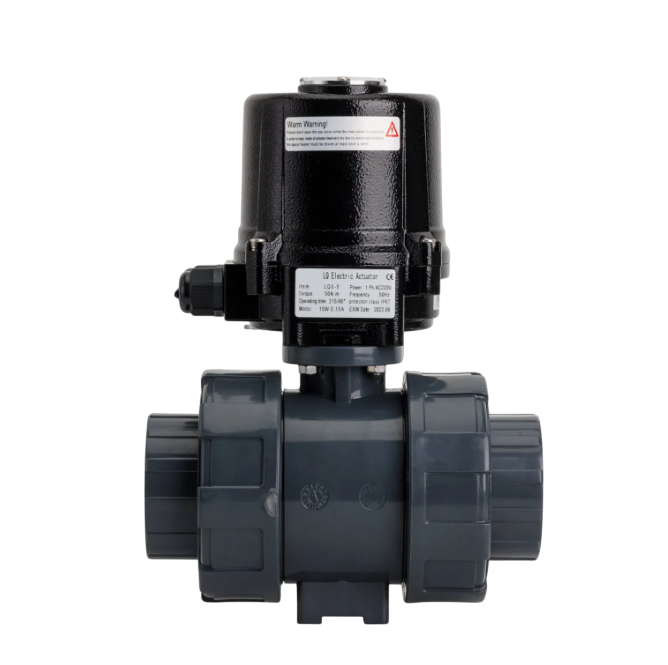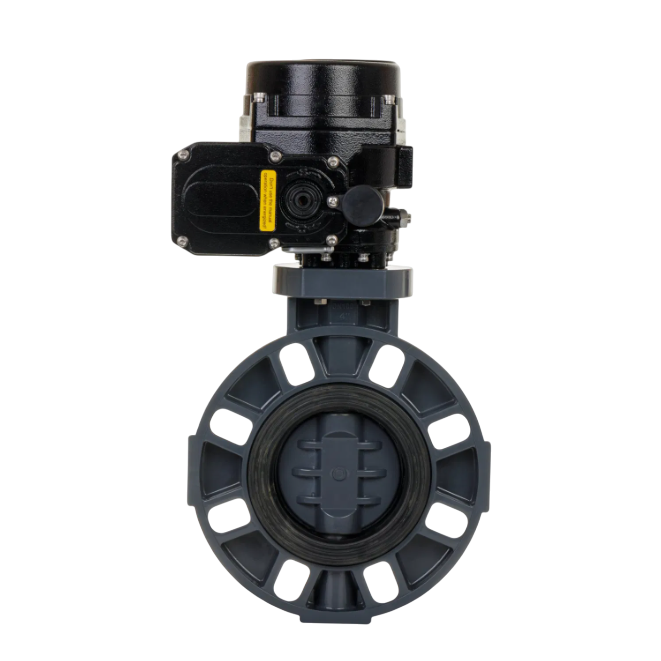
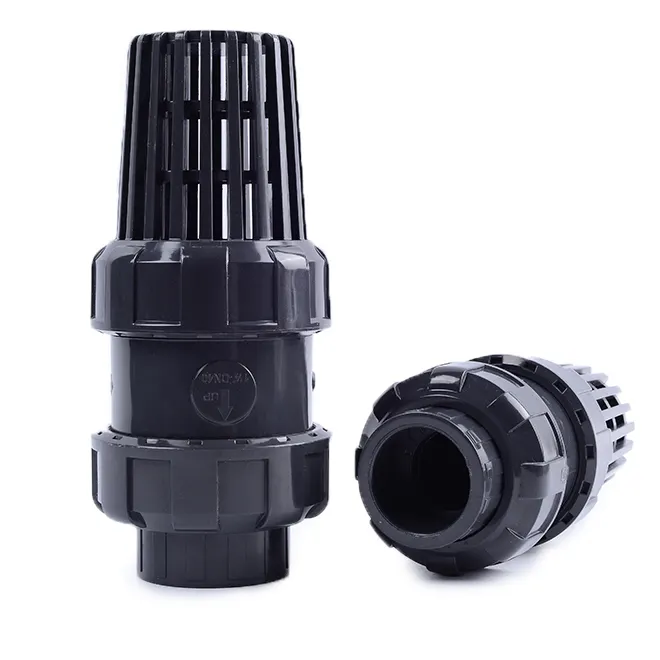
| FIG. | PARTS | MATERIAL |
| 1 | End Connector | U-PVC |
| 2 | Union Nut | U-PVC |
| 3 | End Connector O-ring | EPDM |
| 4 | Seal Carrier - Support | U-PVC |
| 5 | Ball | U-PVC |
| 6 | Body | U-PVC |
| 7 | End Connector O-Ring | EPDM |

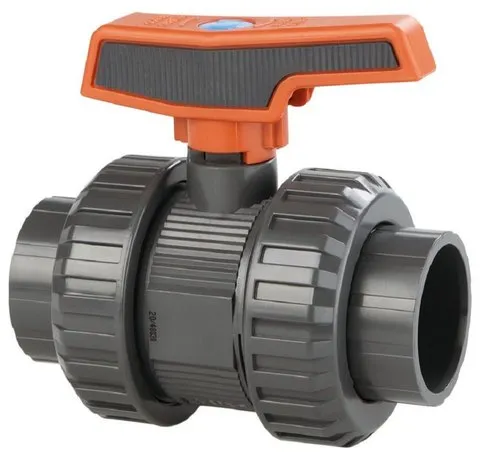
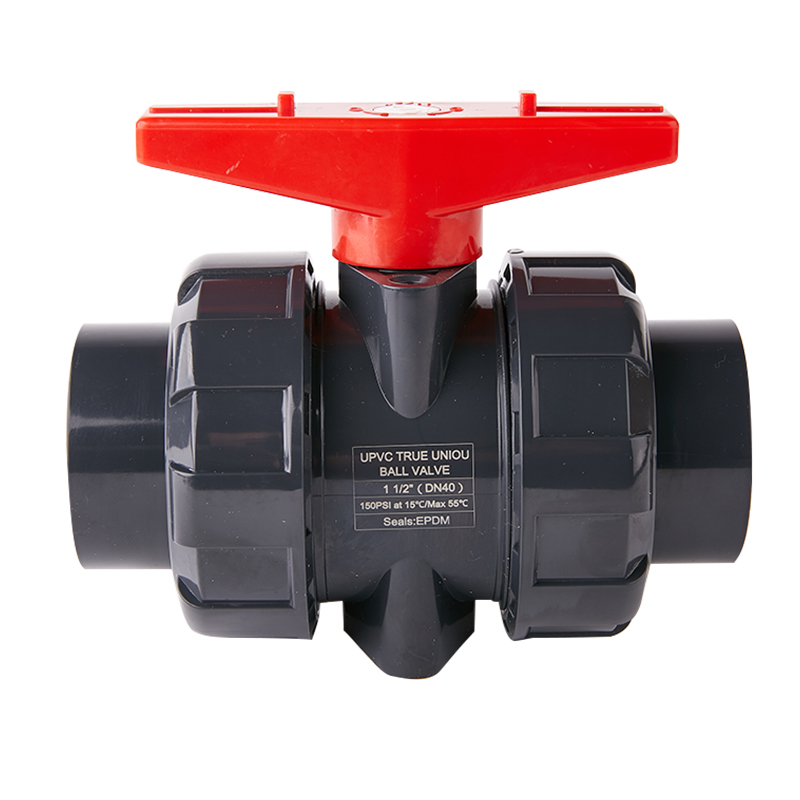
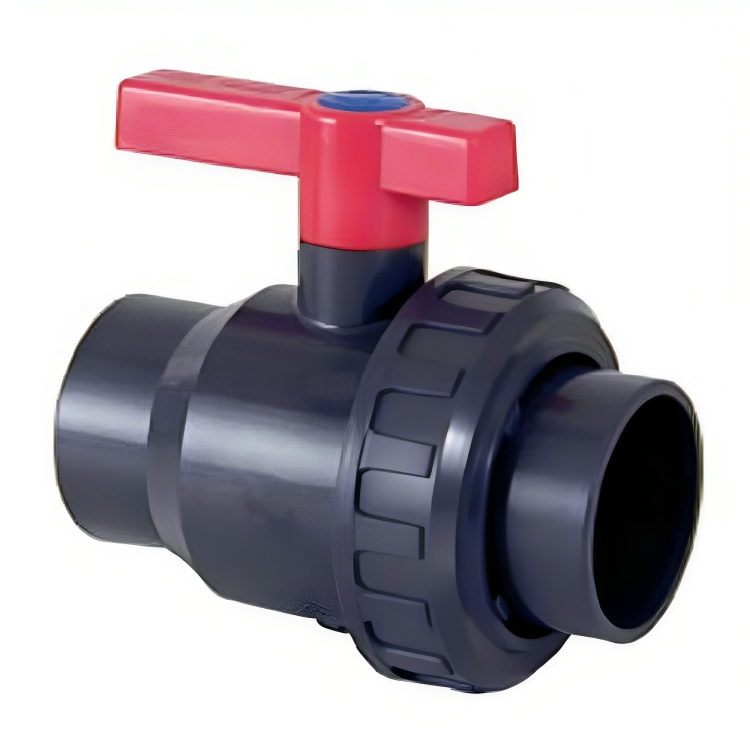
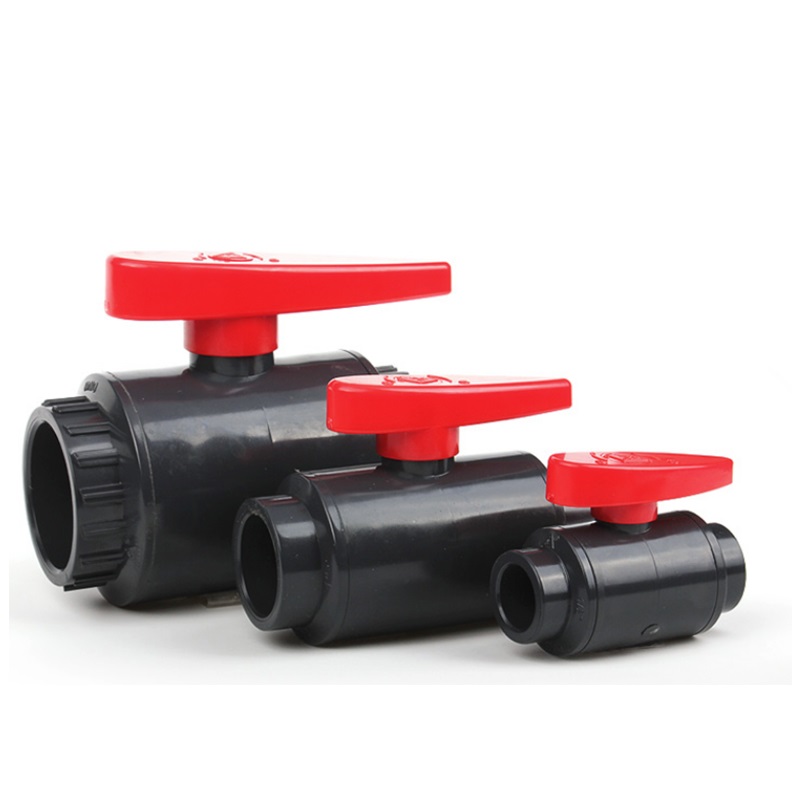
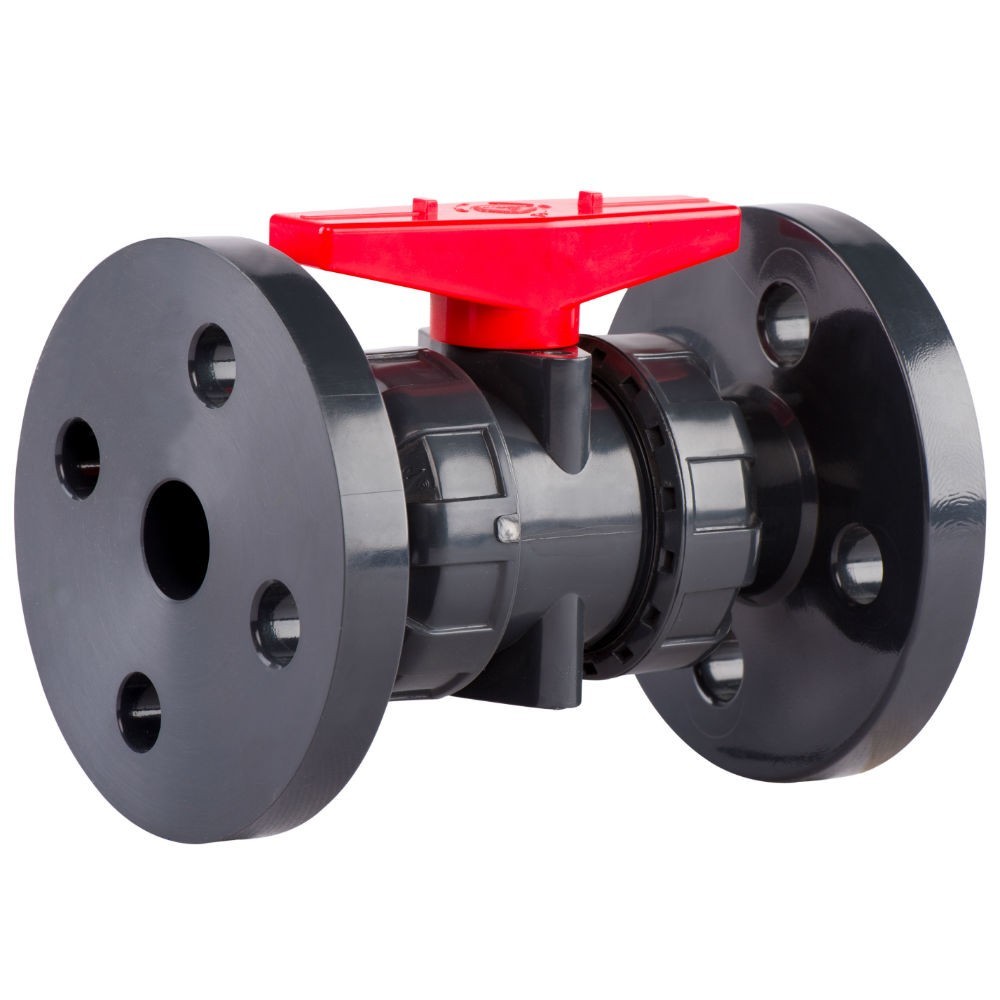
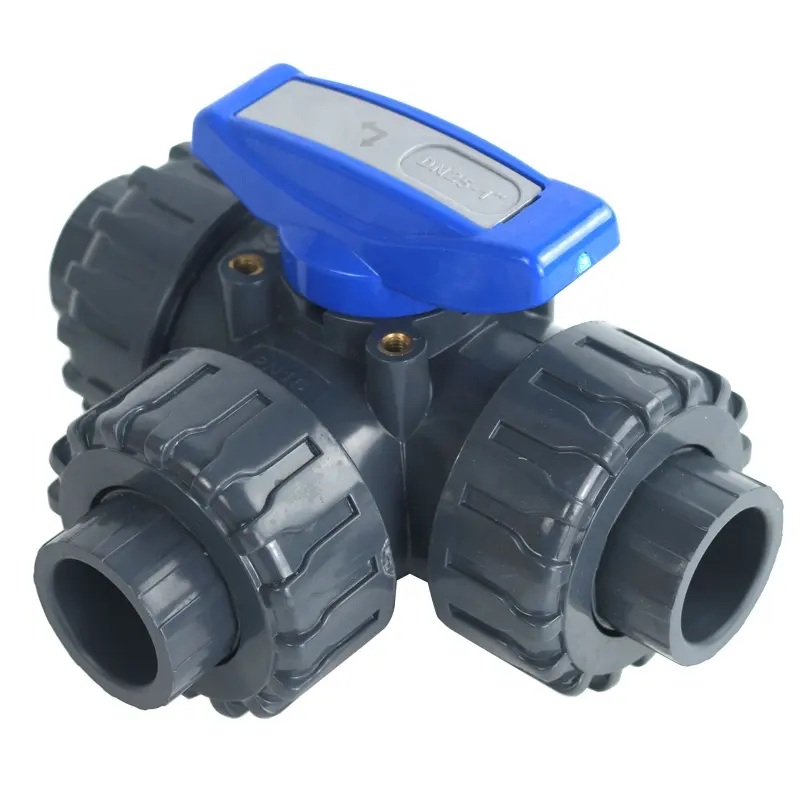
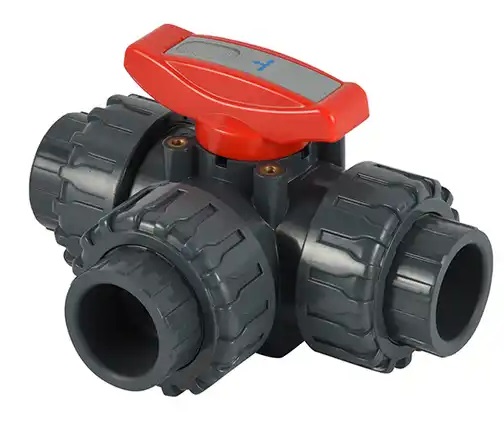
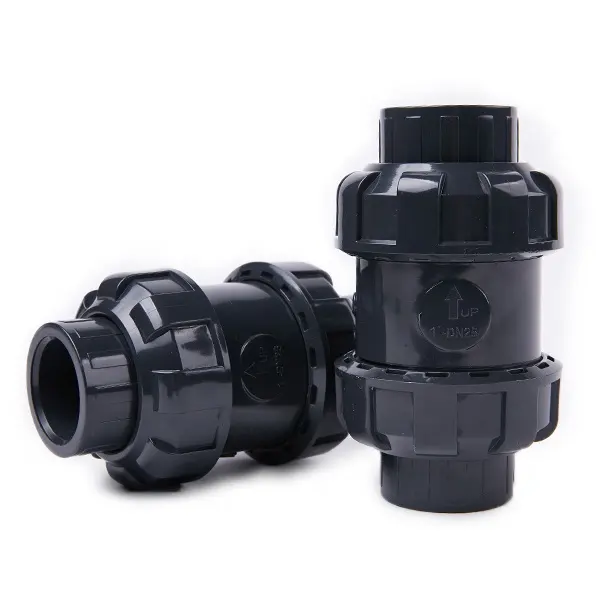
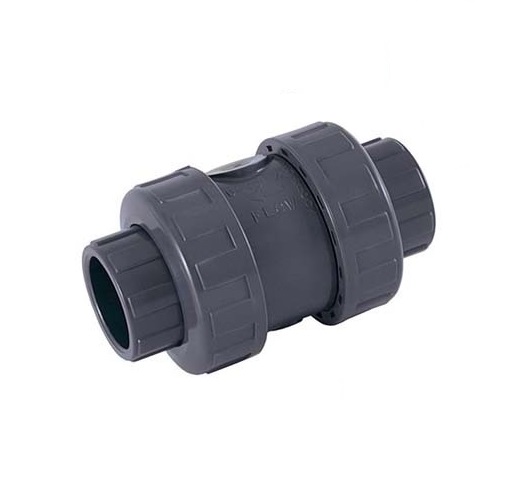
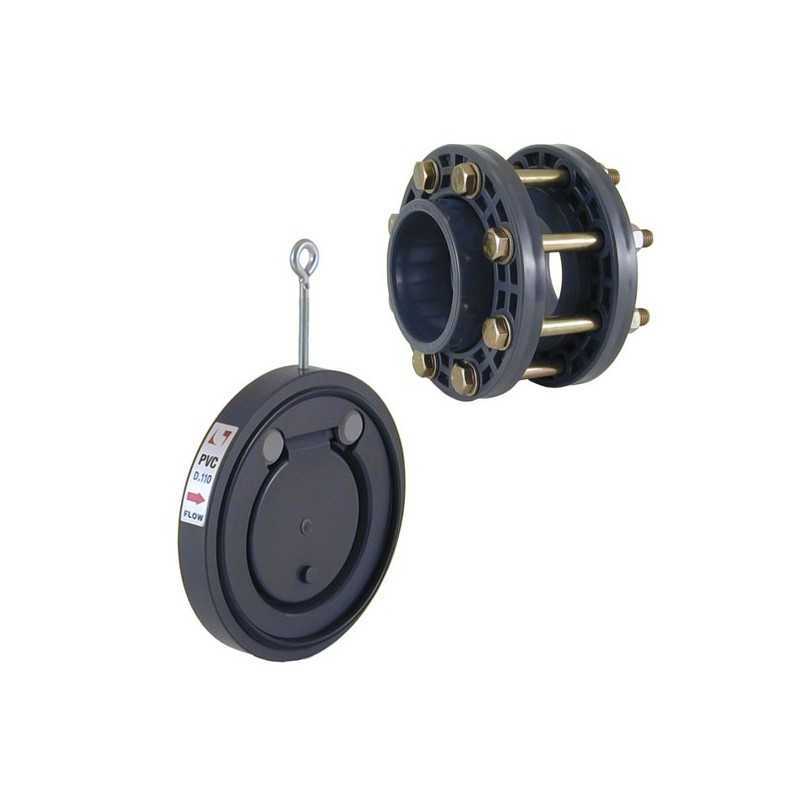
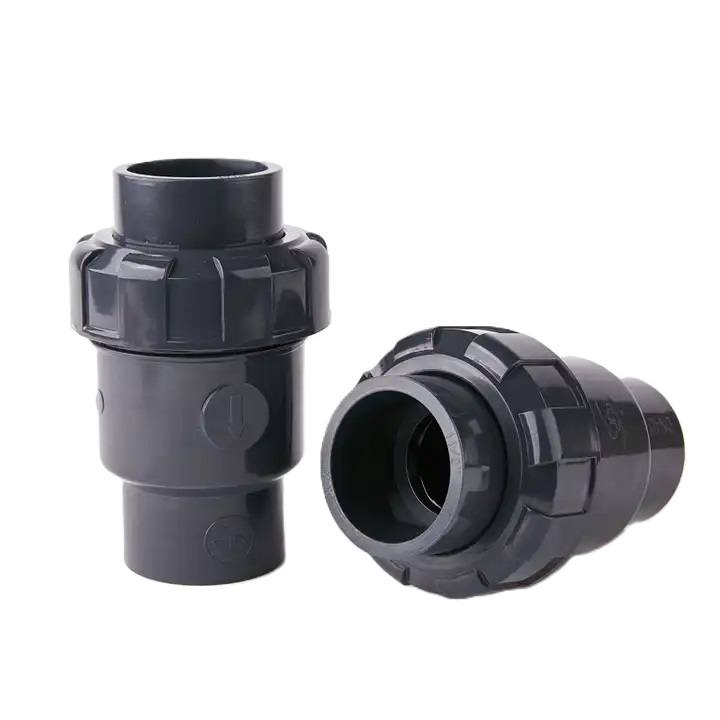
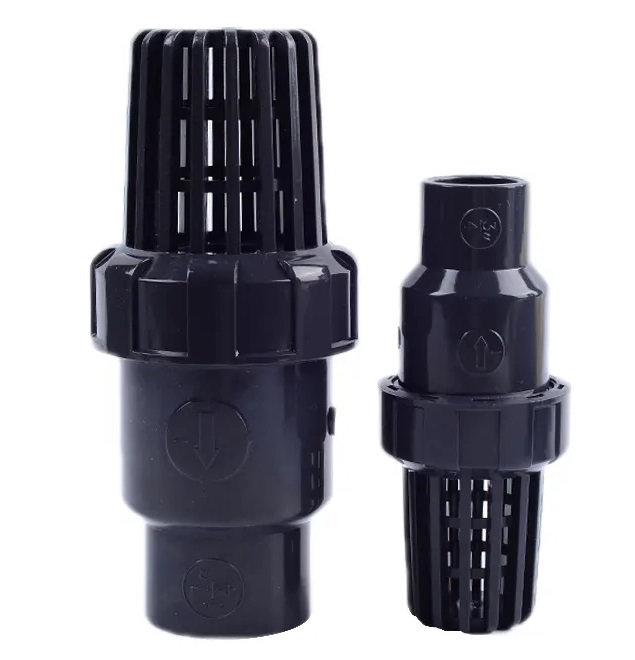
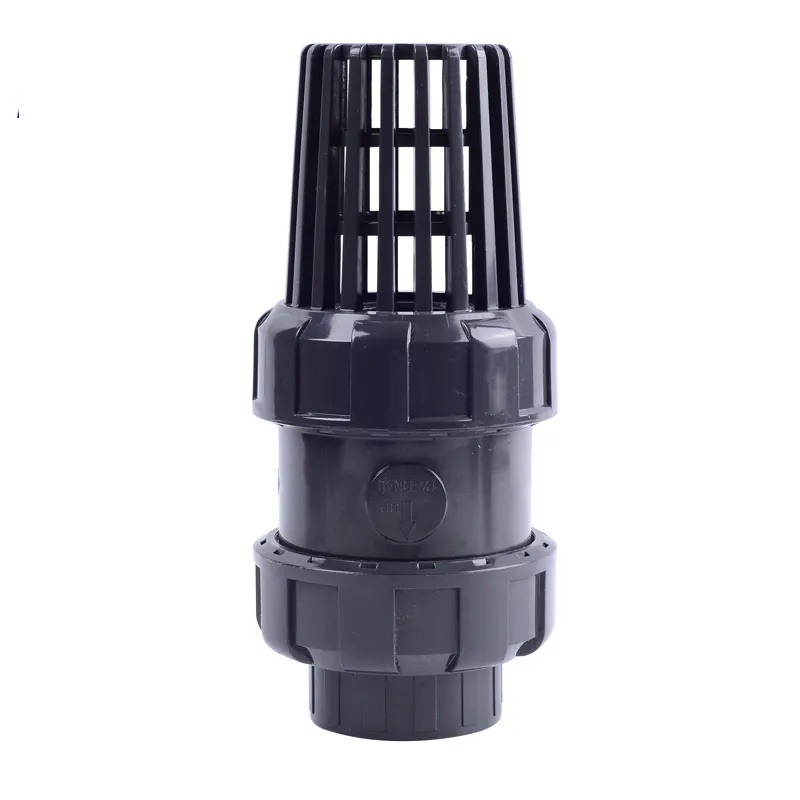
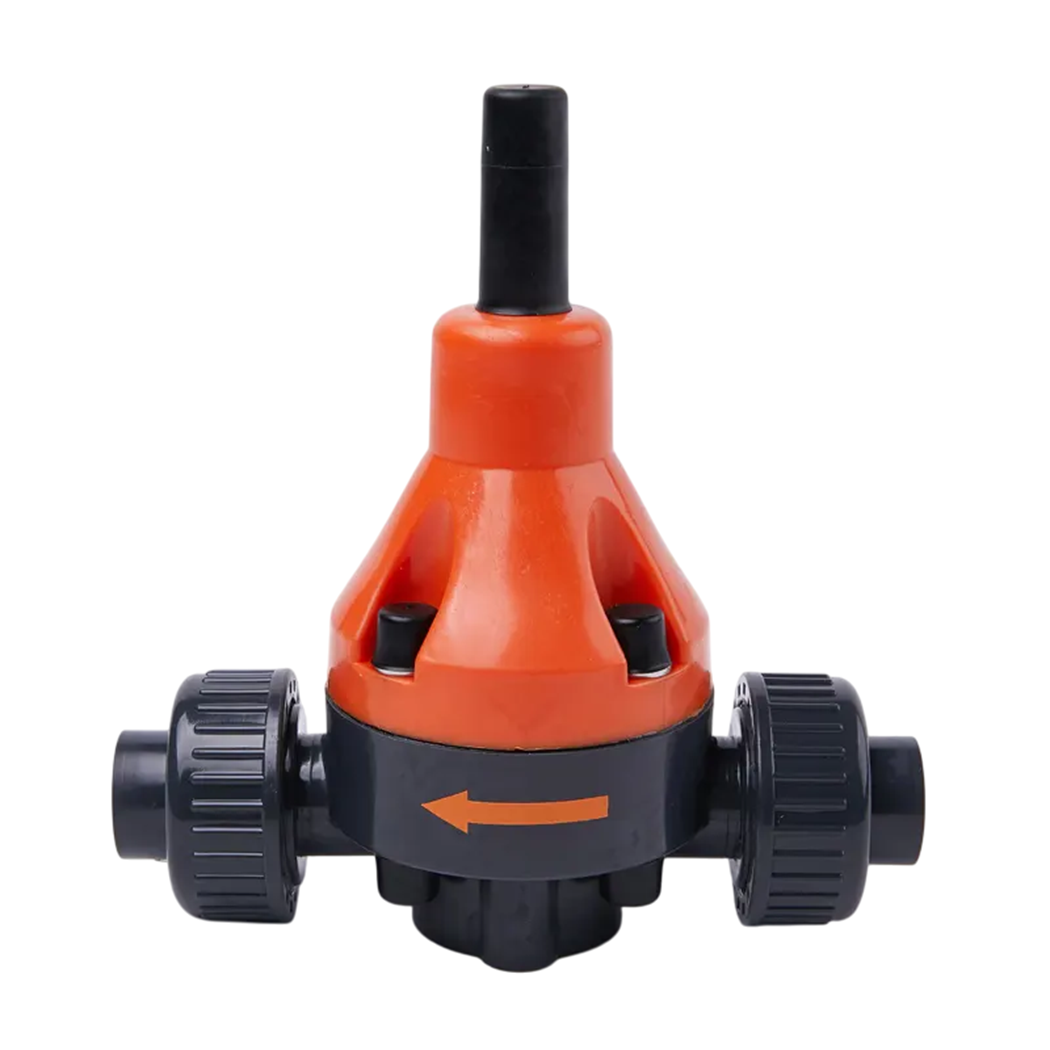
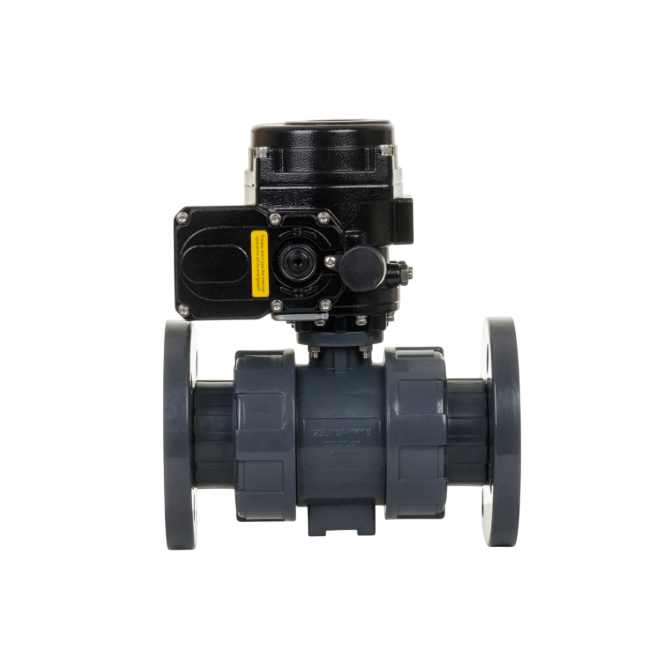
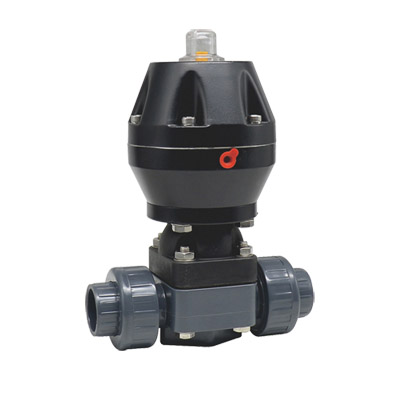
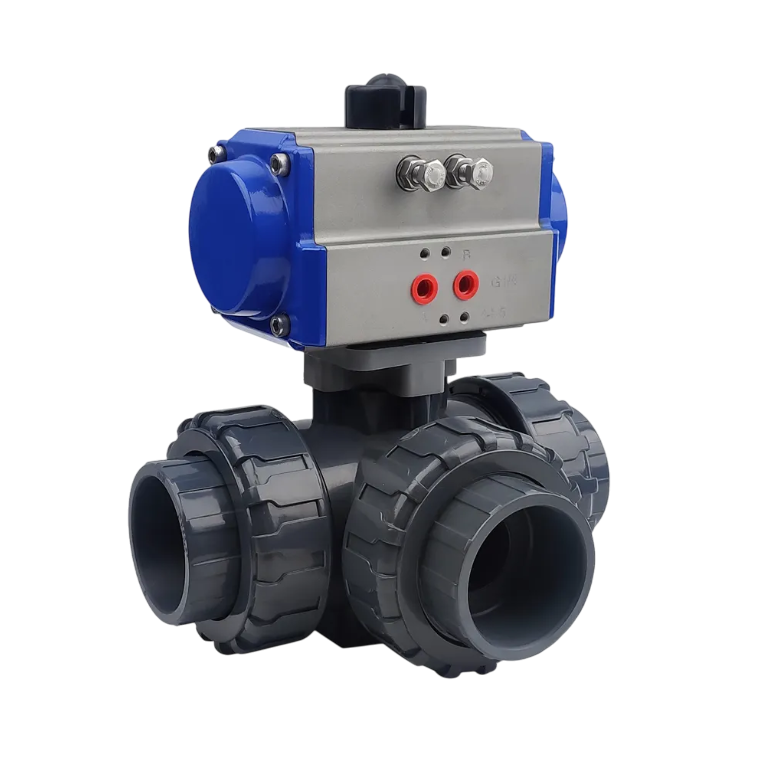
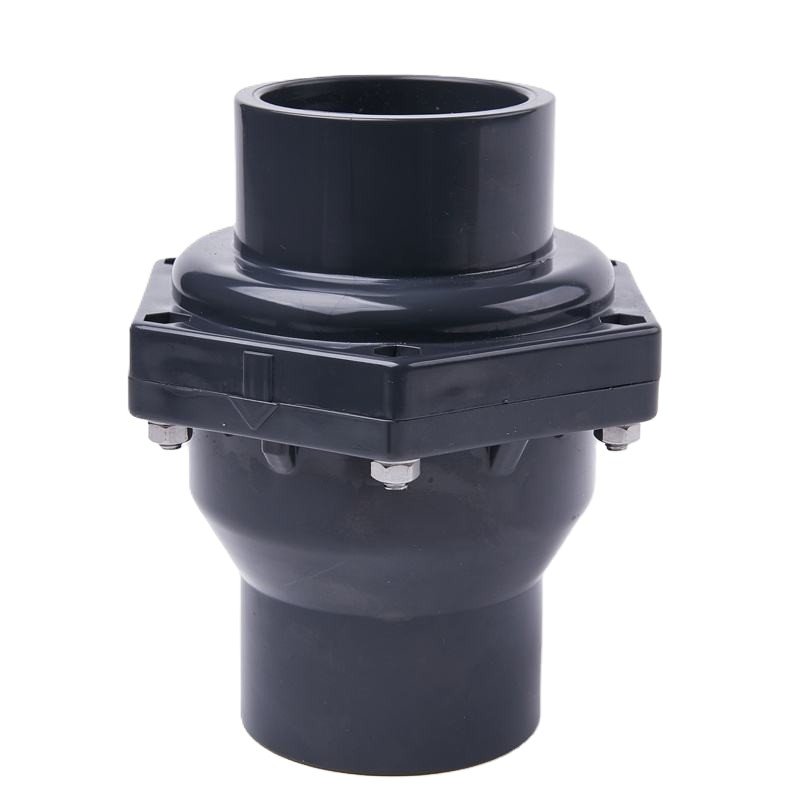
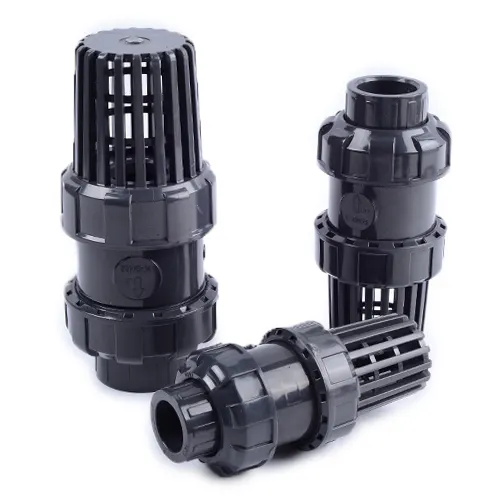
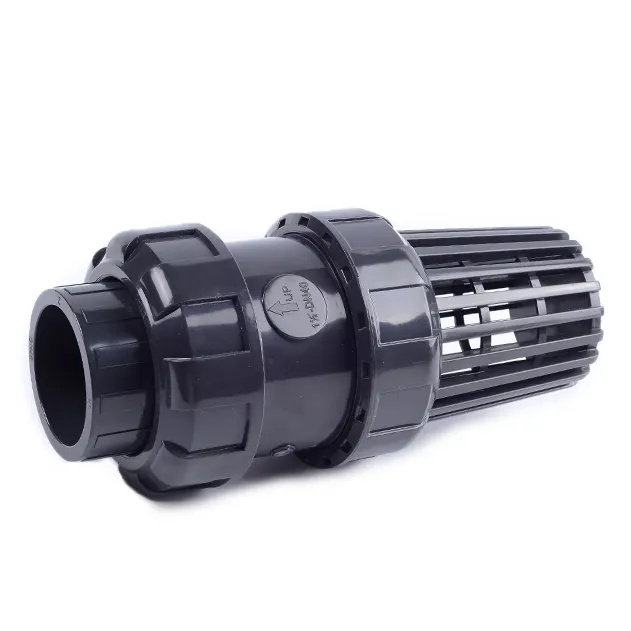
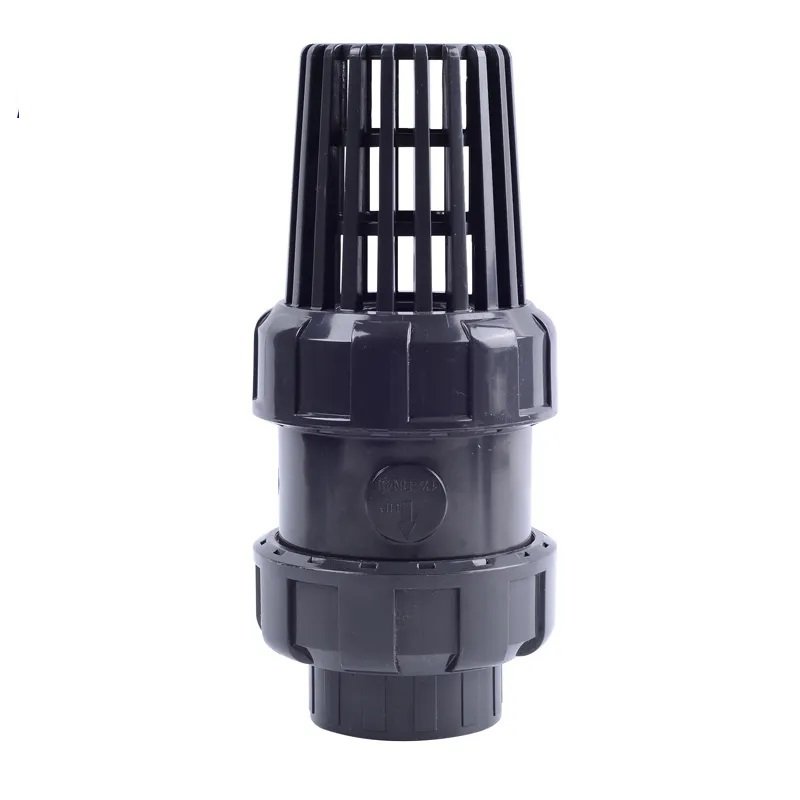
A UPVC double union foot valve is a specialized type of check valve, typically installed at the inlet of a pump's suction line, to prevent backflow and maintain the pump's prime. The "double union" design allows for easy installation, disassembly, and maintenance without cutting the pipe.
Features and how it works
- UPVC construction: The valve is made from unplasticized polyvinyl chloride (UPVC), a durable, lightweight, and corrosion-resistant plastic.
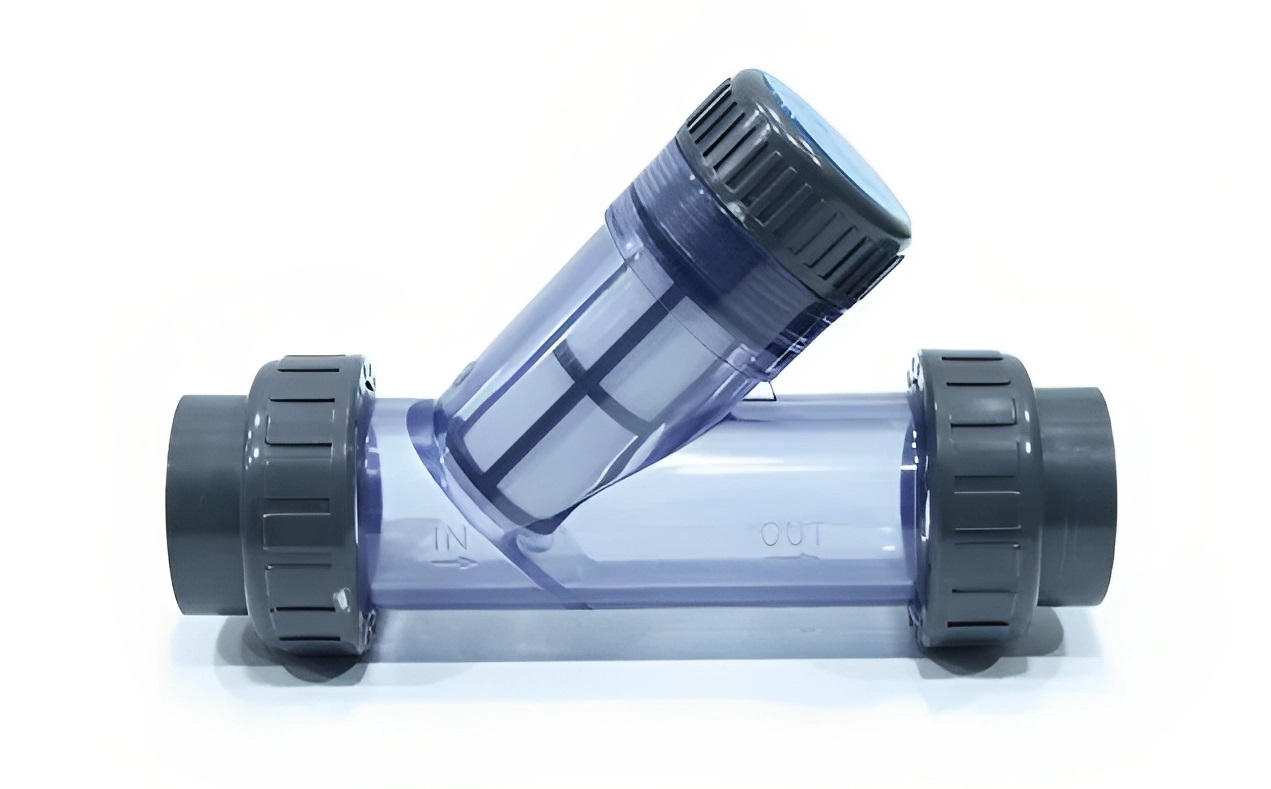
- Strainer: A mesh screen at the valve's inlet prevents large debris and particles from entering and damaging the pump.
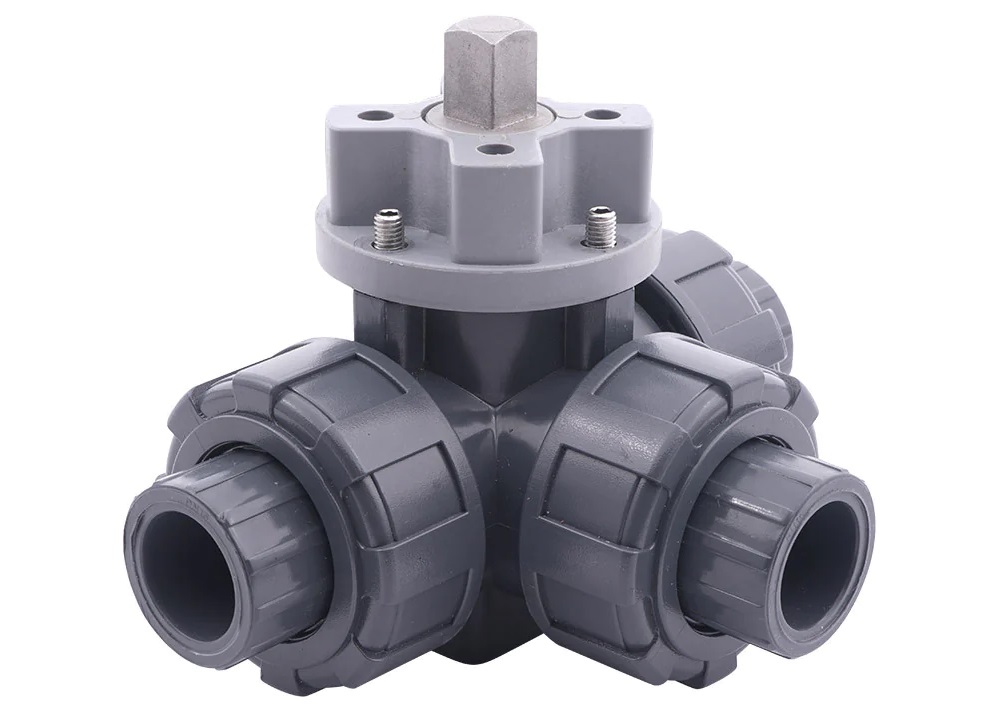
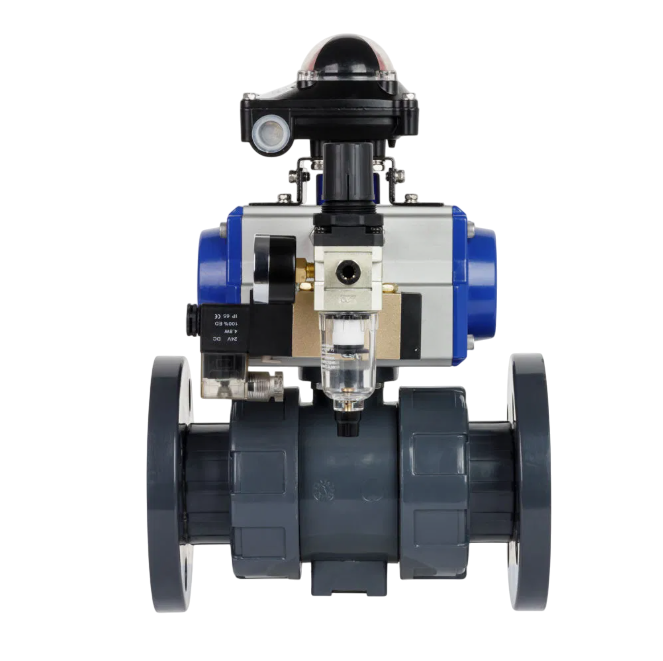
- Double union: Union connectors are located on both ends of the valve. These consist of a union nut that screws onto the valve body, connecting it to the pipe. This allows the valve to be removed for maintenance by simply unscrewing the nuts, which is a major advantage over permanently glued valves.
- Check valve mechanism: Inside the valve, a disc or a ball (depending on the design) sits on a seat.
- Flowing: When the pump is operating, the suction pressure forces the disc or ball off its seat, allowing fluid to flow in one direction.
- Preventing backflow: When the pump is turned off, the spring-assisted mechanism or the force of gravity pushes the disc or ball back against the seat, forming a tight seal that prevents fluid from flowing backward.
- Full bore flow: In some double union ball valve designs, the internal mechanism allows for a full bore flow when open, meaning there are no obstructions to catch debris and clog the valve.
Applications
UPVC double union foot valves are suitable for a wide range of applications that involve pumping liquids from a lower source, including:
- Water supply systems: Wells, boreholes, and reservoirs.
- Agricultural irrigation: Maintaining pump prime for consistent water delivery to crops.
- Wastewater treatment: Controlling the flow of sewage and other wastewater.
- Industrial and chemical processing: Handling various liquids, including concentrated acids and chemicals.
- Aquaculture and pisciculture: Water systems for fish farming.
- Swimming pool filtration: Ensuring proper water circulation.
Installation tips
- Install the valve at the submerged end of the suction pipe, fully below the water line.
- Use the union connectors to your advantage. If using threaded connections, apply Teflon tape to the male threads.
- If using solvent cement connections, follow the correct procedure:
- Apply primer and cement to both the pipe and the valve socket.
- To prevent cement from dripping into the operating parts of the valve, install it upright or remove the union ends and glue them to the pipe separately.
- Hand-tighten union nuts and avoid using tools.
- Always check the flow direction arrow on the valve body and install it correctly to prevent internal parts from blowing out under pressure.