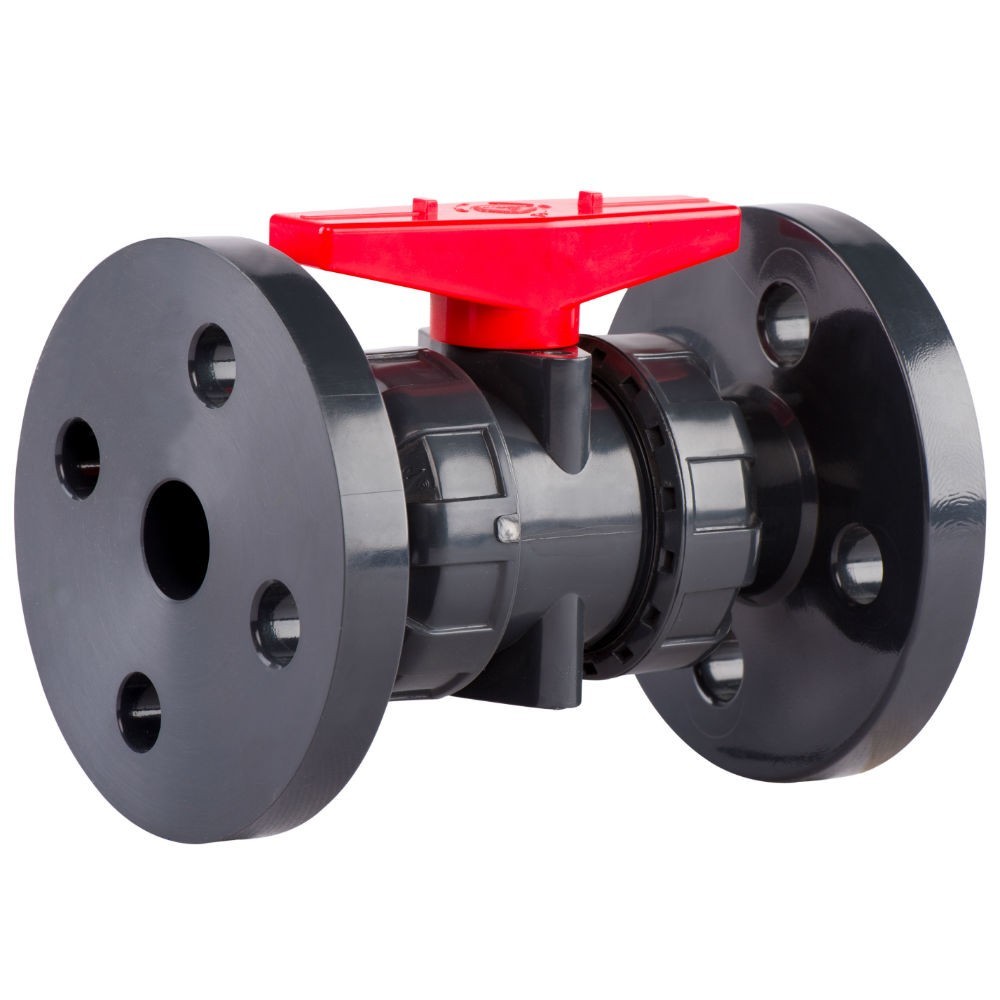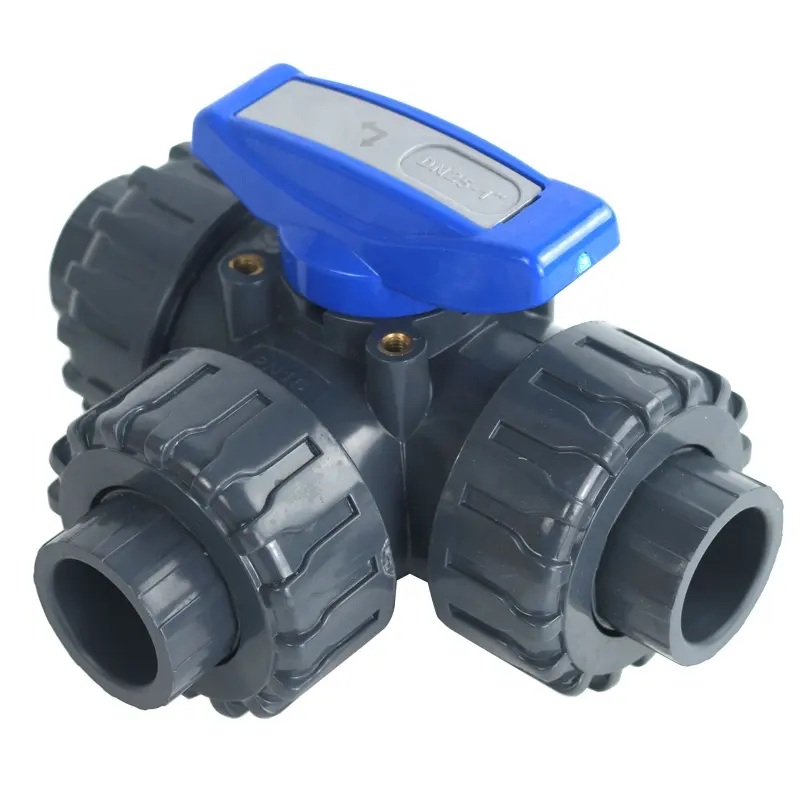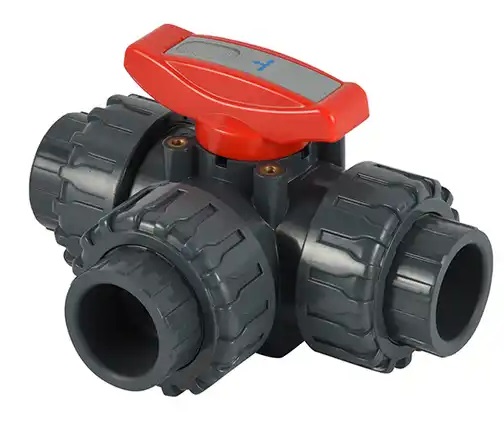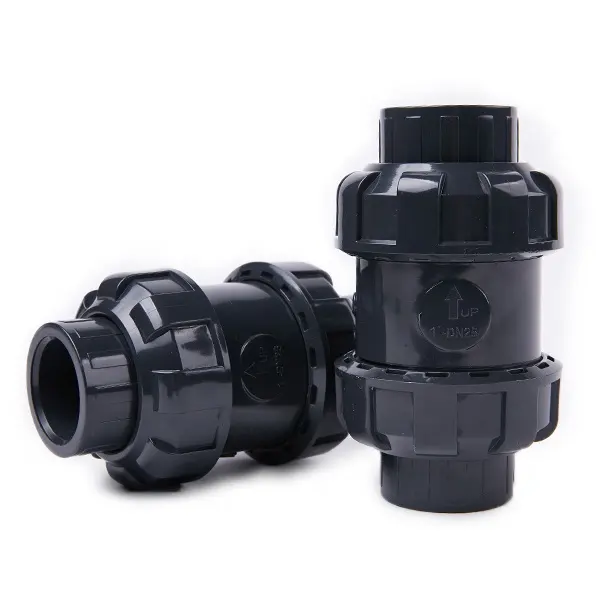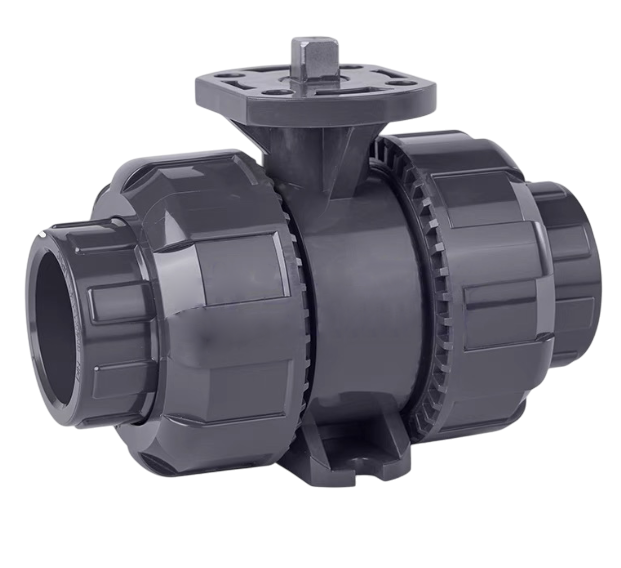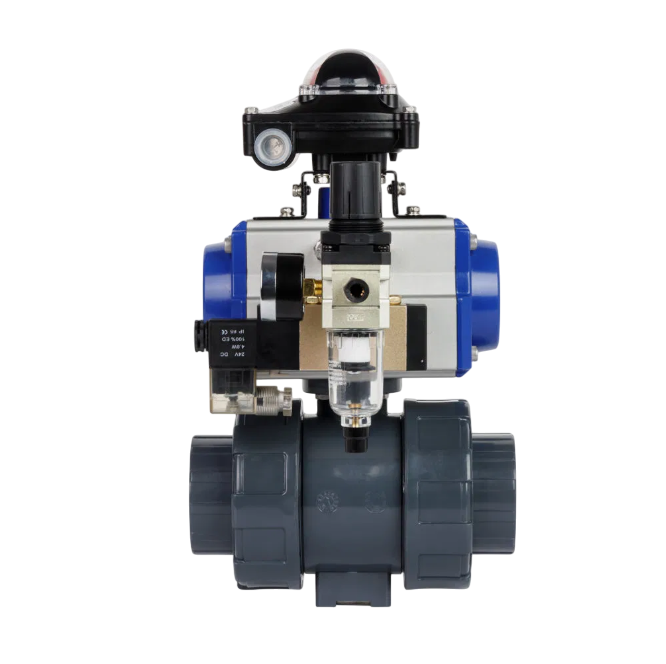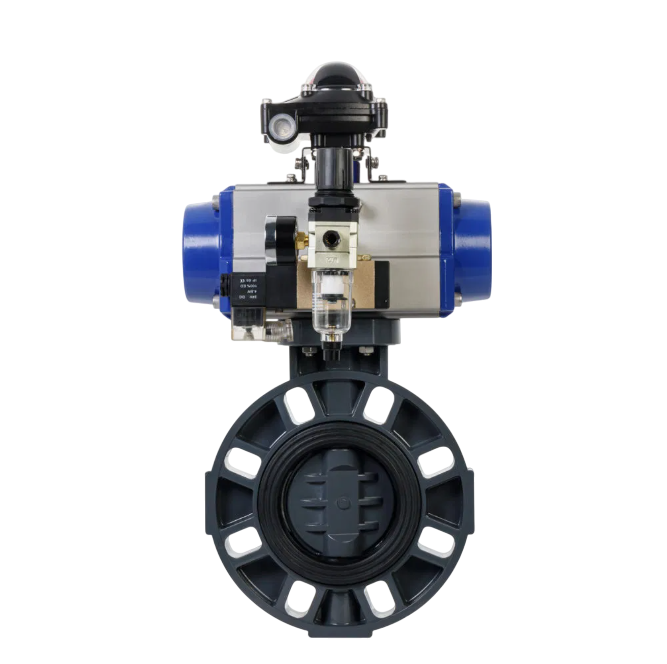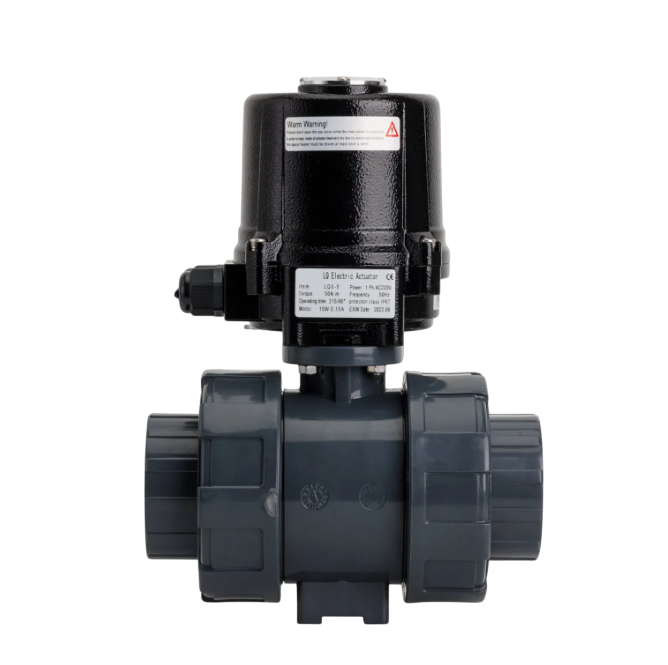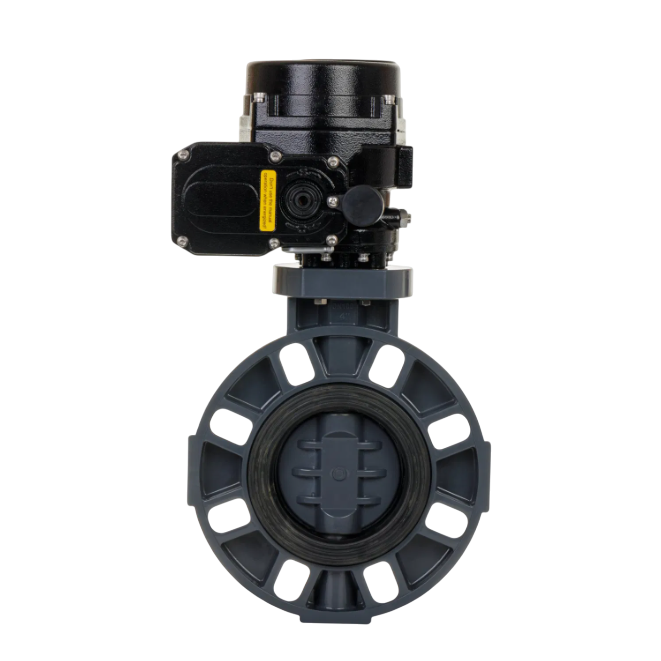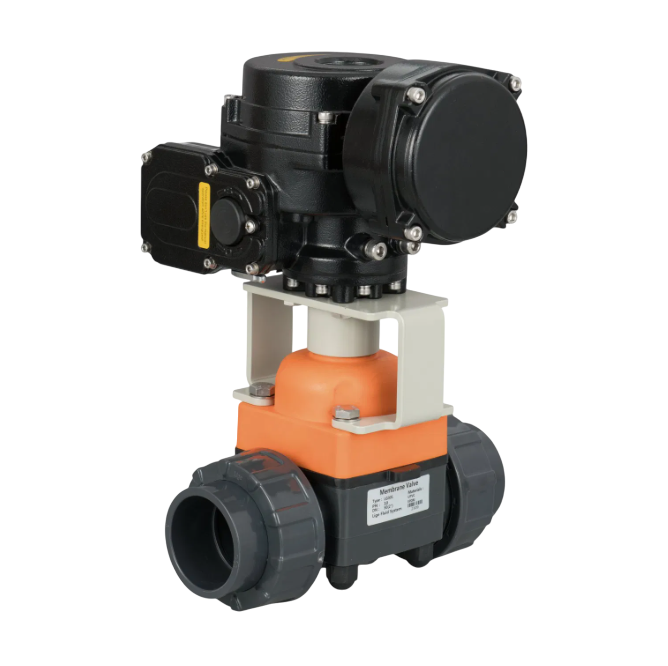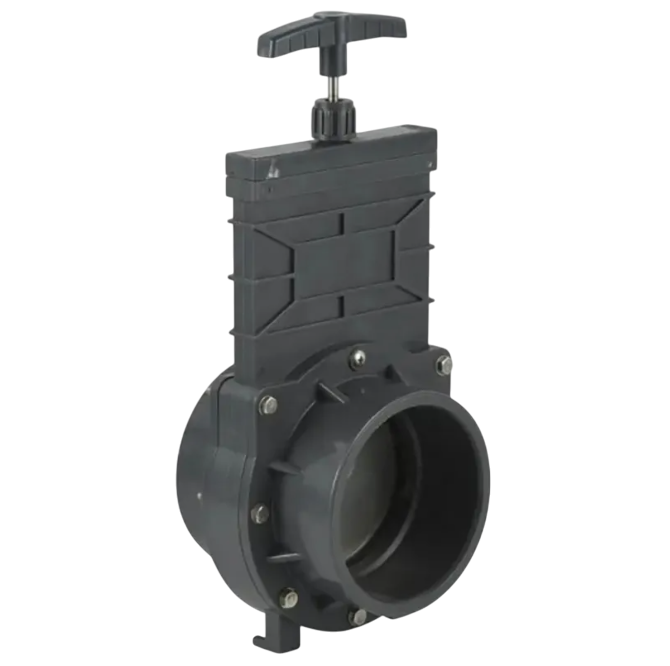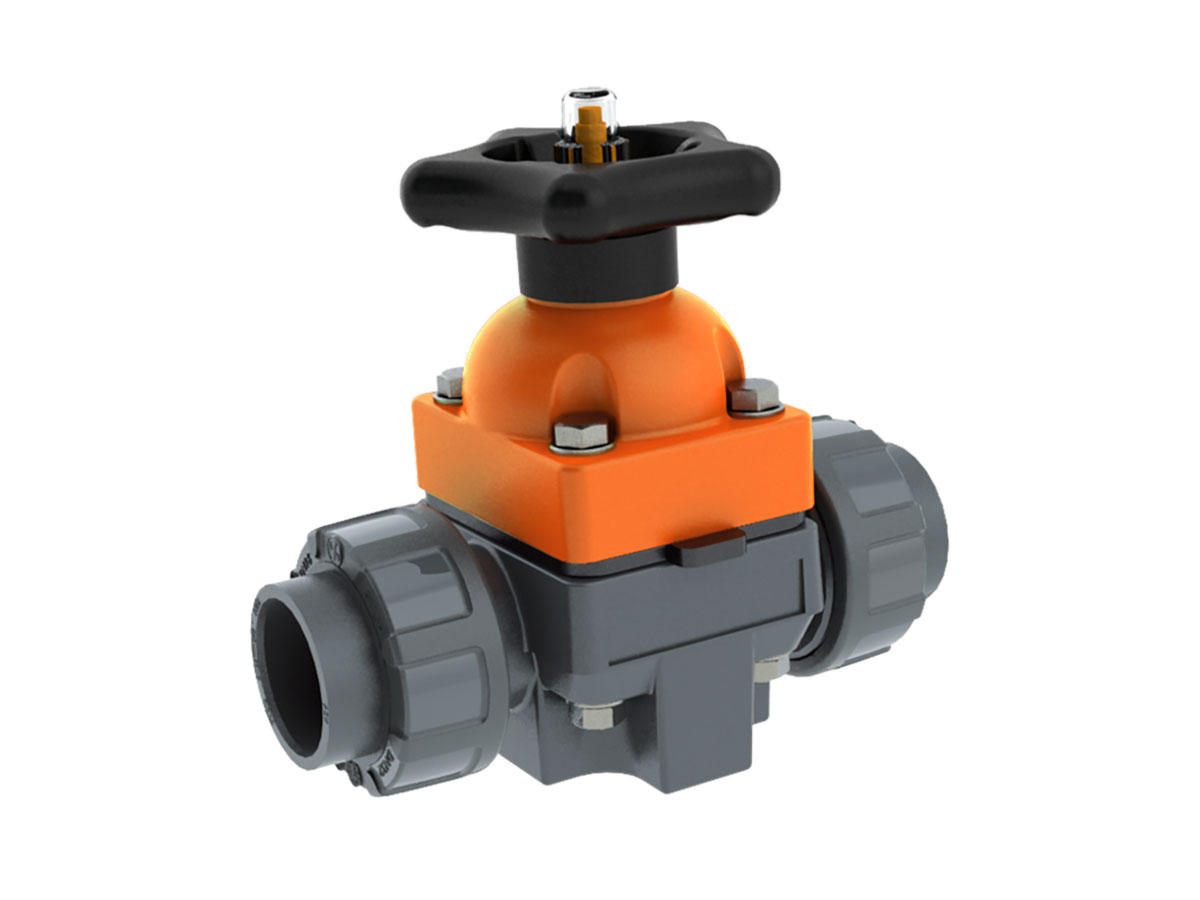
| FIG. | PARTS | MATERIAL | QTY |
| 1 | Body | UPVC | 01 |
| 2 | Ball | UPVC | 01 |
| 3 | STEM | UPVC/SS | 01 |
| 4 | Ball Seat | PTFE | 02 |
| 5 | Body O Ring | EPDM/NBR | 03 |
| 6 | Body Connector O Ring | EPDM/NBR | 03 |
| 7 | Body Connector | UPVC | 03 |
| 8 | Connector | UPVC | 03 |
| 9 | Connector Nut | UPVC | 03 |
| 10 | Stem O Ring | EPDM/NBR | 01 |
| 11 | Body O Ring | EPDM/NBR | 01 |
| 12 | Bracket Pad | ISO 5211 | 01 |
| 13 | Actuator | STD | 01 |

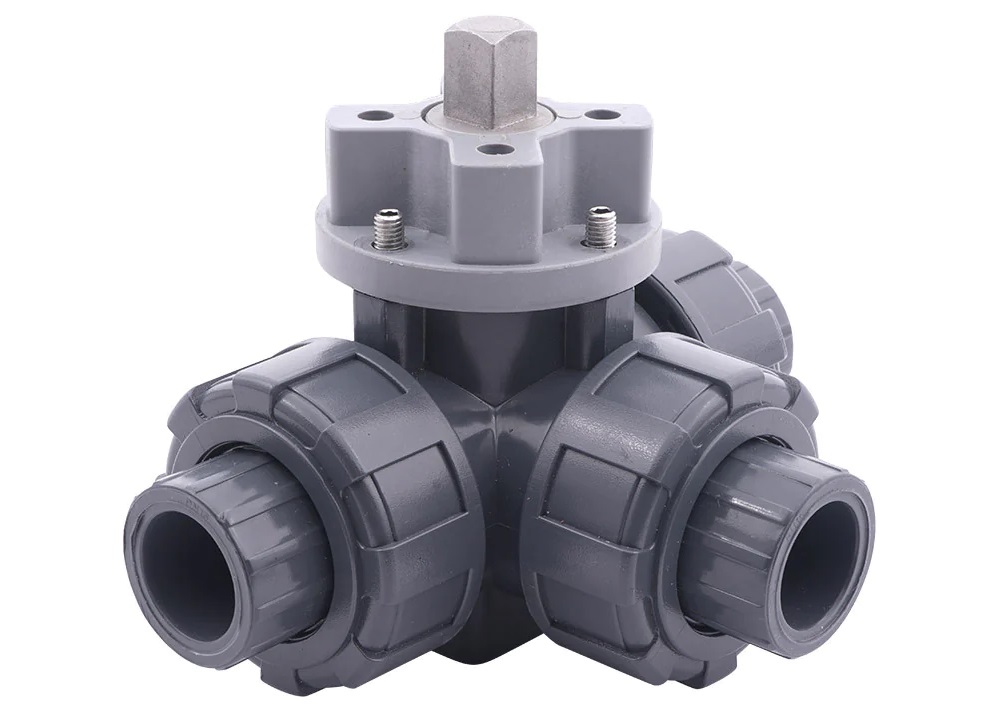
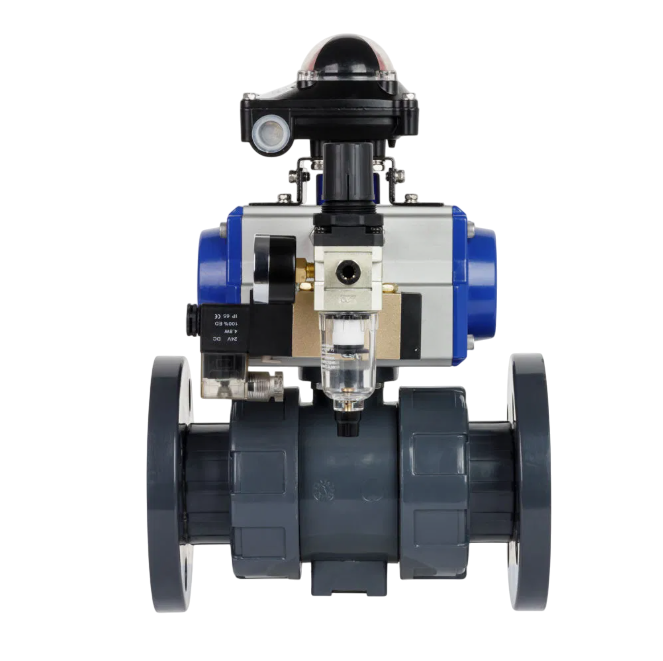
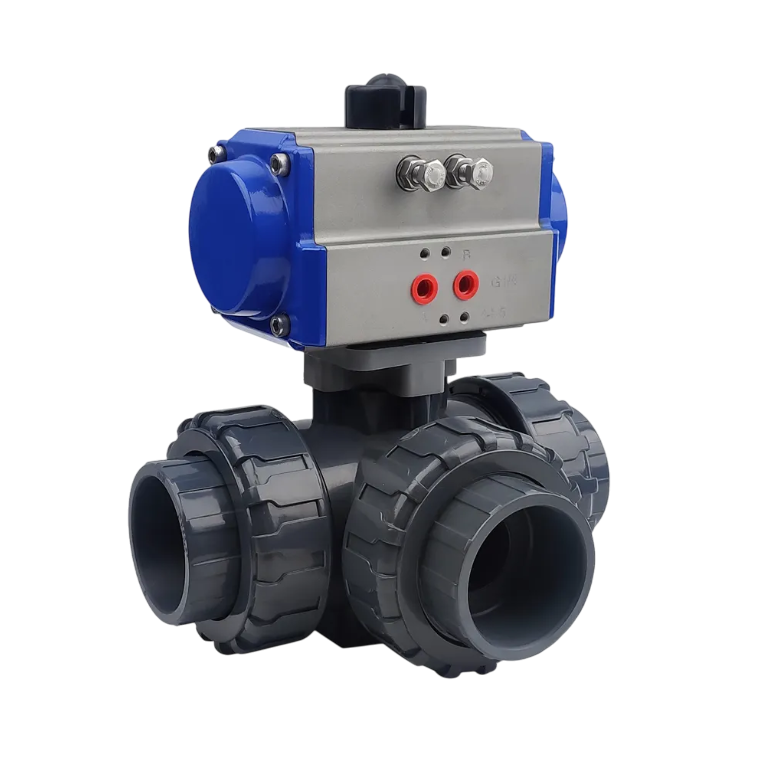
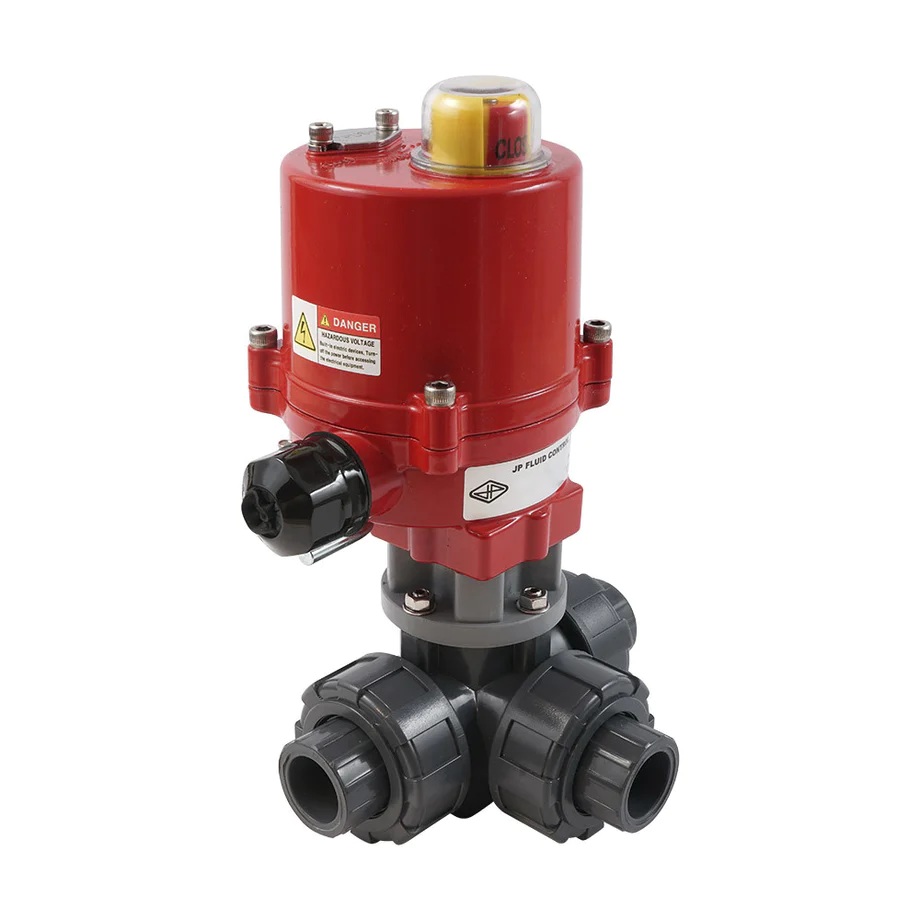
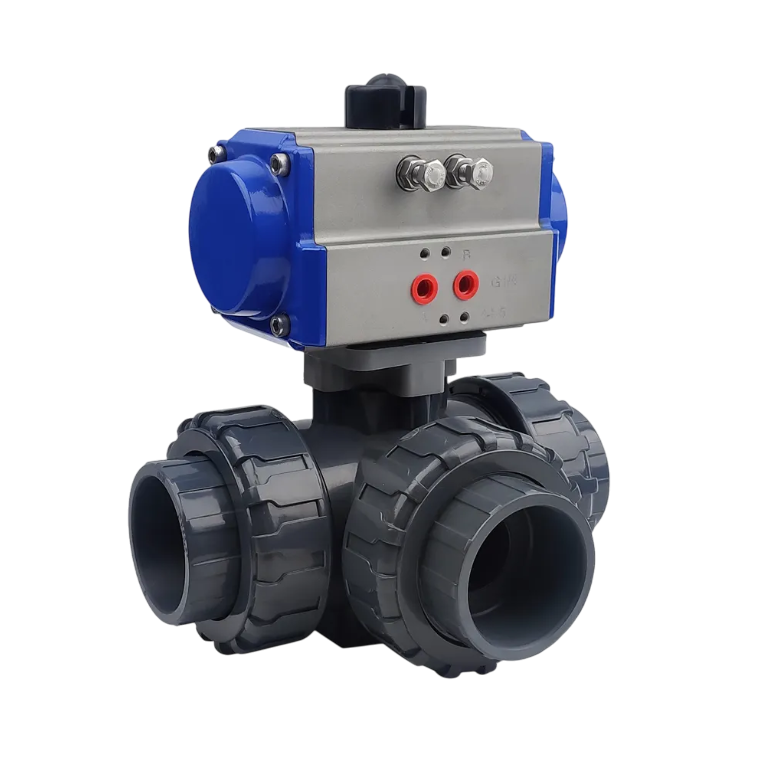
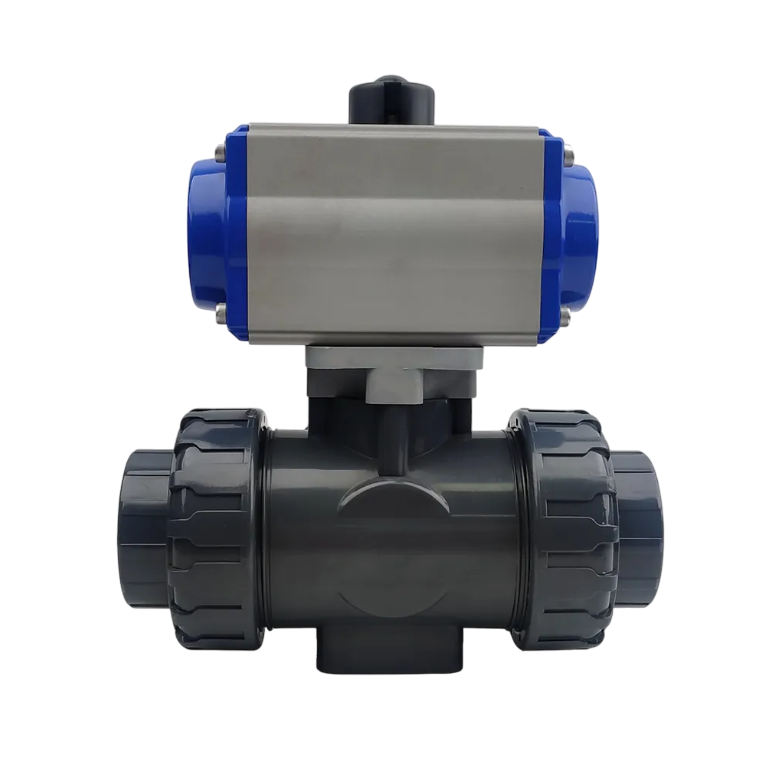
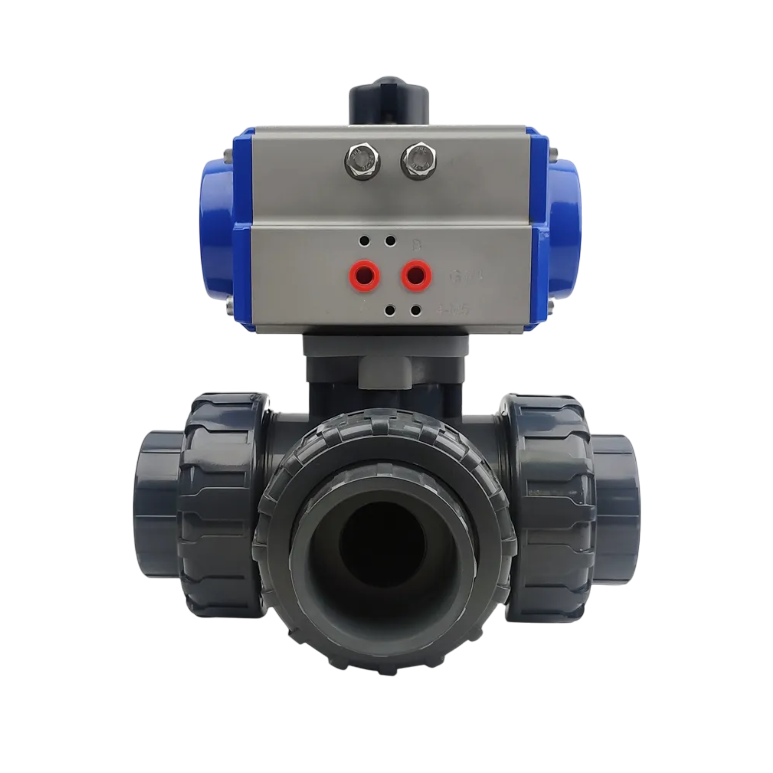
Pneumatic actuator operated UPVC (Unplasticized Polyvinyl Chloride) three-way ball valves are a type of valve commonly used in industrial applications for controlling, diverting, or mixing fluid flows.
Pneumatic actuated UPVC (Unplasticized Polyvinyl Chloride) three-way ball valves are essential components in fluid control systems across a variety of industries. These valves combine the durability and chemical resistance of UPVC with the precision and efficiency of pneumatic actuation for automated control of fluid flow.
Understanding the components
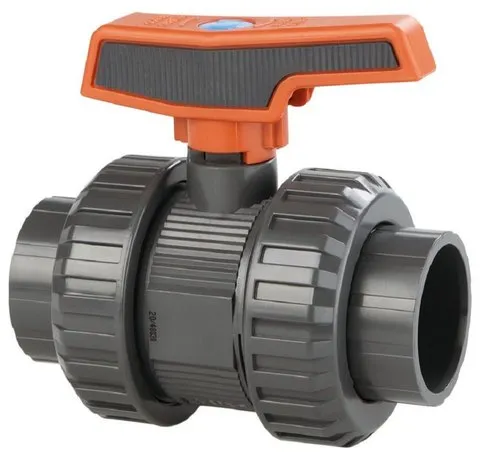
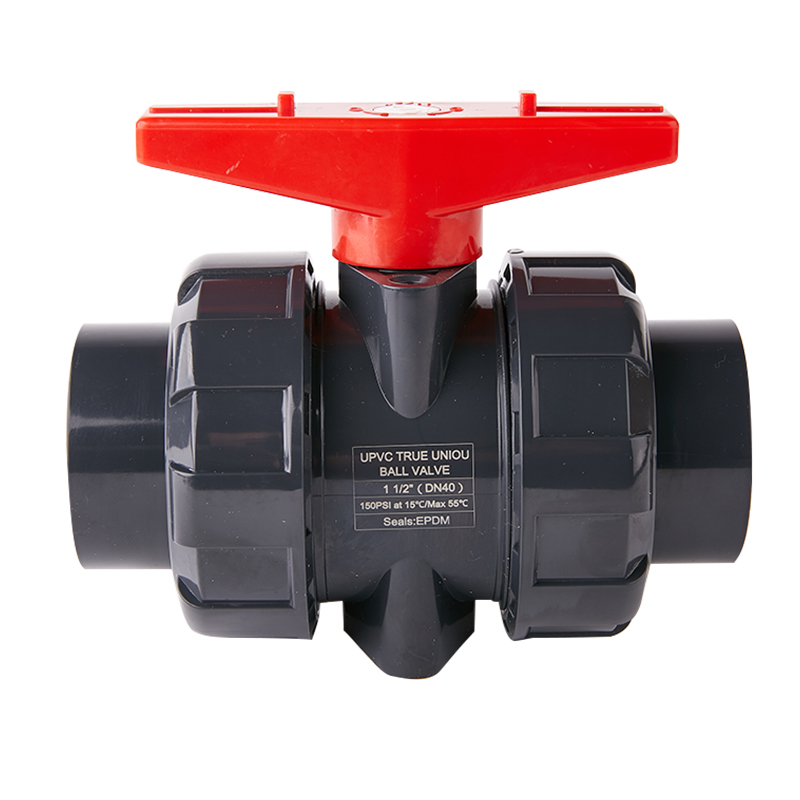
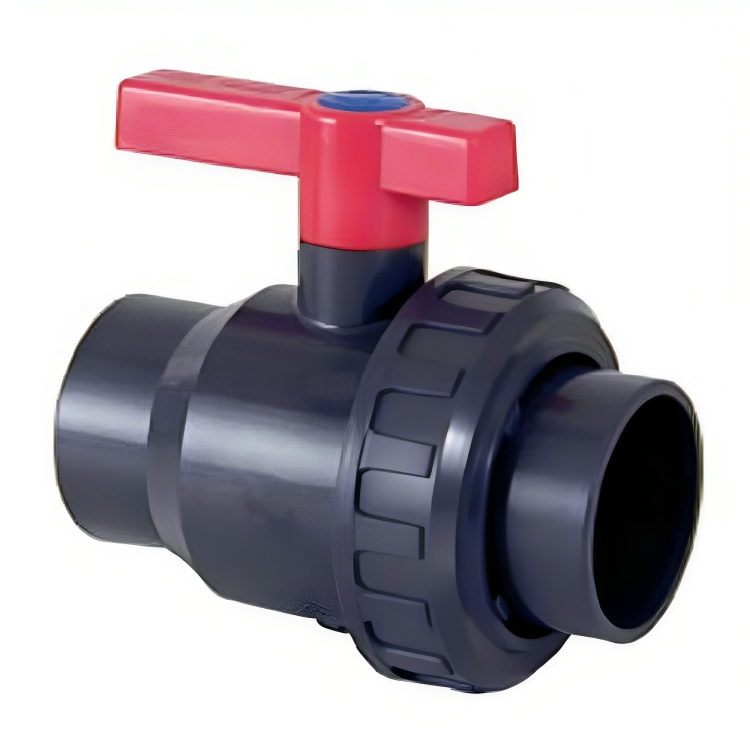
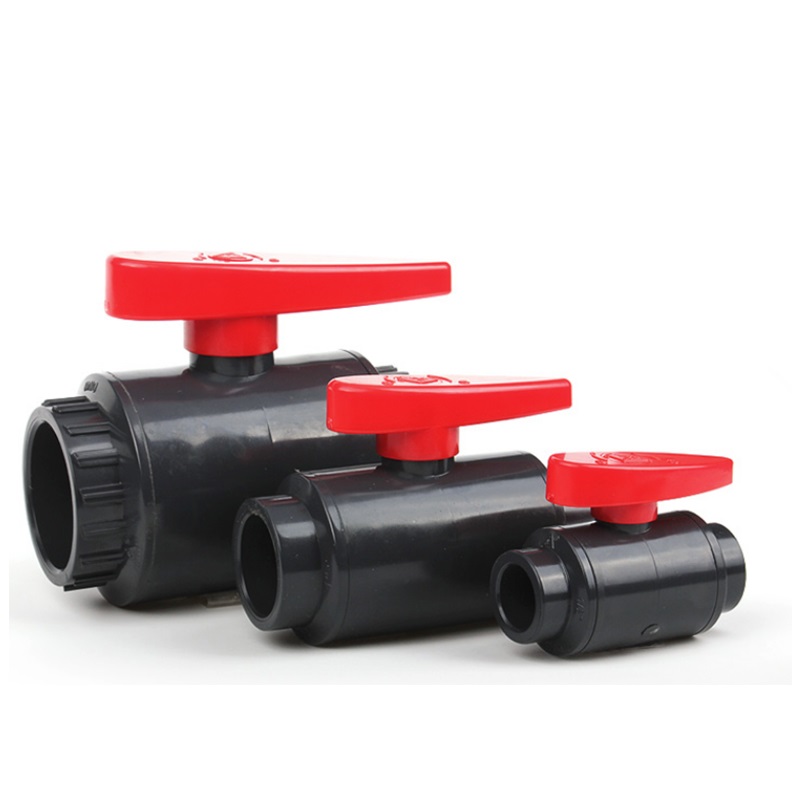
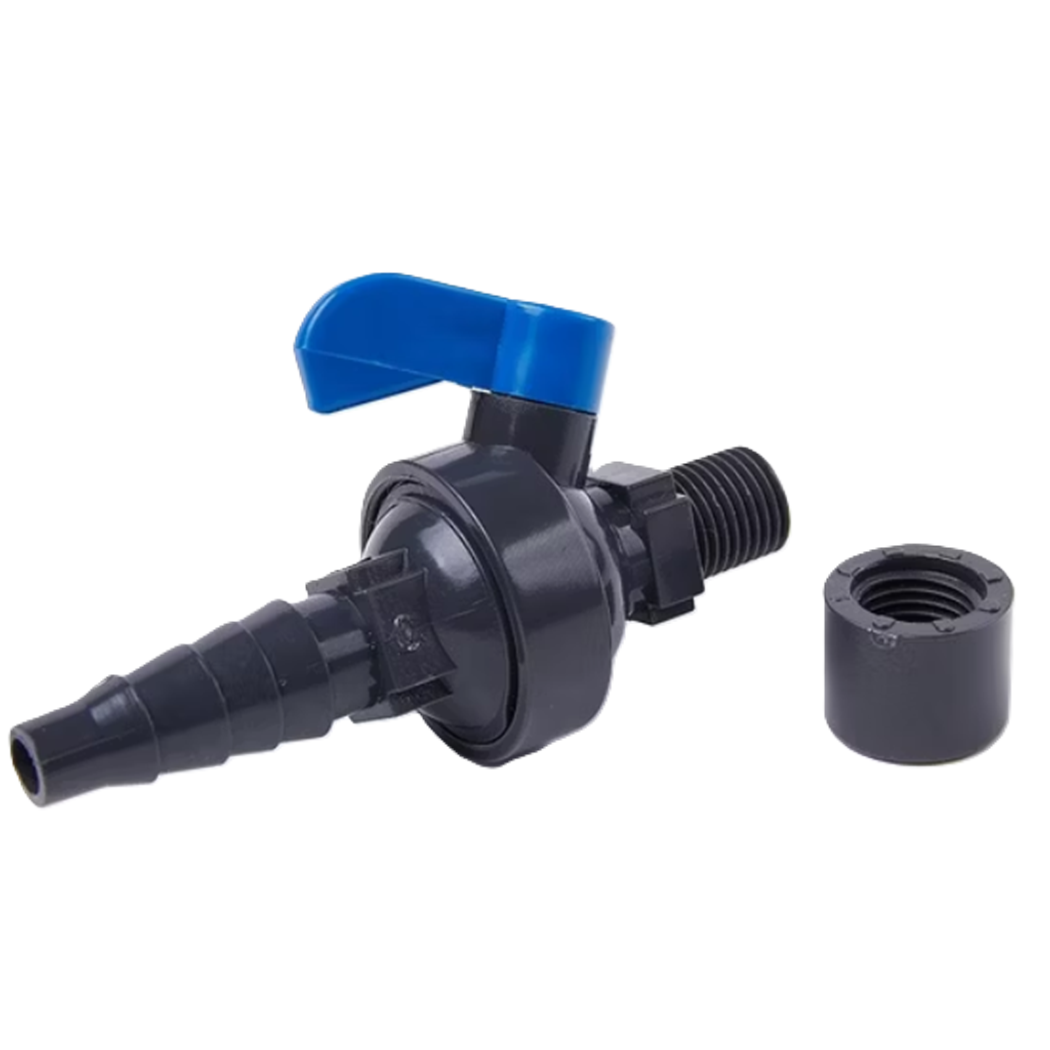
- UPVC Ball Valve: The core component, made of UPVC, houses a ball with either an L-shaped or T-shaped bore. The ball rotates to control, divert, or mix fluid streams. UPVC offers advantages like corrosion resistance, light weight, and ease of installation.
- Pneumatic Actuator: This device uses compressed air to generate the rotational motion needed to operate the ball valve. Pneumatic actuators can be either single-acting (spring return) or double-acting.
Key features and benefits
- Durability and Chemical Resistance: UPVC ensures resistance to corrosion and various chemicals, making it suitable for harsh environments.
- Efficient Operation: Pneumatic actuation allows for quick and precise valve opening and closing, enabling remote control and integration into automated systems.
- Versatility: The 3-way design enables complex flow control, including diverting flow to multiple destinations, mixing different fluids, or isolating specific sections of a system.
- Cost-Effectiveness: UPVC valves are generally more affordable than metal valves and require less maintenance.
- Leak-proof Design: The use of materials like PTFE for ball seats helps ensure a tight seal and minimize leakage.
L-port vs. T-port configuration
The internal configuration of the ball determines the valve's functionality:
- L-port: Designed primarily for diverting flow, allowing connection between two ports while the third remains closed. L-ports as being able to connect two orthogonal pipes, but cannot keep the third pipe connected at the same time. Offers simpler operation and lower cost.
- T-port: Provides both diverting and mixing capabilities, allowing flow between any three ports. Offers greater flexibility for complex flow management but can be more expensive and complex to design and install.
How they work
The valve consists of a UPVC body, a three-way ball, and a pneumatic actuator. The pneumatic actuator uses compressed air to rotate the ball, which has a T- or L-shaped bore. By aligning the bore with the desired ports, the valve can divert, mix, or shut off the fluid flow.
Applications
Pneumatic actuator operated UPVC three-way ball valves are employed in various industries:
- Water Treatment: Regulating water flow and managing chemical dosing systems.
- Chemical Processing: Controlling and diverting chemicals to different parts of the system.
- Agriculture: Managing water flow in irrigation systems.
- Industrial Systems: Controlling flow in various applications, including oil and gas pipelines, heating systems, and manufacturing facilities.
- HVAC systems: Regulating refrigerant or water flow for temperature control.
- Power generation: Controlling flow in boiler feedwater and cooling water systems.
Important considerations.
When choosing a pneumatic actuator UPVC three-way ball valve, factors like valve size, actuator type, operating pressure, temperature range, fluid media, and compatibility with the control system are crucial for ensuring the right fit for the specific application. Consulting manufacturer specifications and seeking expert advice can help in making an informed decision.