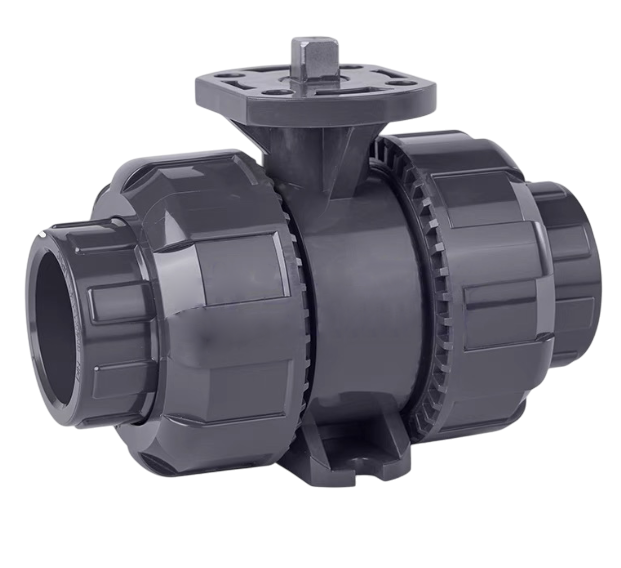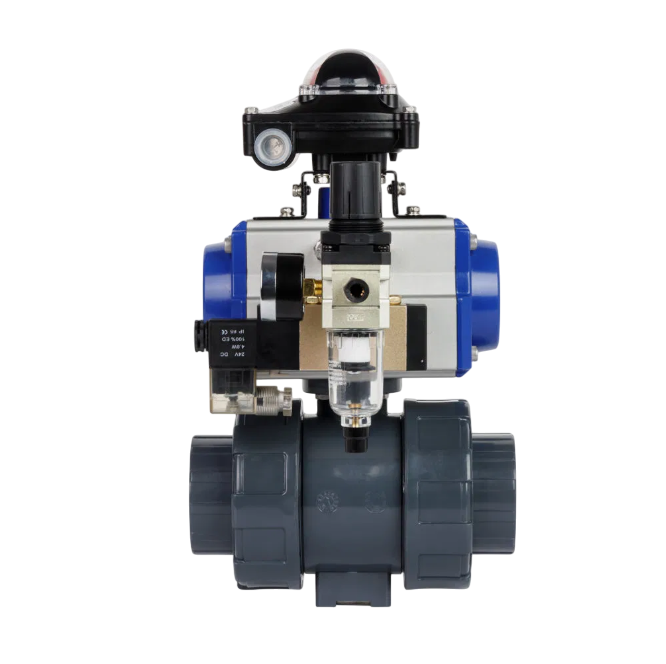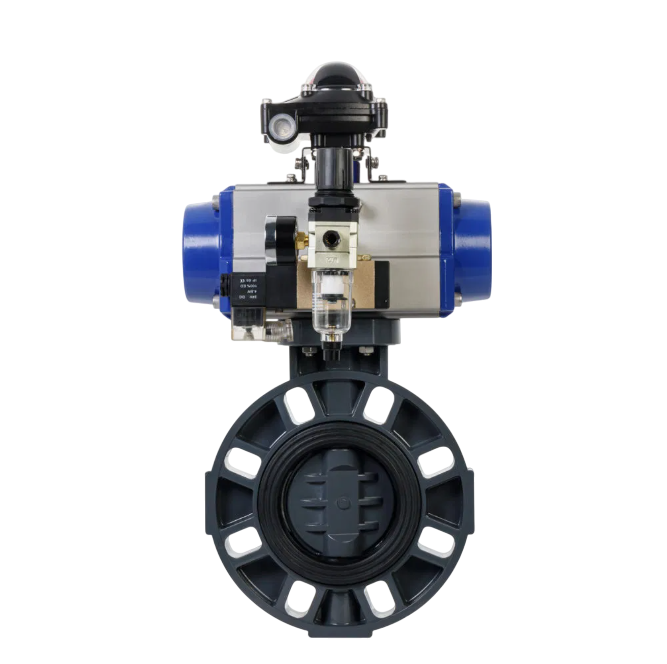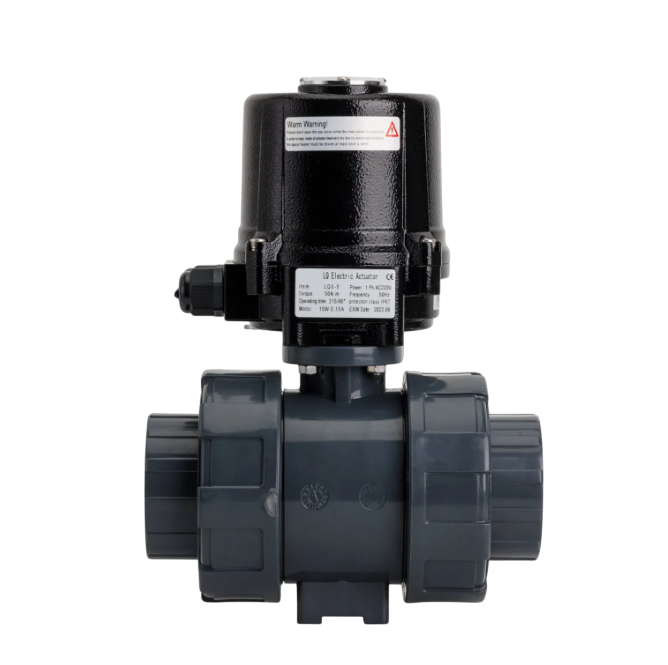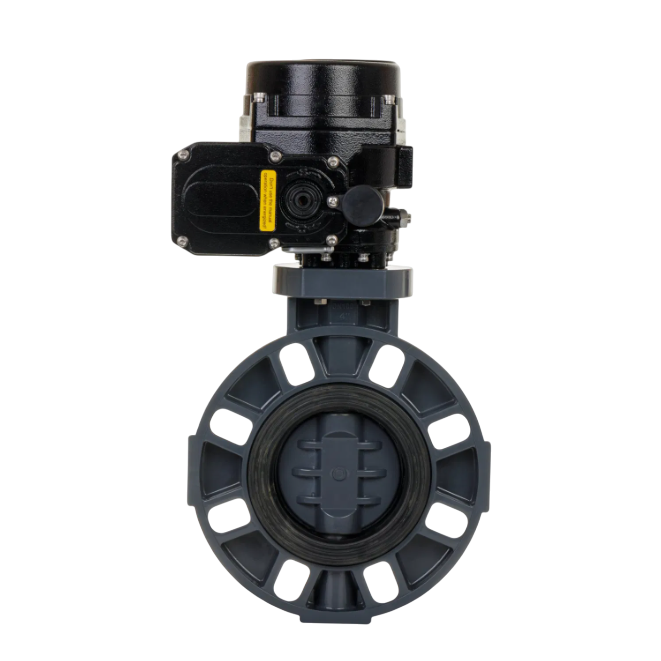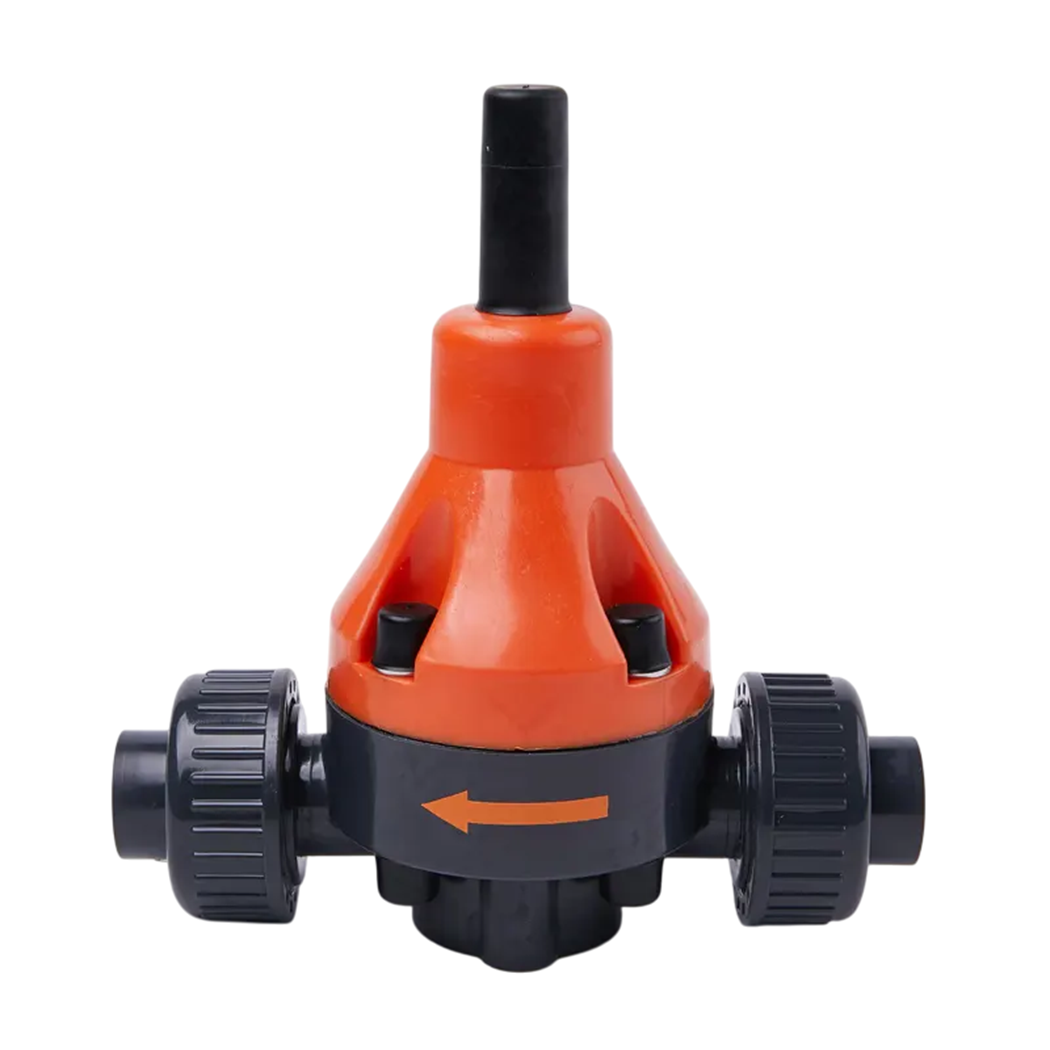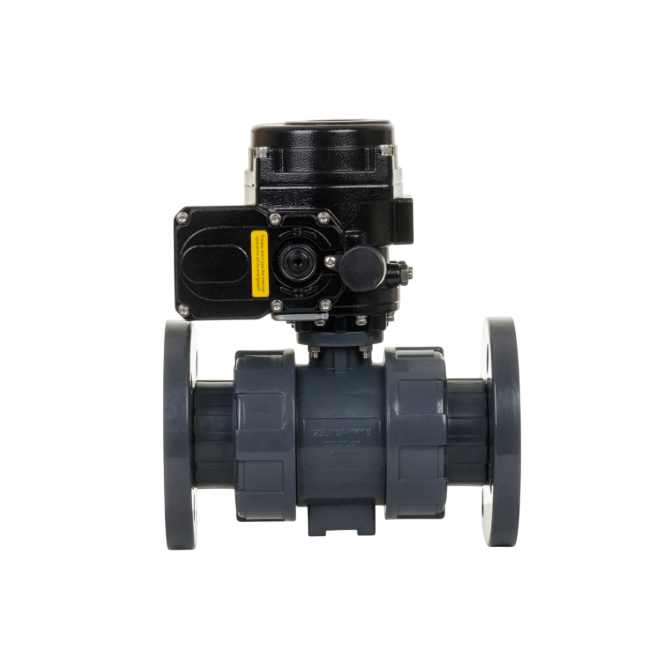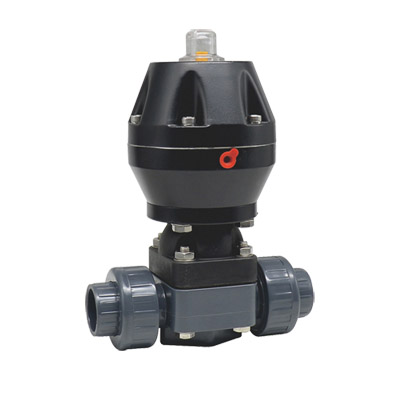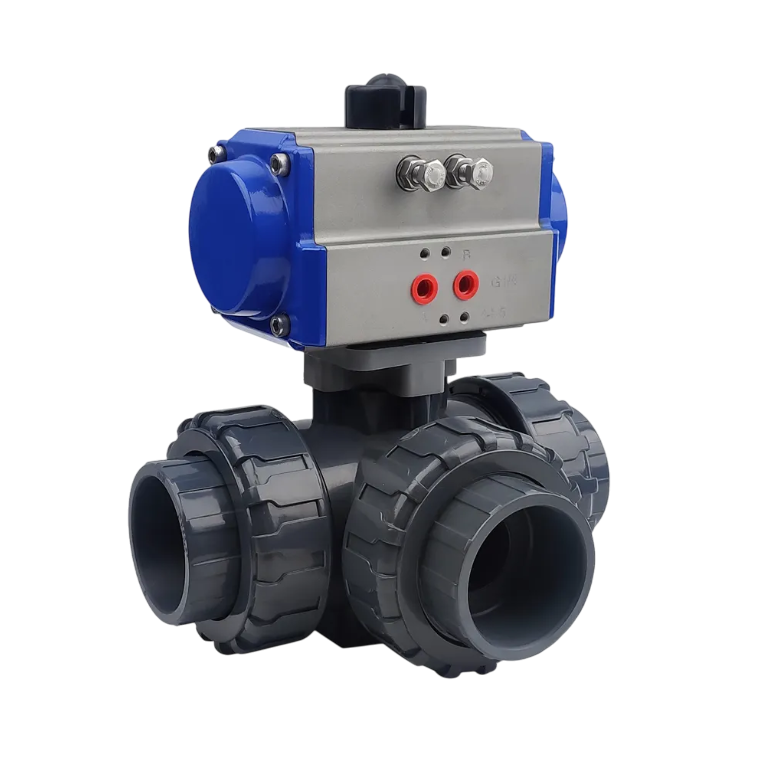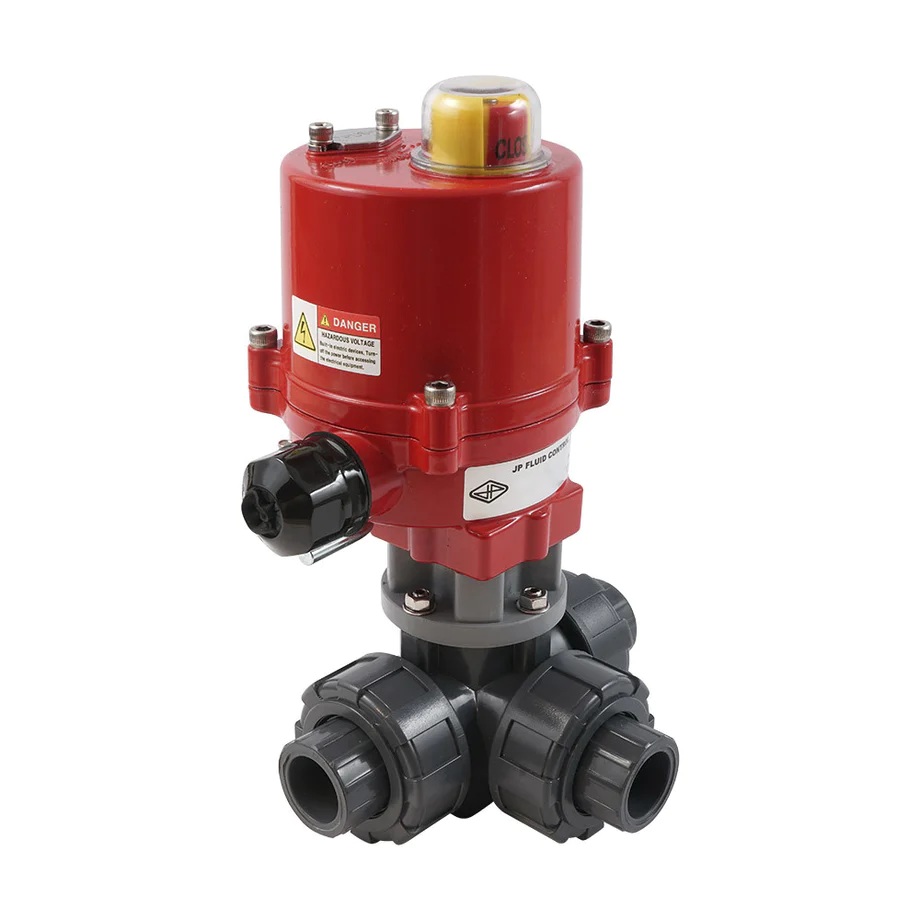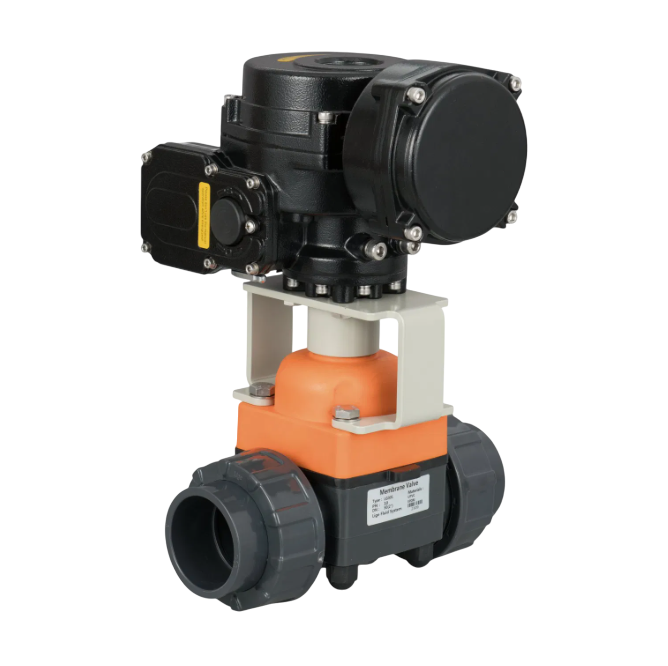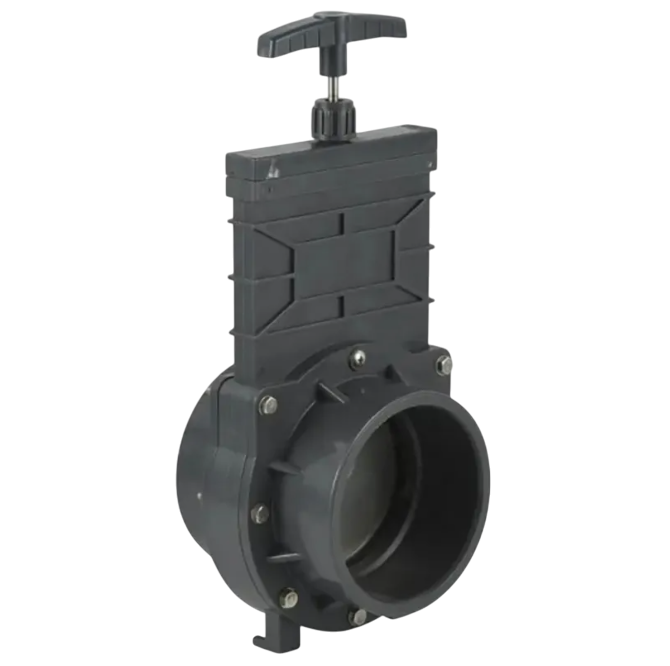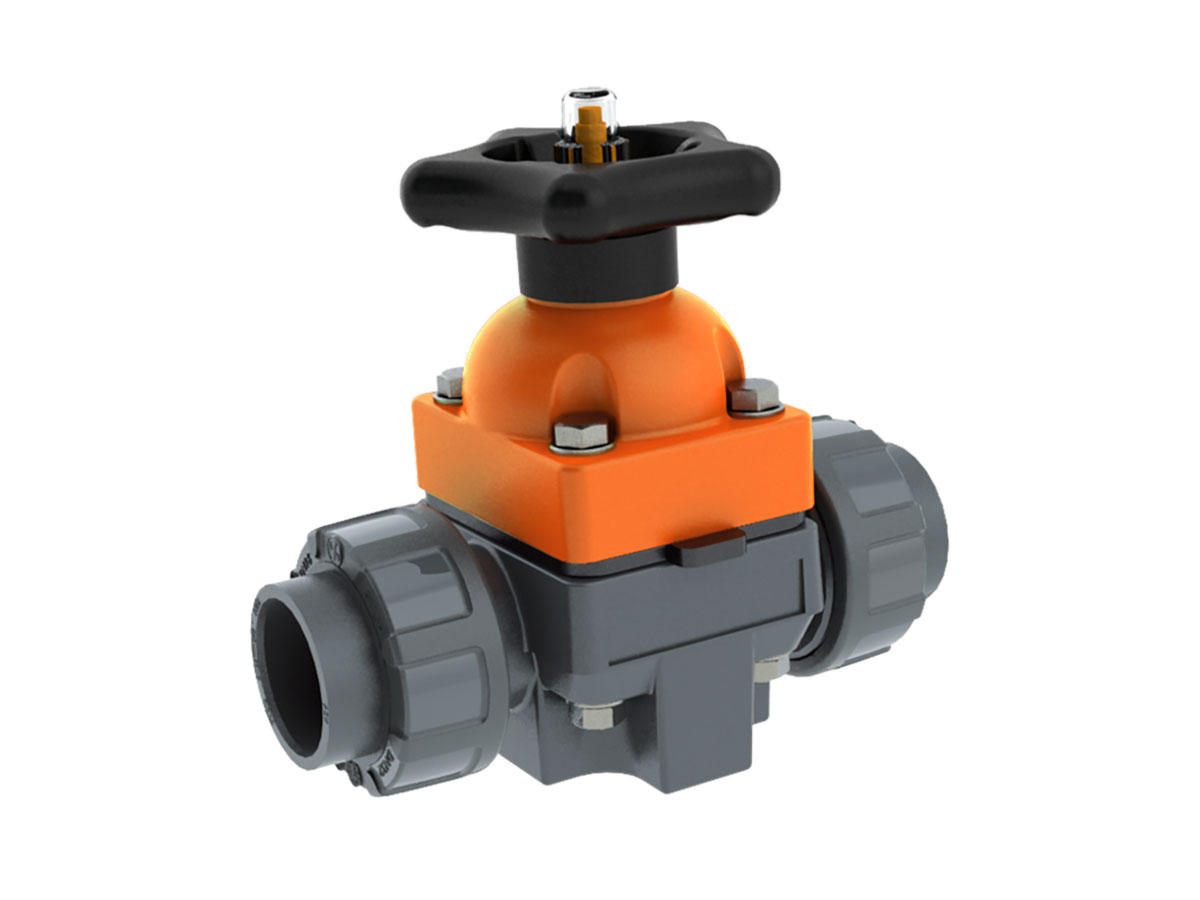
| FIG. | PARTS | MATERIAL |
| 1 | End Connector | U-PVC |
| 2 | Union Nut | U-PVC |
| 3 | End Connector O-ring | EPDM |
| 4 | Seal Carrier - Support | U-PVC |
| 5 | Ball | U-PVC |
| 6 | Body | U-PVC |
| 7 | End Connector O-Ring | EPDM |

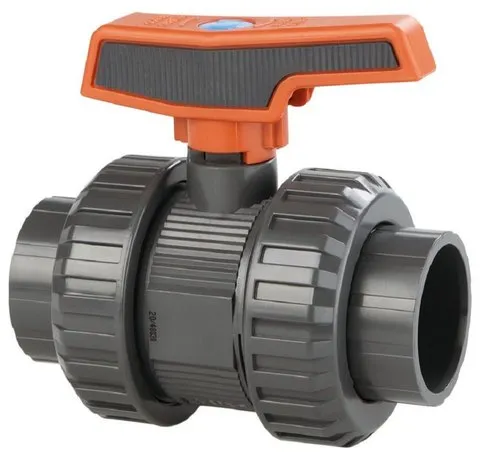
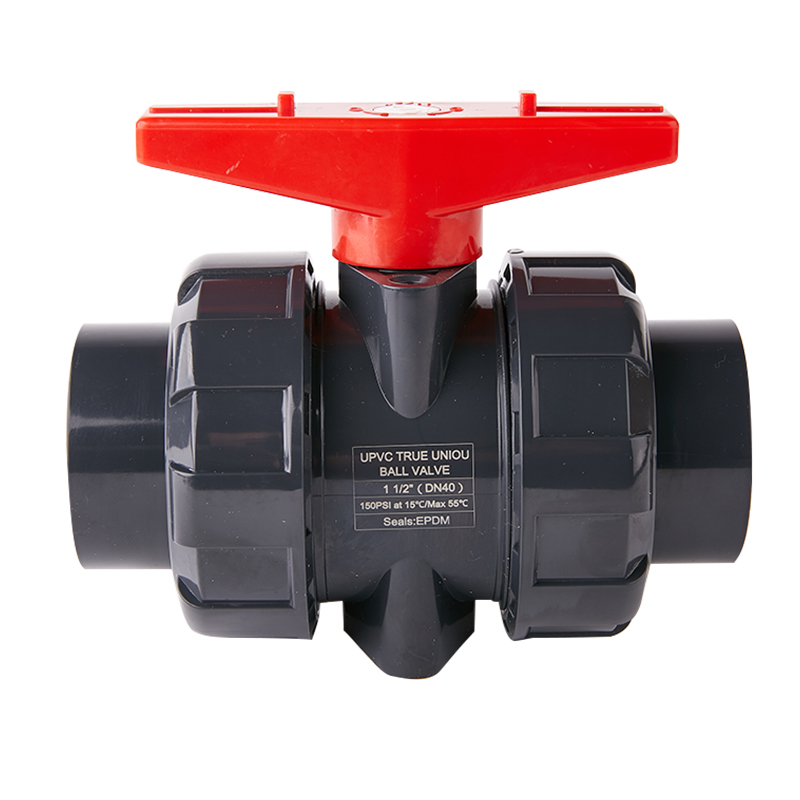
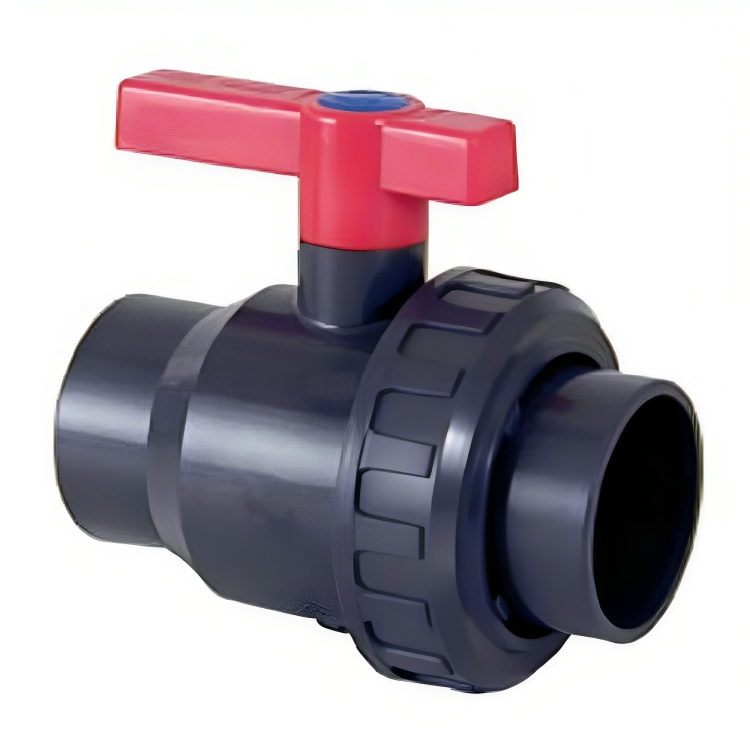
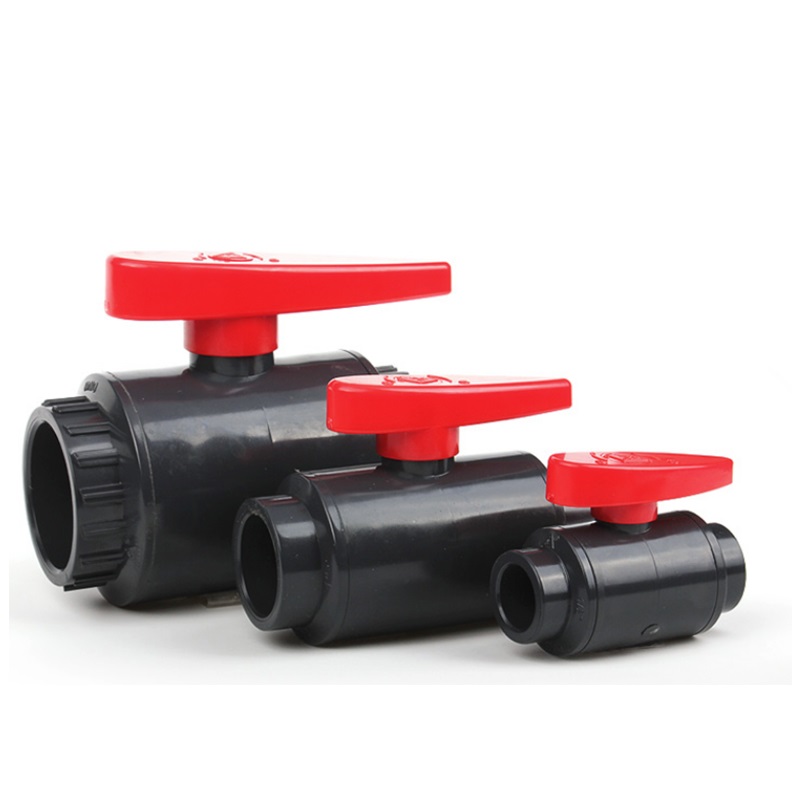
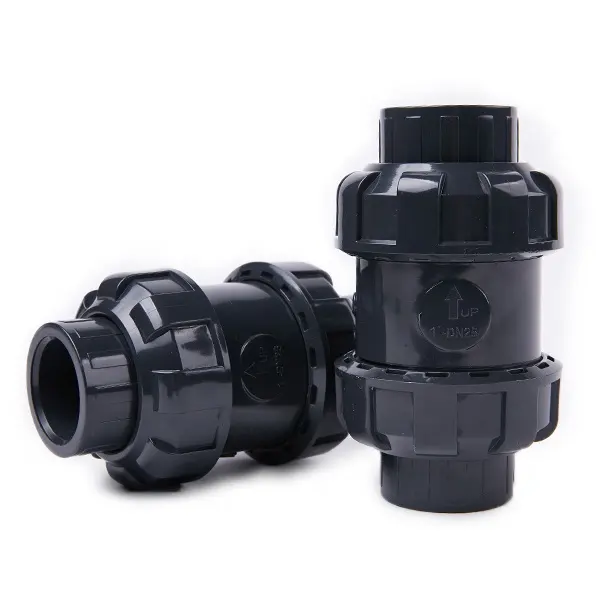
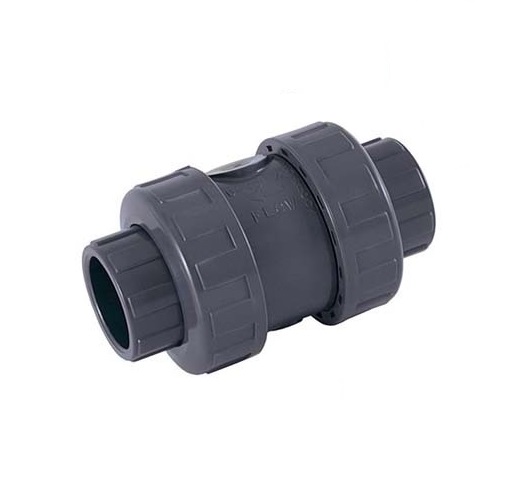
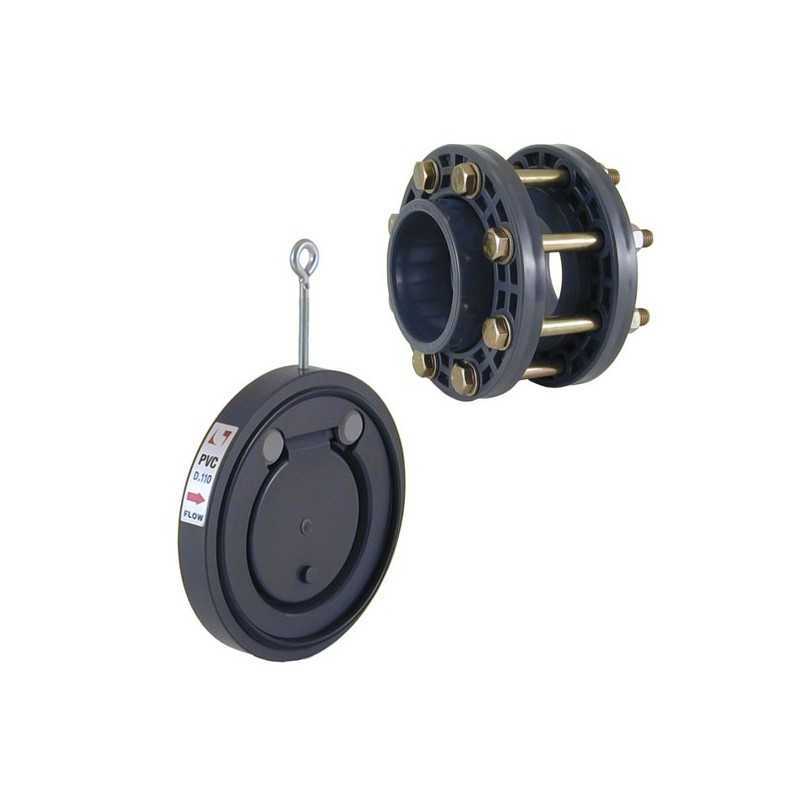
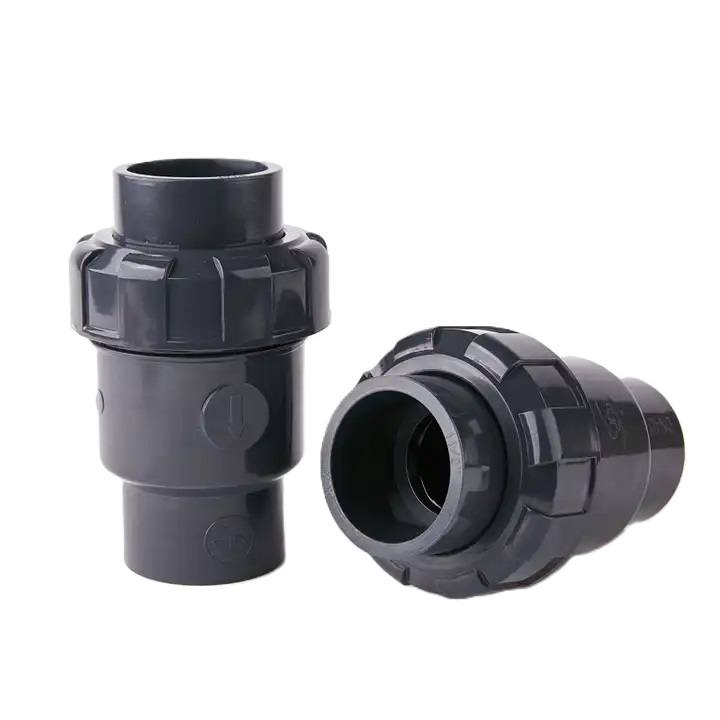
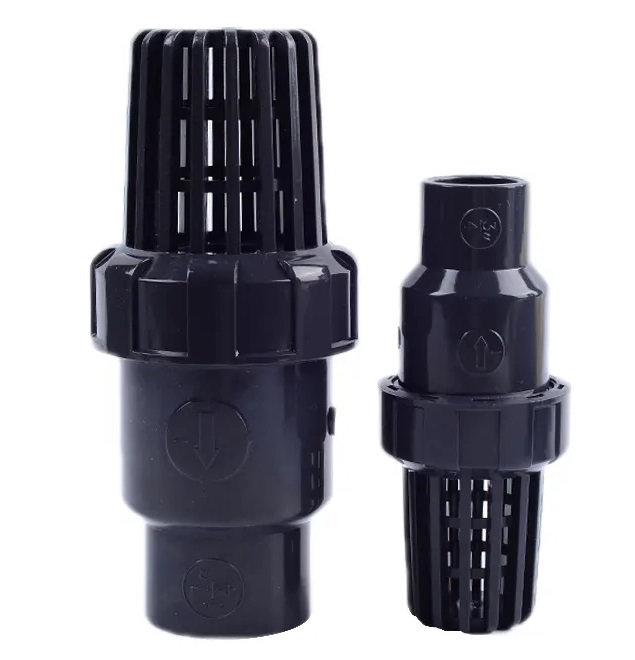
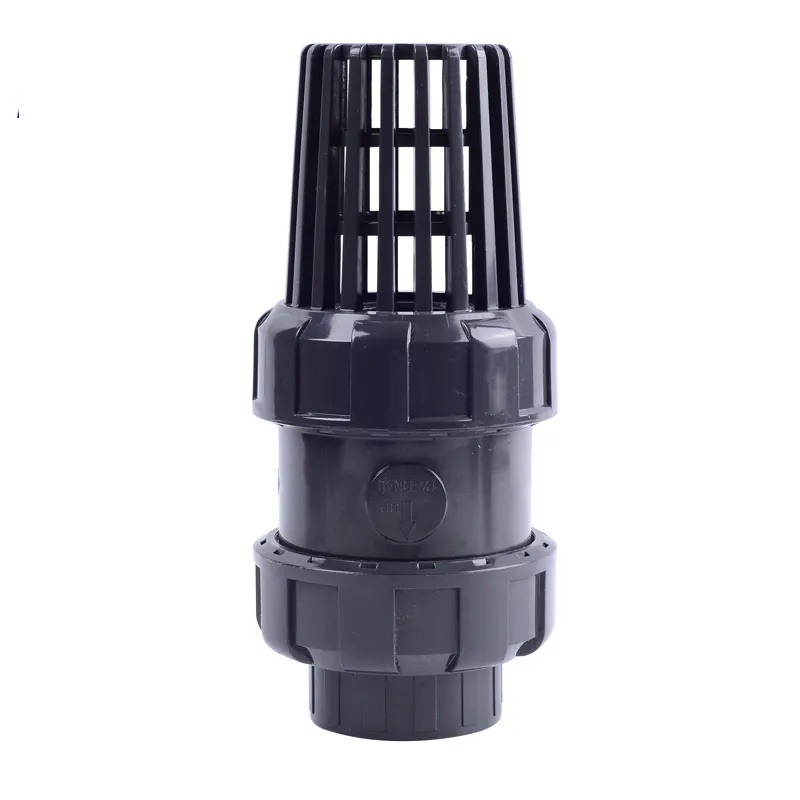
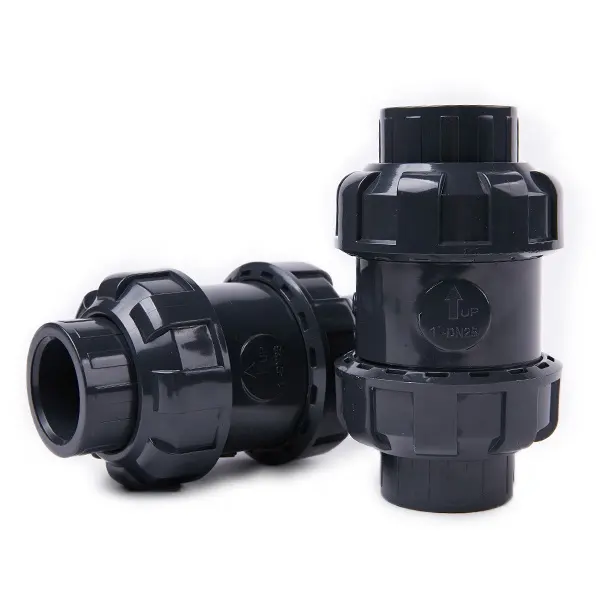
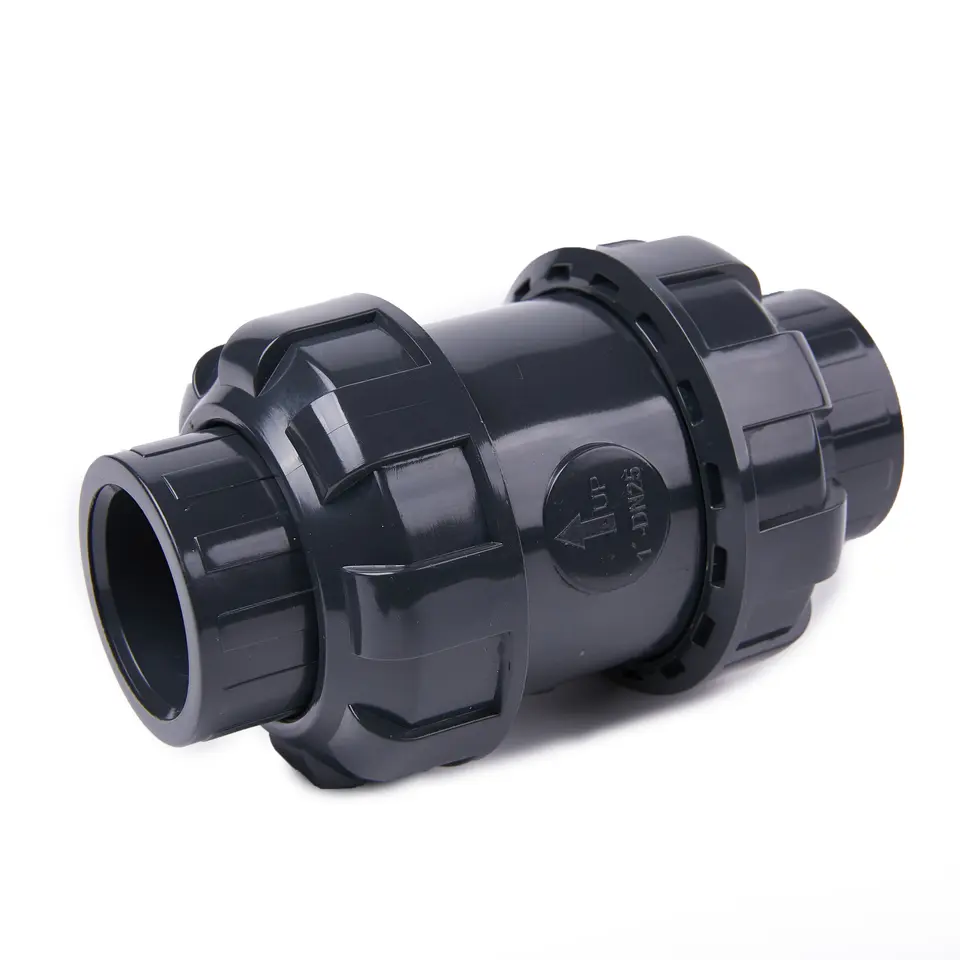
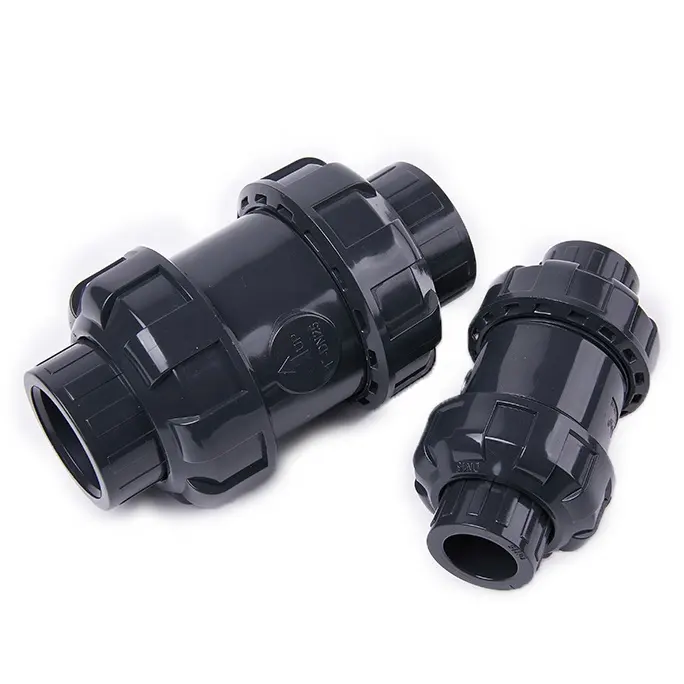
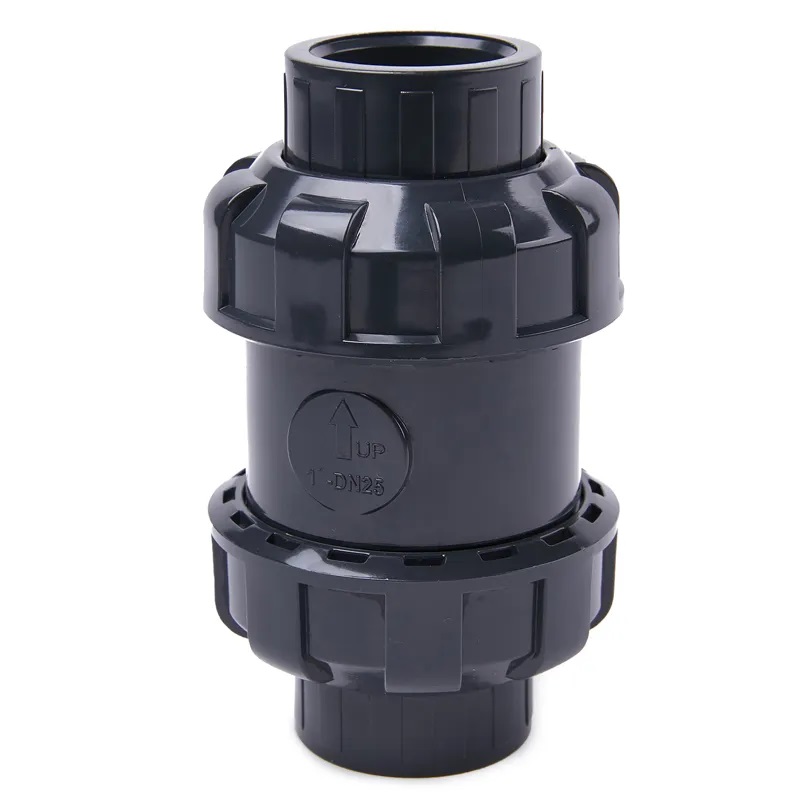
EVA double union UPVC ball check valve is a type of valve that allows fluid flow in one direction and prevents backflow. It utilizes a ball mechanism that seals against a valve seat to stop reverse flow. The "double union" aspect means it has union nuts on both ends of the valve body, allowing for easy disassembly and maintenance. These valves are commonly used in various applications, including water and wastewater systems, due to their robust construction, chemical resistance, and ease of installation.
Here's a more detailed breakdown:
Key Features:
- One-way flow:
The valve allows fluid to flow in one direction while preventing reverse flow.
- Ball mechanism:
A spherical ball inside the valve body acts as the sealing mechanism. When flow is in the intended direction, the ball is pushed away from the seat, allowing flow. When the flow reverses, the ball is forced back against the seat, creating a seal and preventing backflow.
- Double union:
The valve body can be easily disconnected from the piping system on both ends by unscrewing the union nuts, facilitating maintenance and repair.
- UPVC material:
Unplasticized Polyvinyl Chloride (UPVC) is a durable, corrosion-resistant, and chemically resistant material, making the valve suitable for various applications.
- Easy installation and maintenance:
The double union design simplifies installation and allows for easy removal and replacement of the valve body.
- Applications:
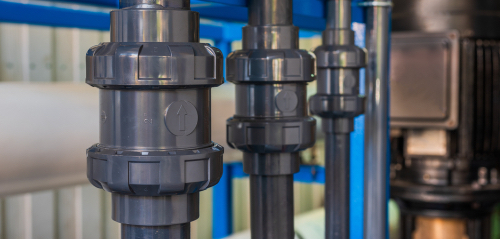
These valves are widely used in water supply systems, wastewater treatment, irrigation, and industrial applications.
- Water treatment and distribution systems
- Sewage and wastewater management
- Pool filtration systems
- Chemical dosing setups
- Agricultural irrigation
- Aquaculture and industrial fluid control
How it works:
When fluid pressure is applied to the inlet side of the valve, it pushes the ball away from the valve seat, allowing fluid to flow through. If the flow reverses, the ball is forced back against the seat, creating a seal and preventing backflow. The union nuts allow for easy removal of the valve body for cleaning, inspection, or replacement.
Benefits:
- Prevents backflow:
Ensures unidirectional flow, protecting downstream equipment from damage caused by reverse flow. Suitable for vertical and horizontal installations.
- Corrosion resistance:
UPVC construction makes it resistant to corrosion and suitable for various fluid types.
- Chemical resistance:
UPVC is resistant to many chemicals, expanding its application range.
- Cost-effective:
UPVC is a relatively inexpensive material, making the valve a cost-effective solution.
- Compact design:
The valve's compact design makes it suitable for installations where space is limited.