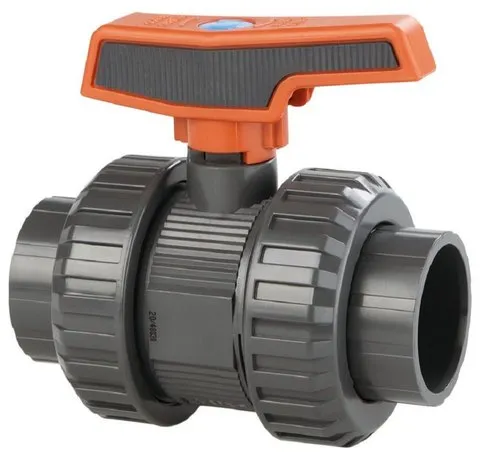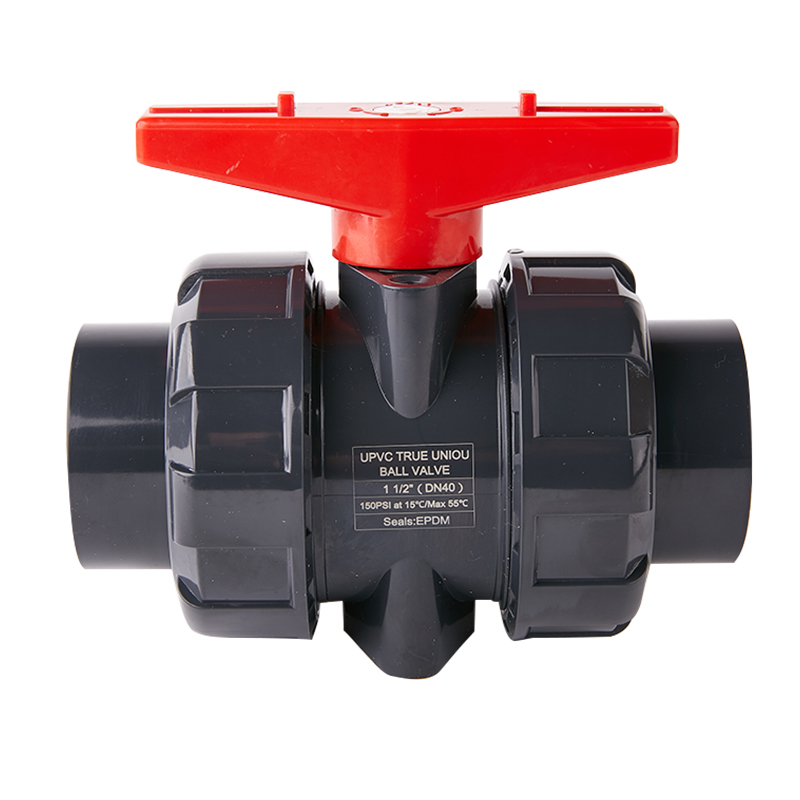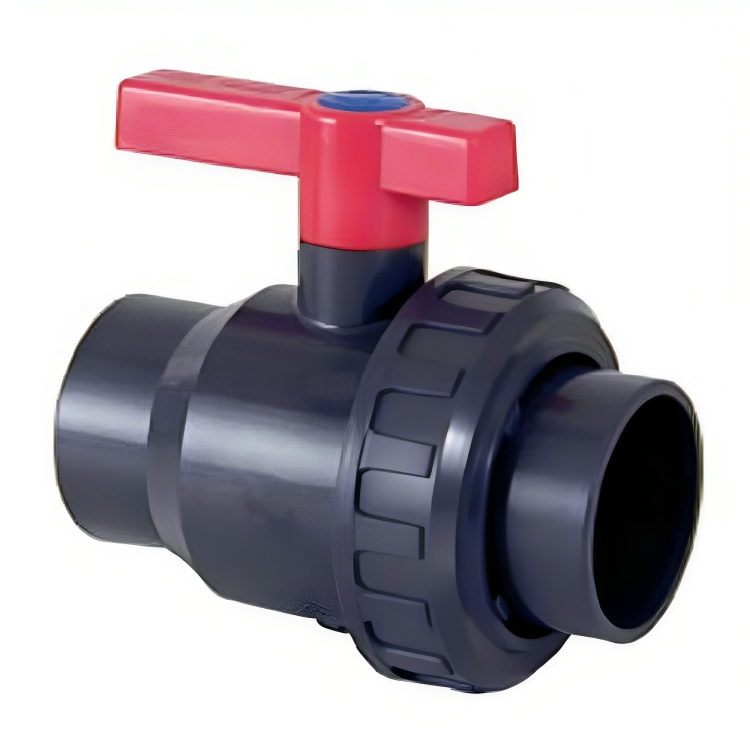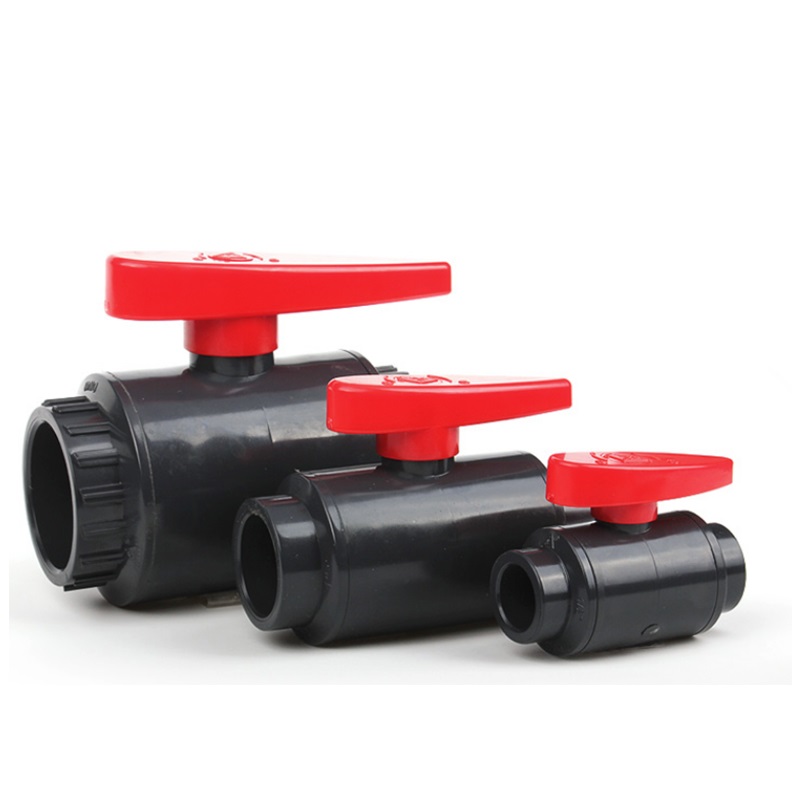
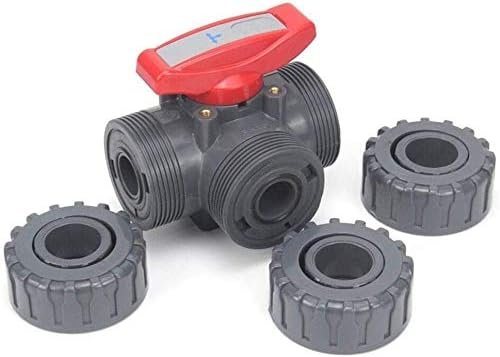
| FIG. | PARTS | MATERIAL | QTY |
| 1 | Handle Cap | ABS | 01 |
| 2 | Handle | ABS | 01 |
| 3 | Stem O Ring | EPDM | 01 |
| 4 | Stem Shaft | UPVC/CPVC/PPH/PVDF | 01 |
| 5 | Body | UPVC/CPVC/PPH/PVDF | 01 |
| 6 | Valve Seat | PTFE | 03 |
| 7 | O-Ring | EPDM/VITON/FKM | 03 |
| 8 | O-Ring | EPDM/VITON/FKM | 03 |
| 9 | Seat Retainer | UPVC/CPVC/PPH/PVDF | 03 |
| 10 | O-Ring | EPDM/VITON/FKM | 03 |
| 11 | Ring | UPVC/CPVC/PPH/PVDF | 03 |
| 12 | Ends | UPVC/CPVC/PPH/PVDF | 03 |
| 13 | Union | UPVC/CPVC/PPH/PVDF | 03 |
| 14 | Ball | UPVC/CPVC/PPH/PVDF | 01 |

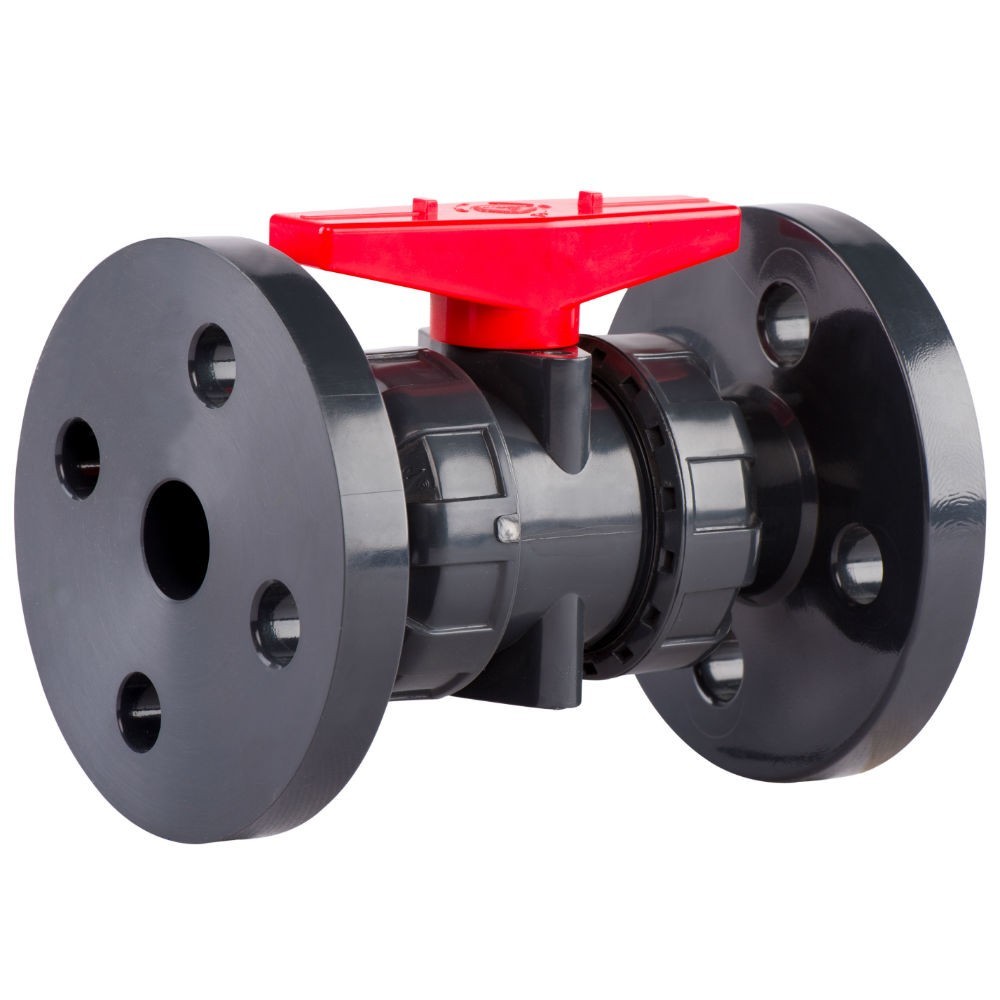
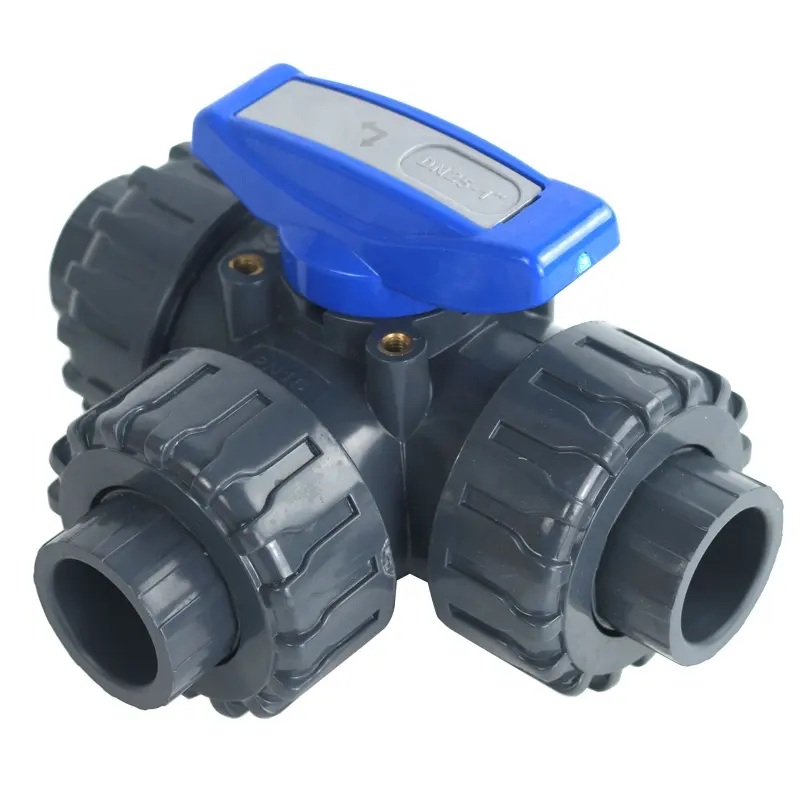
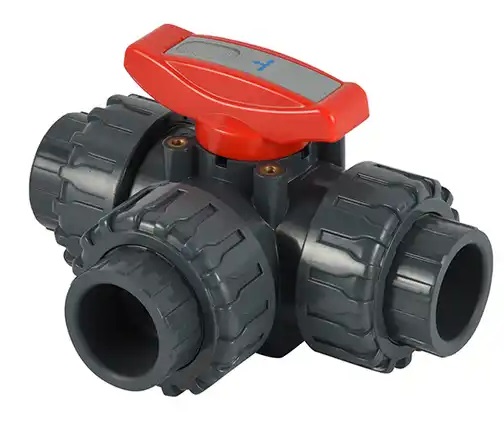
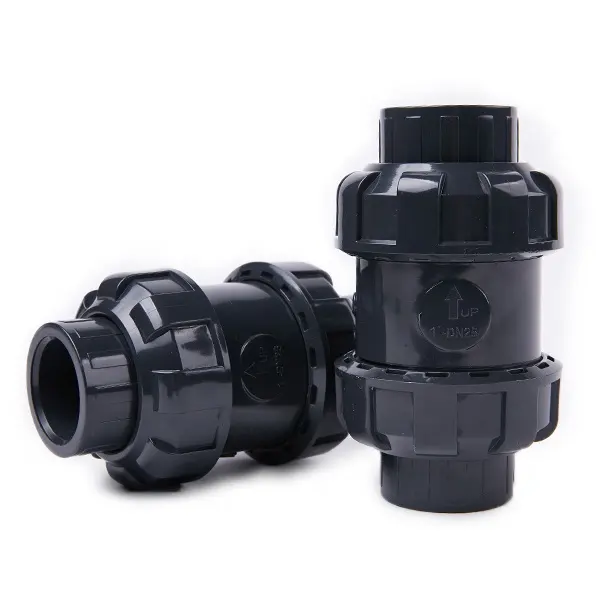
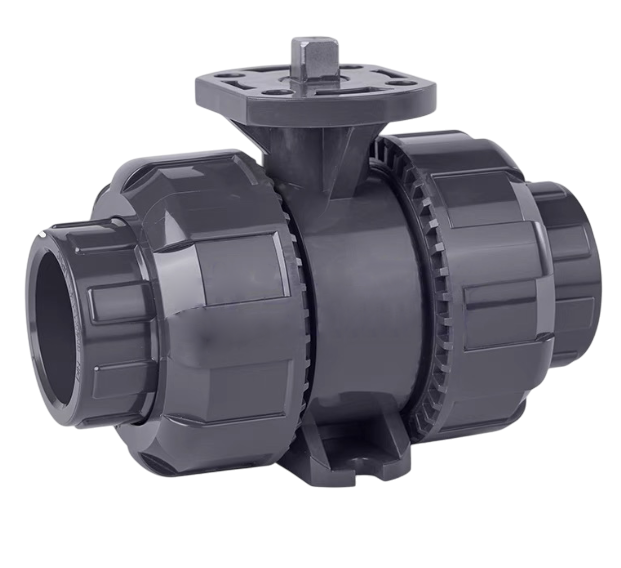
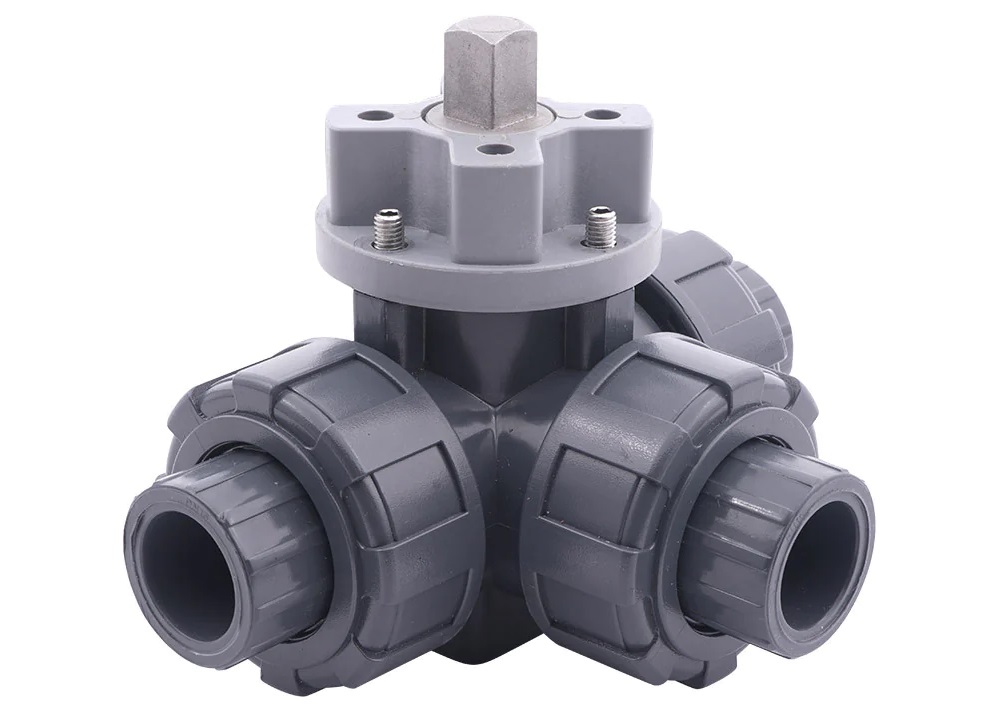
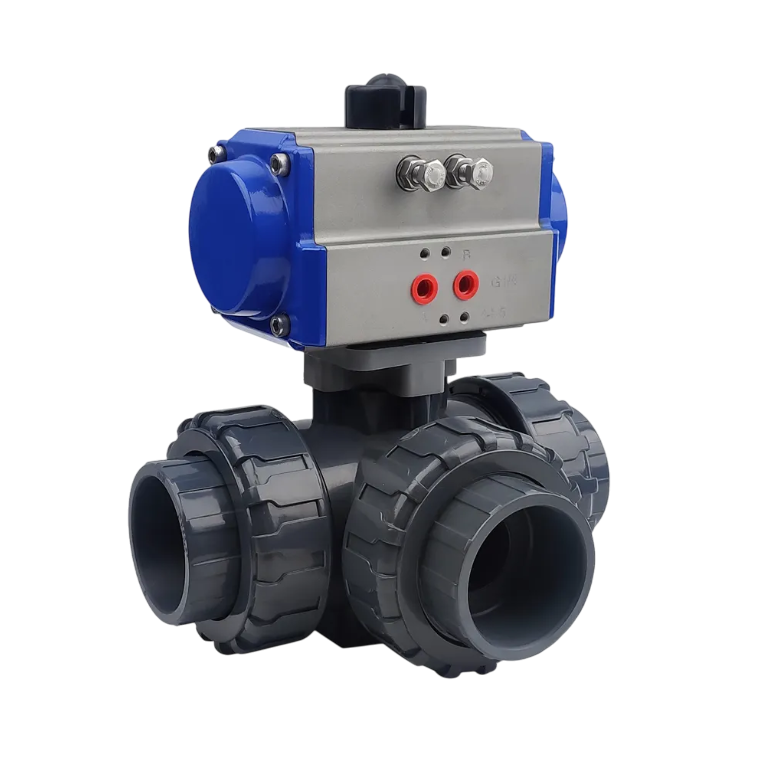
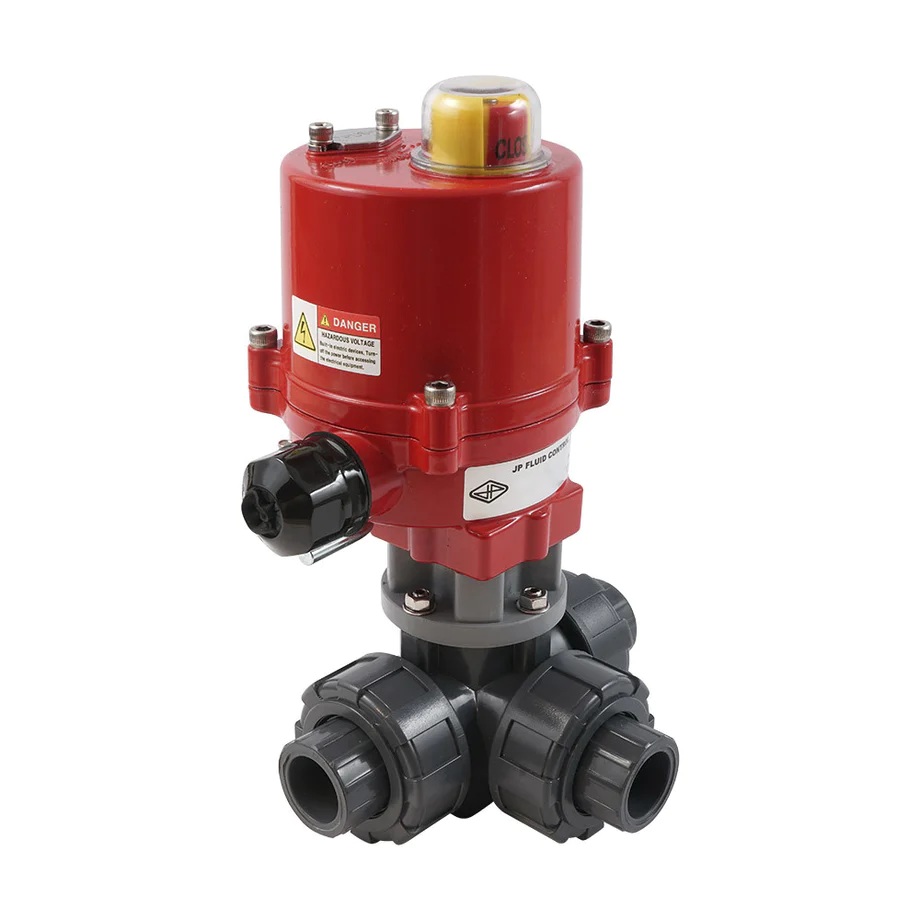
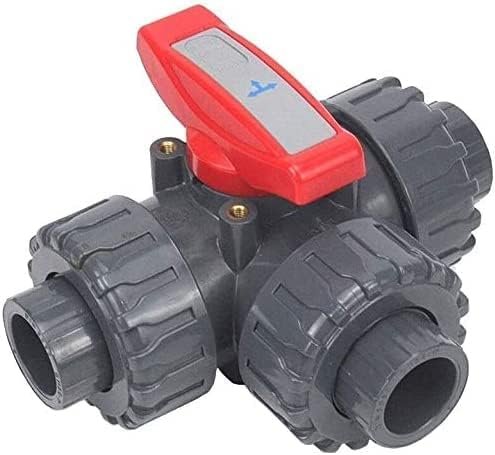
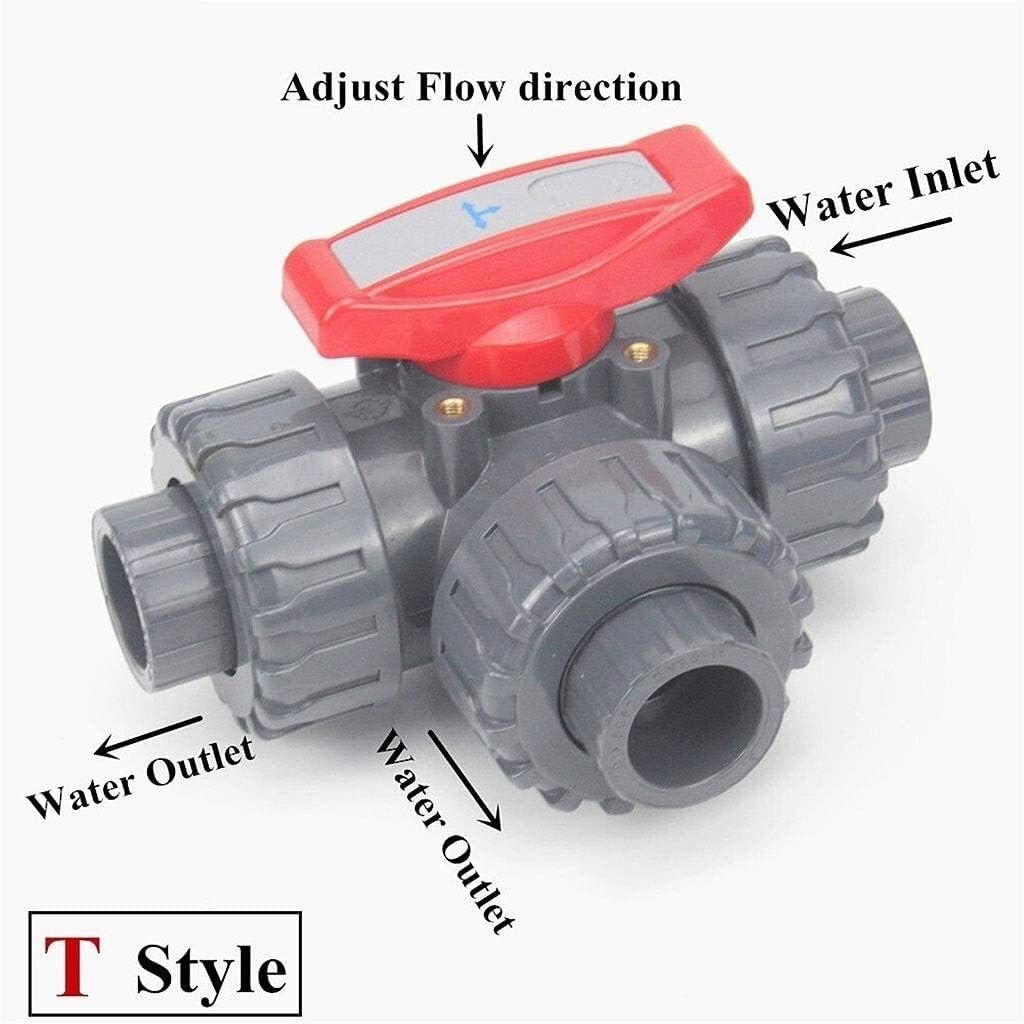
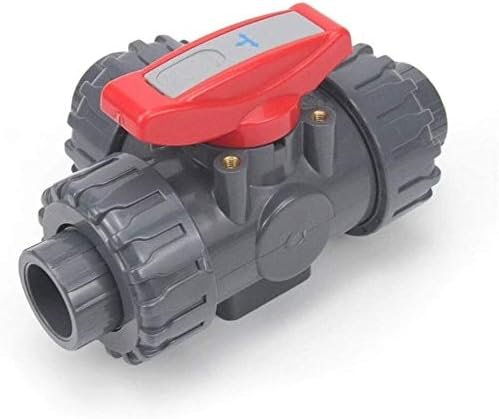
A UPVC three-way ball valve with a T-port is a fluid control device used to divert, mix, or distribute the flow of liquids or gases in a piping system. Made from Unplasticized Polyvinyl Chloride (UPVC), these valves are ideal for applications requiring corrosion resistance and durability.
How a T-port ball valve works
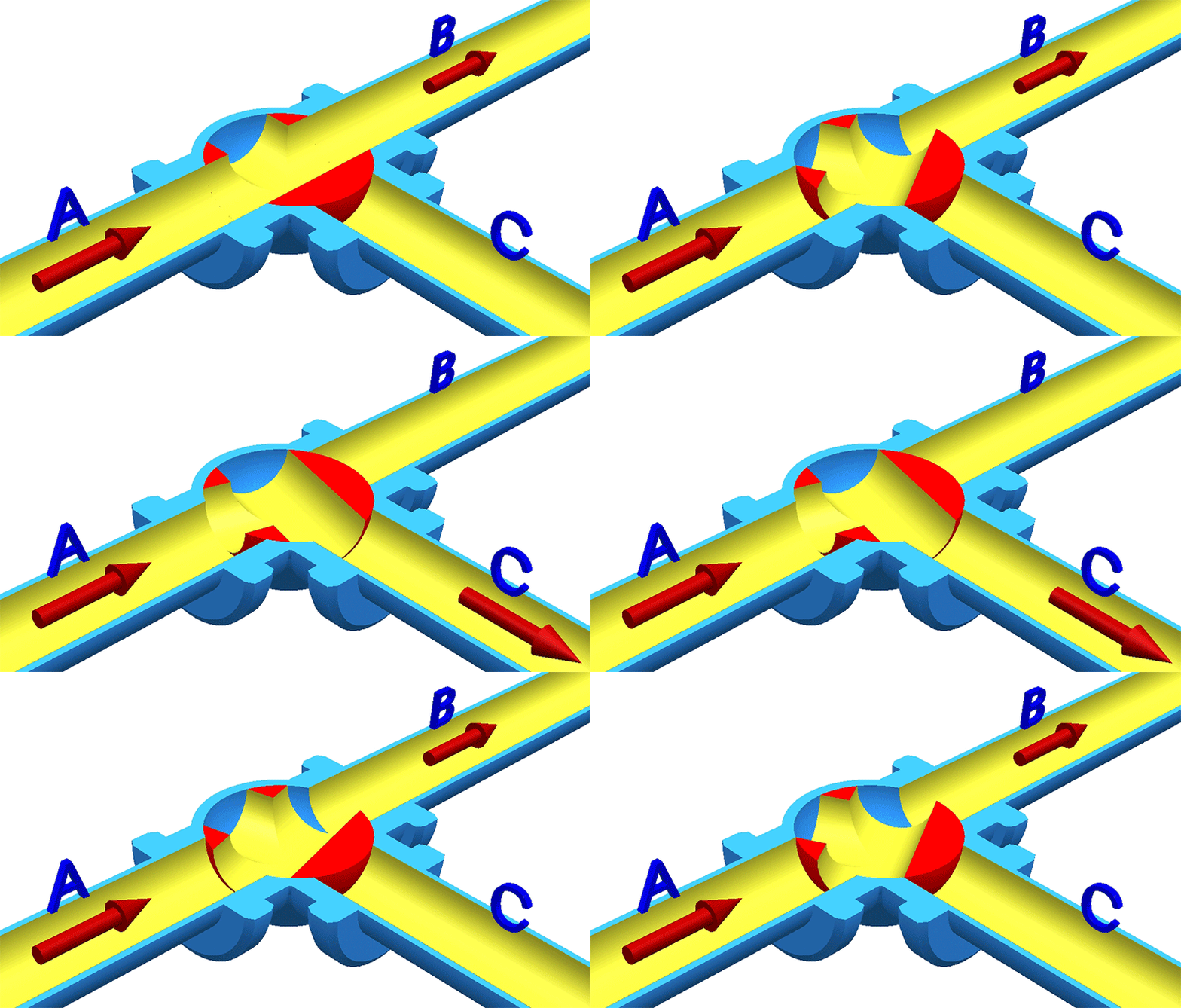
A T-port ball valve has three connection points, with a T-shaped bore through the rotating ball inside. The valve's handle operates with a 90-degree turn, allowing it to perform the following functions:
- Diverting flow: Redirecting flow from a single inlet to either of the two outlets.
- Combining flow: Mixing fluids from two inlets into a single outlet.
- Straight-through flow: Allowing fluid to pass directly from one port to the port opposite it.
- Unlike L-port valves, T-port valves cannot shut off the flow completely. At least two ports are always connected, allowing for continuous operation.
Key features
- Corrosion resistance: UPVC is highly resistant to a wide range of chemicals, making it suitable for water treatment, industrial chemical processing, and agricultural applications.
- High pressure rating: Many UPVC models are rated for pressures up to PN16 (16 bar), making them suitable for high-pressure water systems.
- Durable construction: The valve's solid and compact design ensures a long operational life with minimal maintenance.
- Variety of connections: Available with threaded or union-end connections to suit different piping systems.
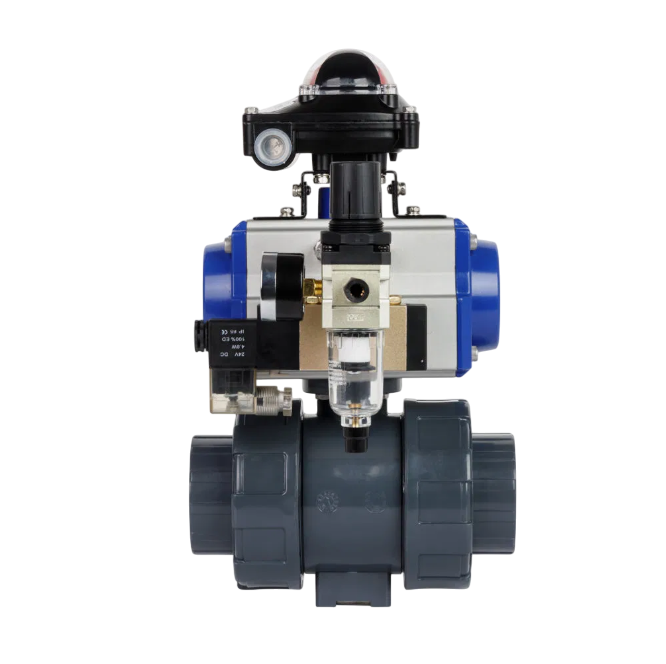
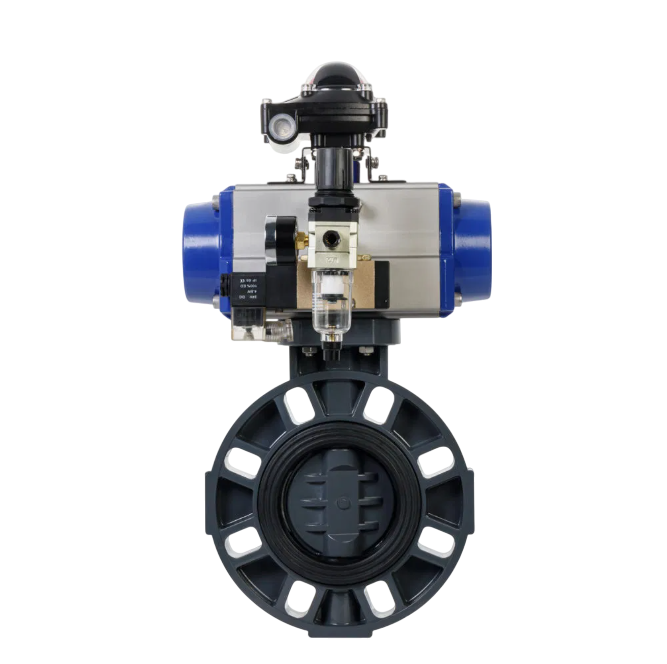
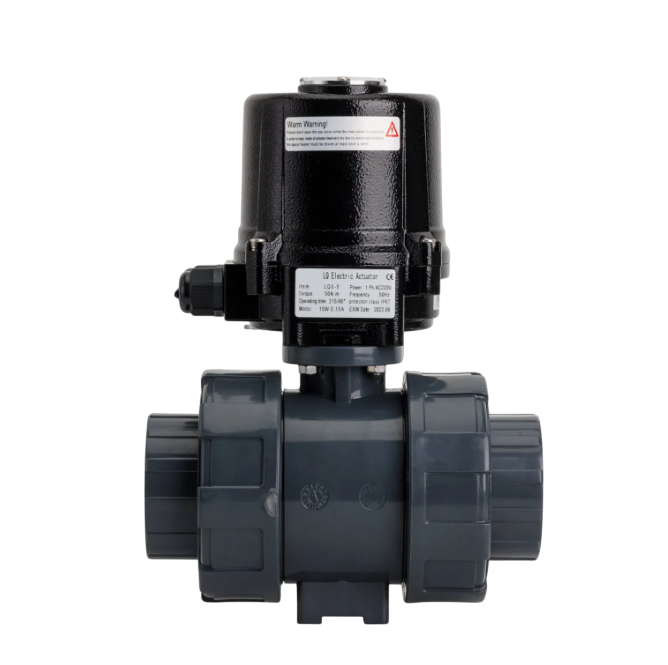
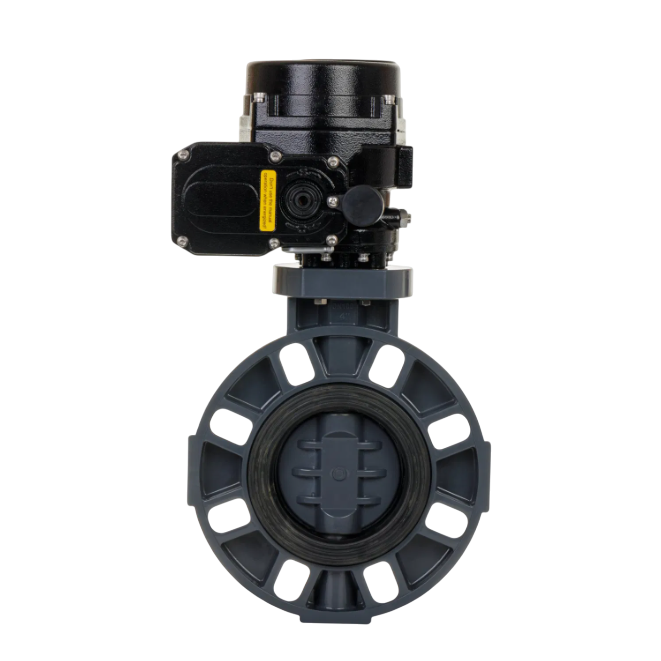
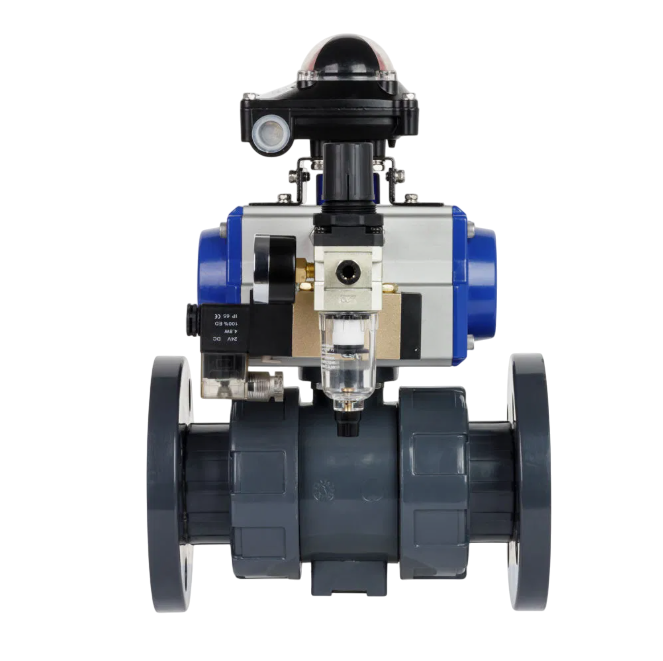
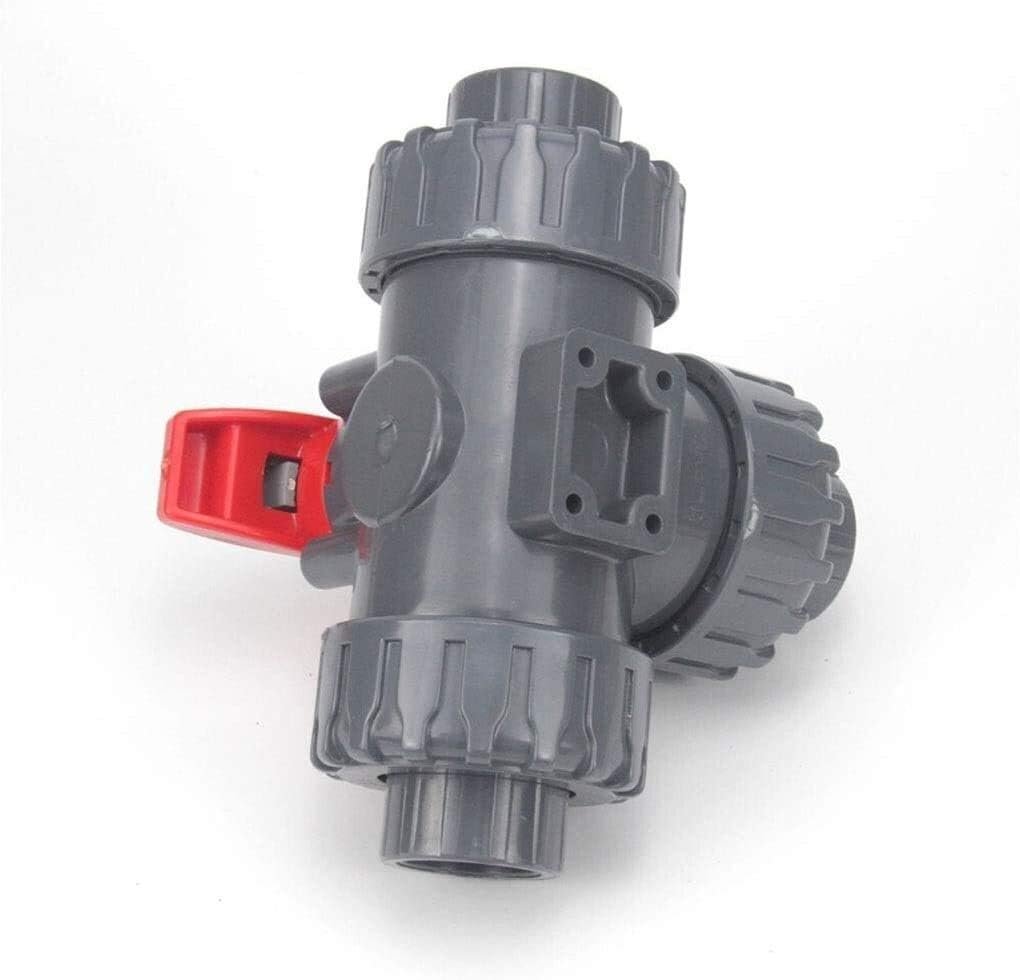
- Actuator-ready: Many industrial-grade UPVC three-way ball valves are equipped with an ISO-standard mounting pad for easy installation of electric or pneumatic actuators for automated control.
Applications
UPVC three-way T-port ball valves are used in numerous settings due to their versatility and chemical resistance. Common applications include:
- Water management: Diverting or mixing water flow in municipal water treatment plants and swimming pool systems.
- Industrial processes: Handling corrosive fluids in chemical manufacturing and wastewater treatment.
- Agricultural irrigation: Controlling the distribution of water or fertilizers in irrigation networks.
- HVAC systems: Managing fluid flow in heating, ventilation, and air conditioning systems.
L-port vs. T-port configuration
When selecting a three-way ball valve, it is important to distinguish between L-port and T-port types, as they have different functionalities.
|
Feature |
L-Port Ball Valve |
T-Port Ball Valve |
|
Bore shape |
The passage in the internal ball is shaped like a capital "L". |
The passage in the internal ball is shaped like a capital "T". |
|
Flow paths |
Diverts flow between two orthogonal (perpendicular) paths. The flow can be directed from a common inlet to either of two outlets. |
Can mix or divert flow between three different paths. Can mix two inlets into one outlet, or divide one inlet into two outlets. |
|
Shutoff ability |
Can completely shut off the flow. |
Generally cannot shut off all three ports completely in a single turn. |
|
Use case |
Ideal for diverting flow, switching between two flow paths, and shutoff applications. |
Ideal for mixing fluids from two sources or splitting flow from one source to two destinations. |