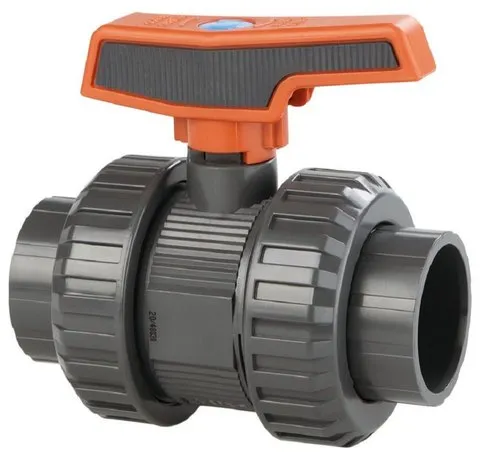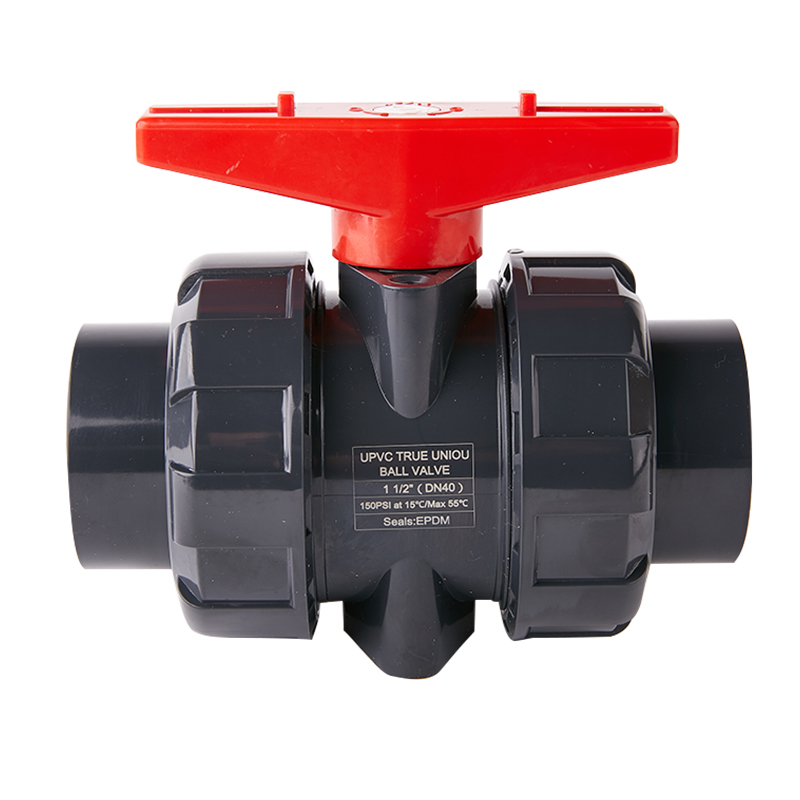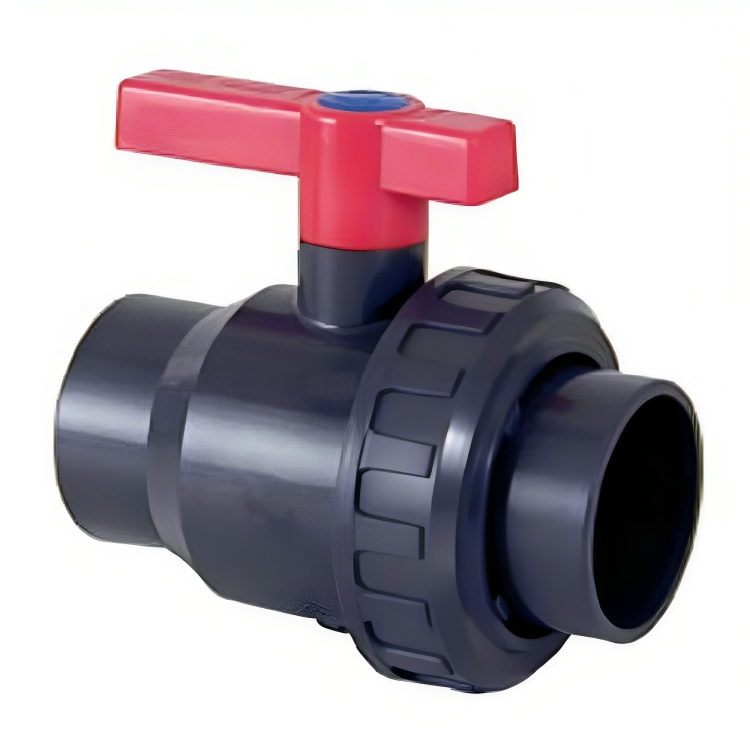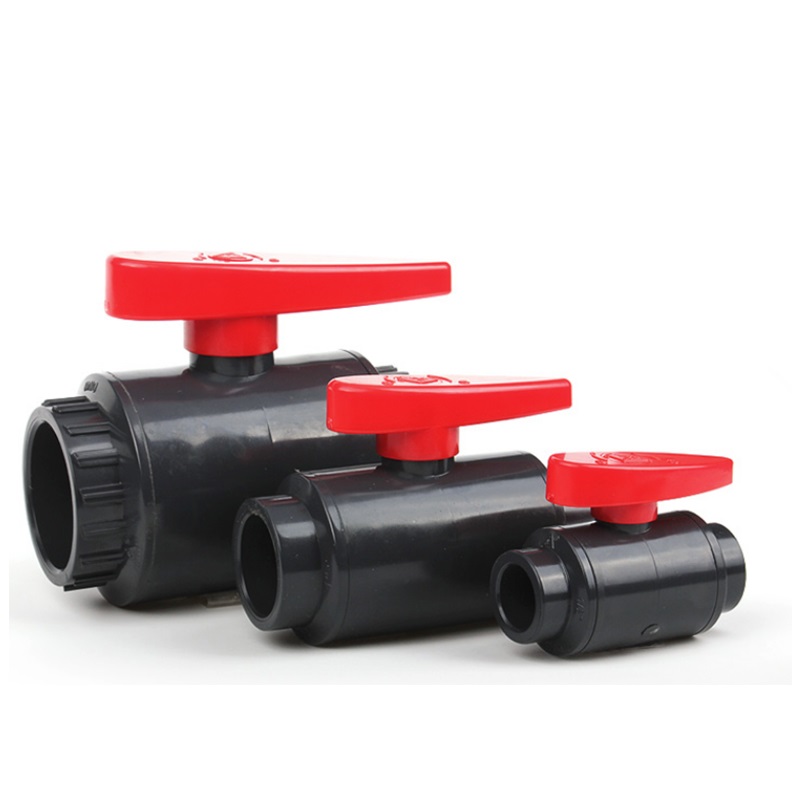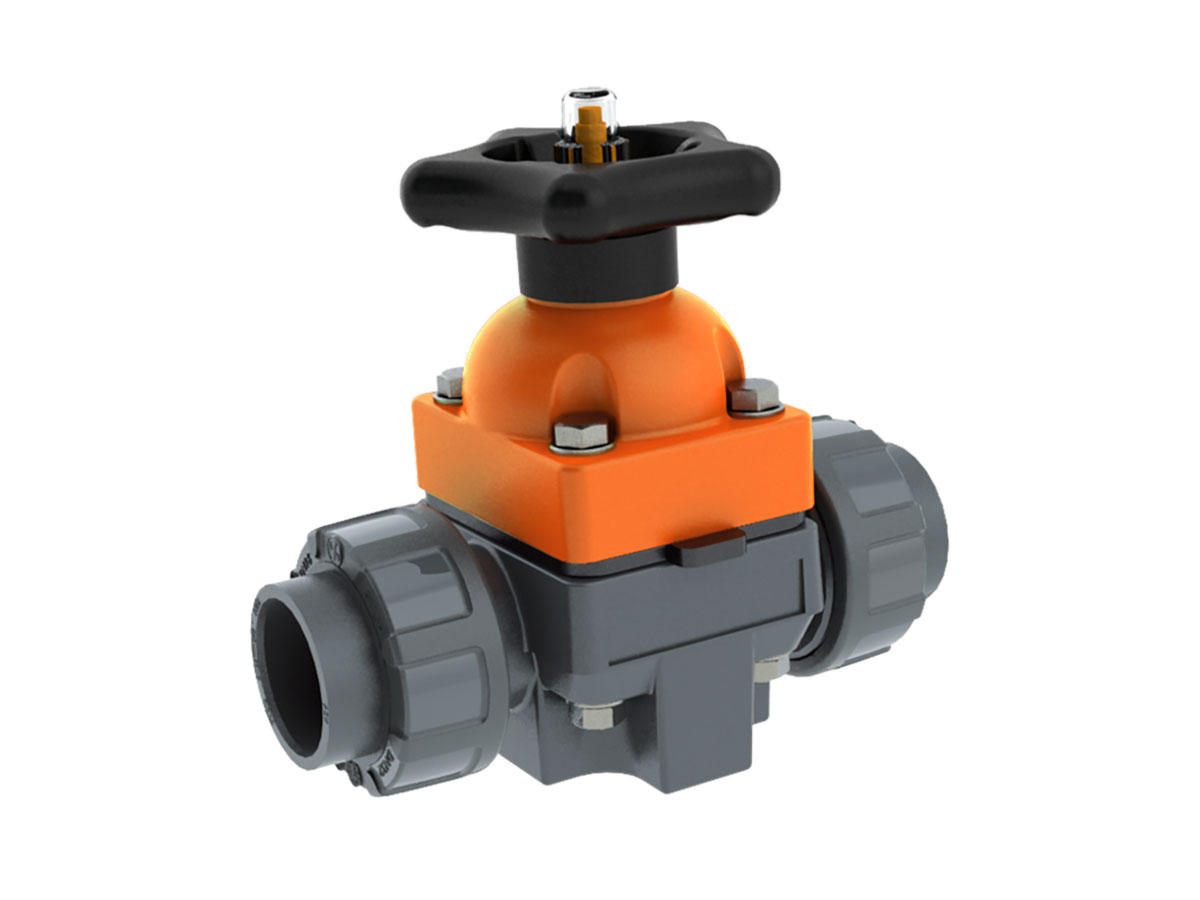
| FIG | PARTS | MATERIAL |
| 1 | Drive Shaft | PP |
| 2 | Drive Nut | PP |
| 3 | Diaphragm | EPDM/PTFE |
| 4 | Valve Body O-Ring | EPDM/FPM |
| 5 | Indicator Rod | PP |
| 6/7/8/9 | Bolt,Nut & Washer, Rubber Sleeve | SS |
| 10 | Fastening Cover | PP |
| 11 | Connector | UPVC |
| 13 | Diaphragm Body | UPVC |
| 14 | Actuator | Electric/Motorised |

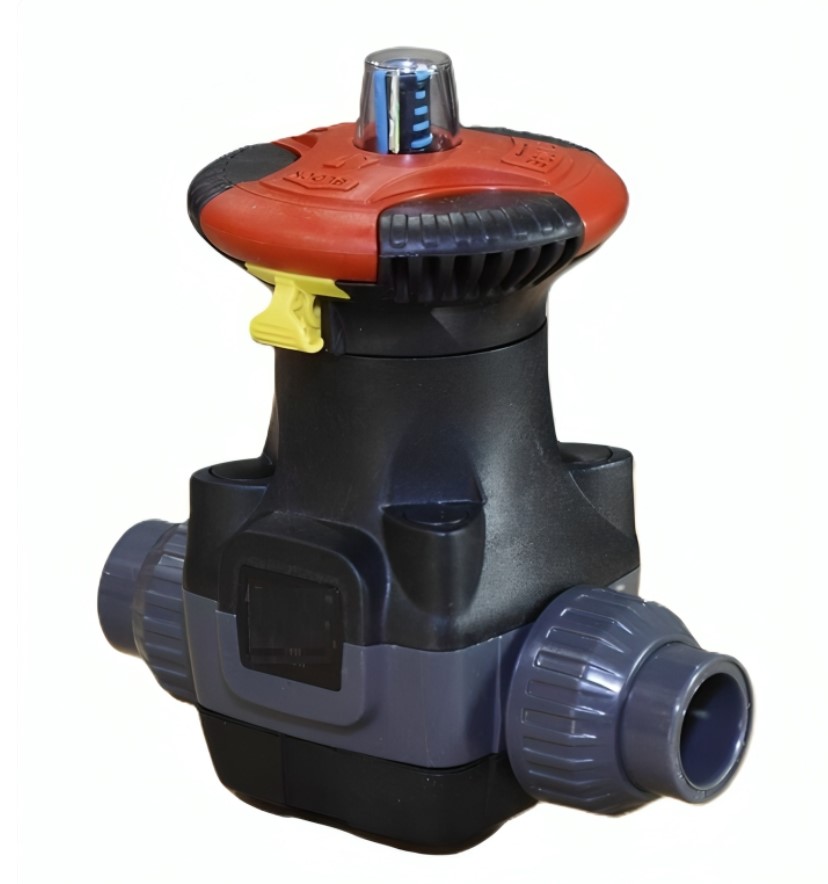
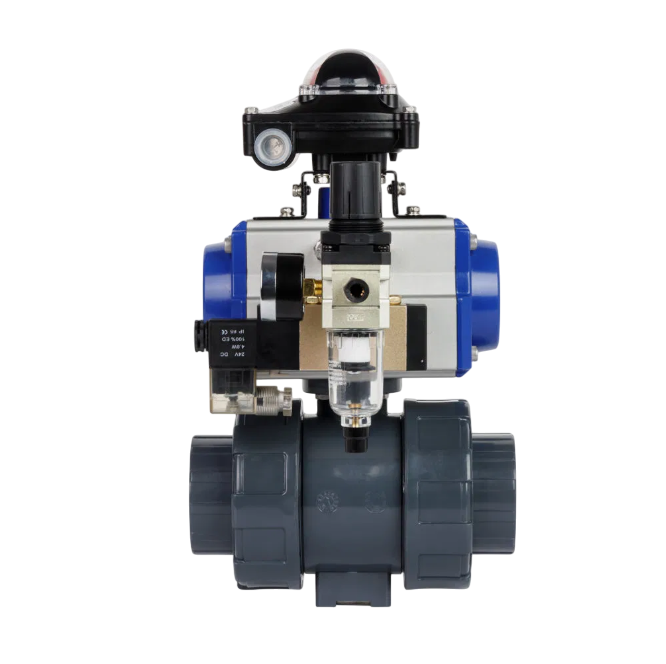
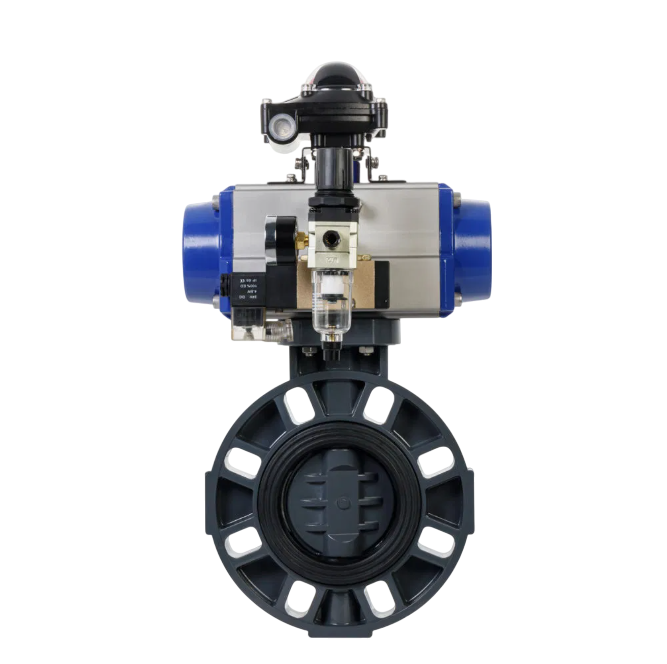
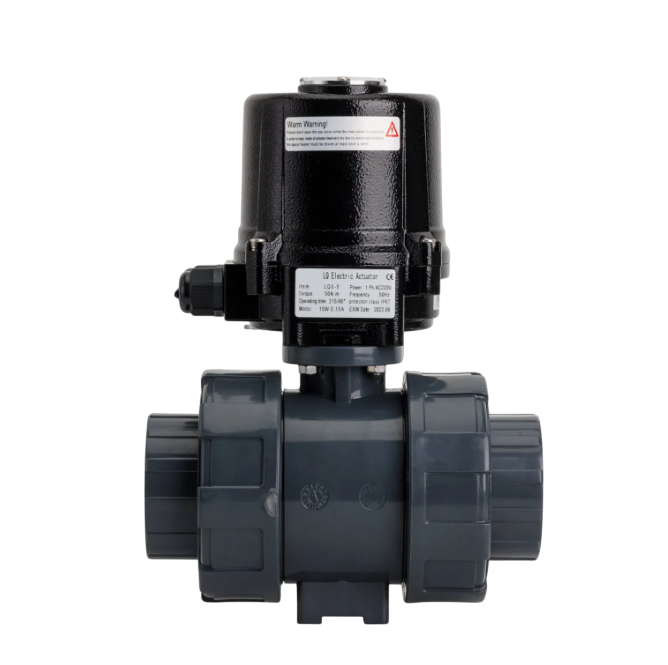
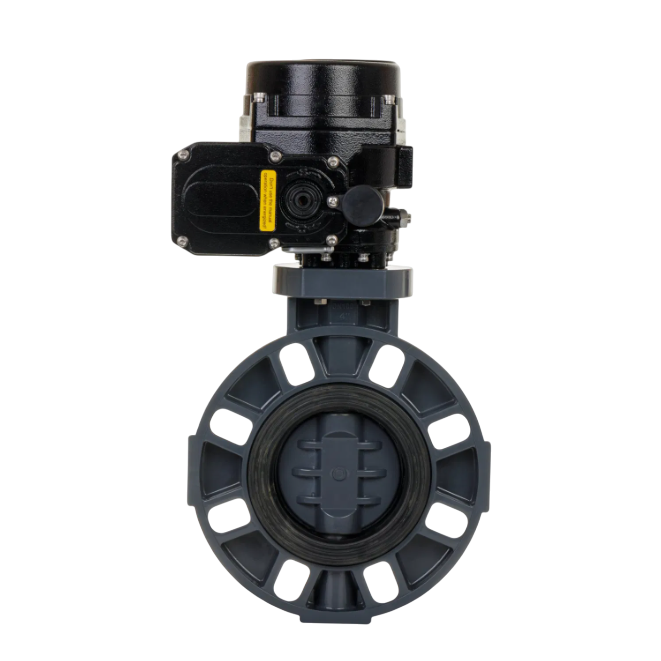
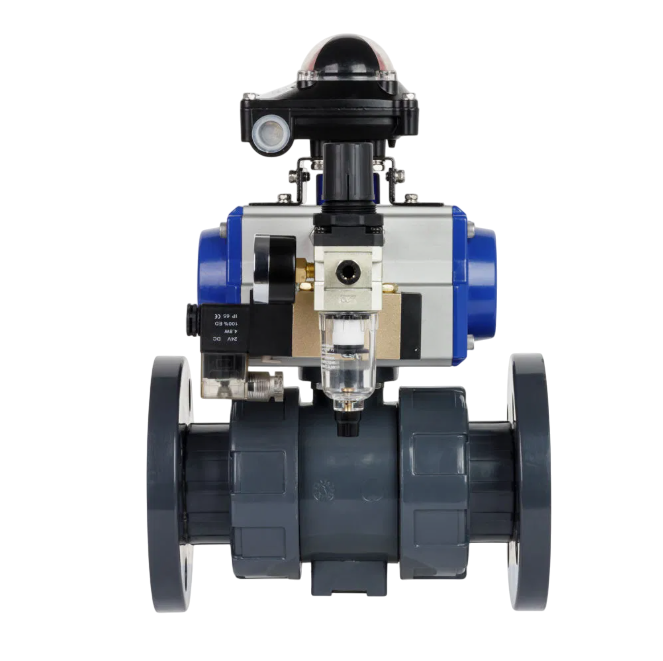
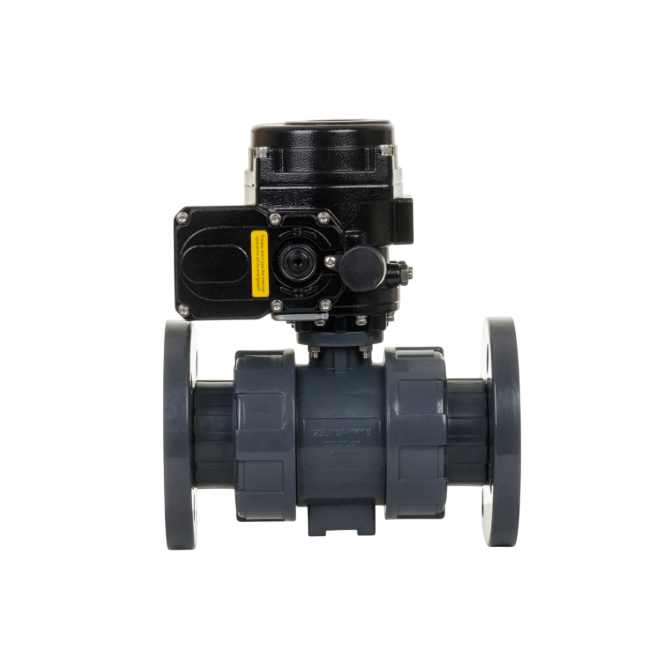
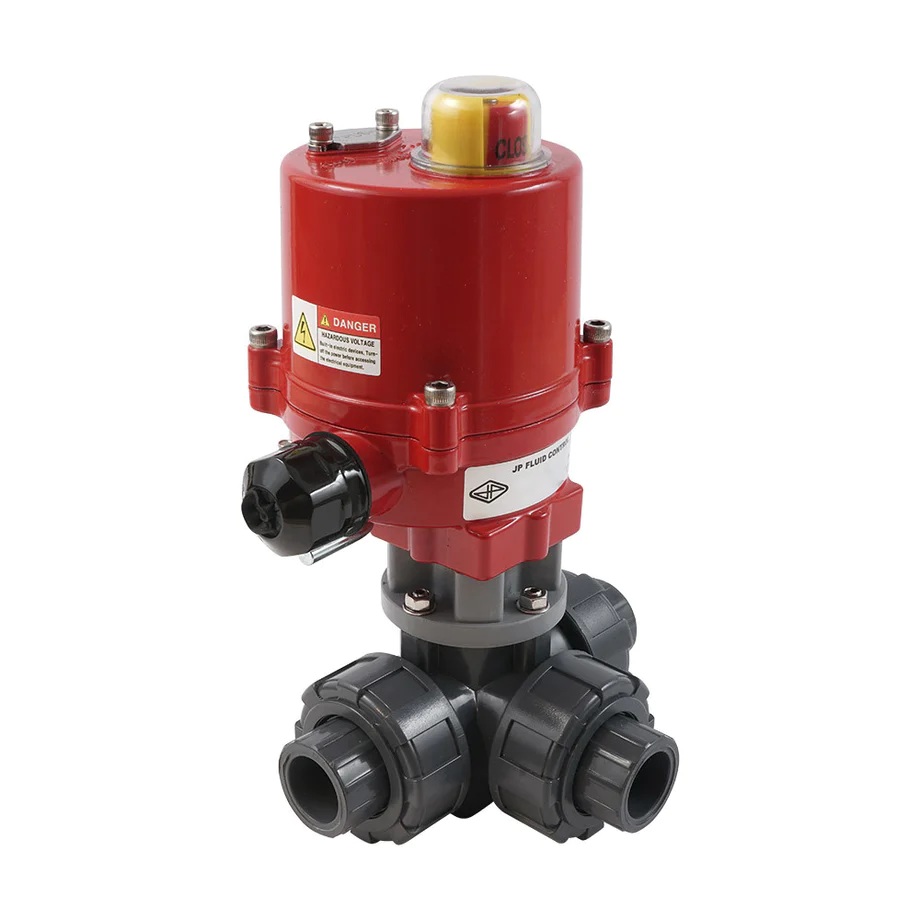
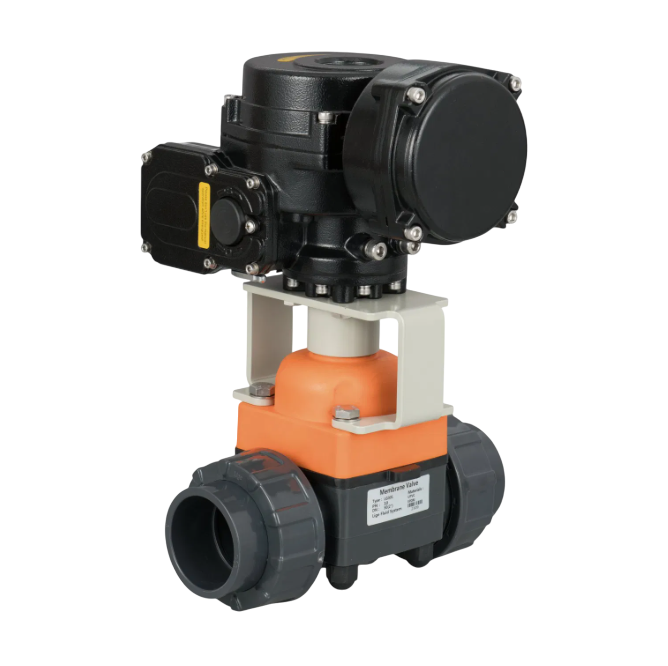
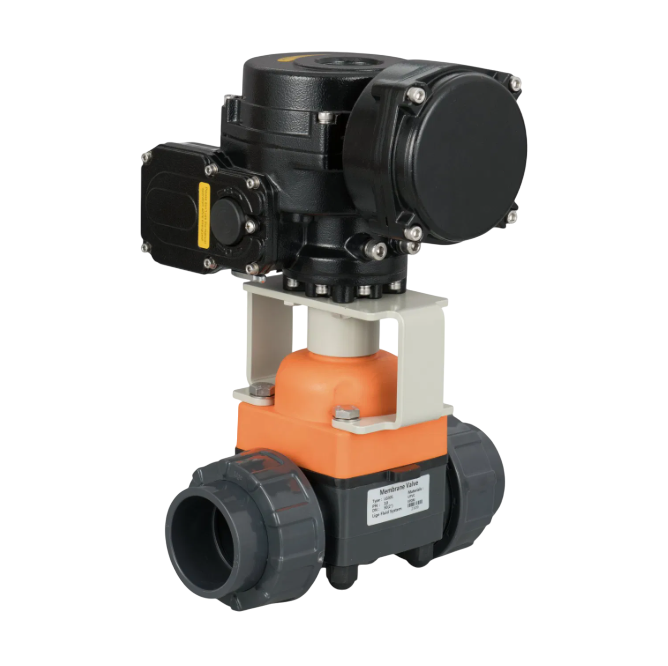
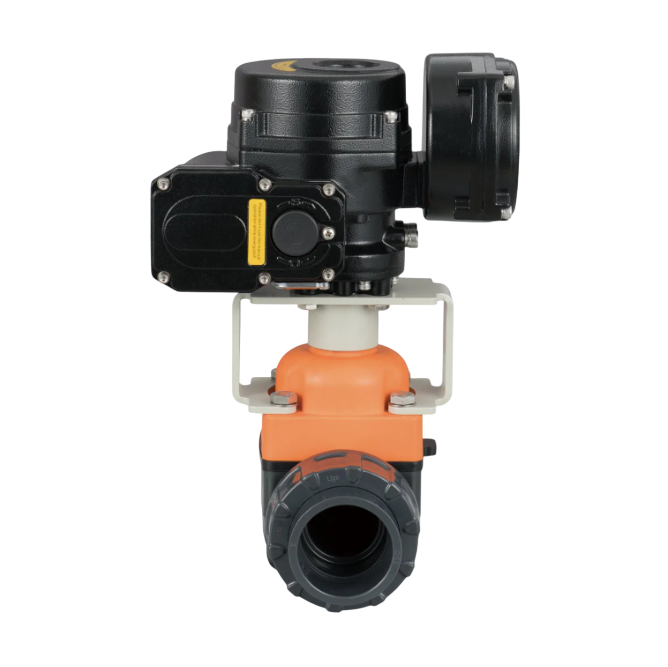
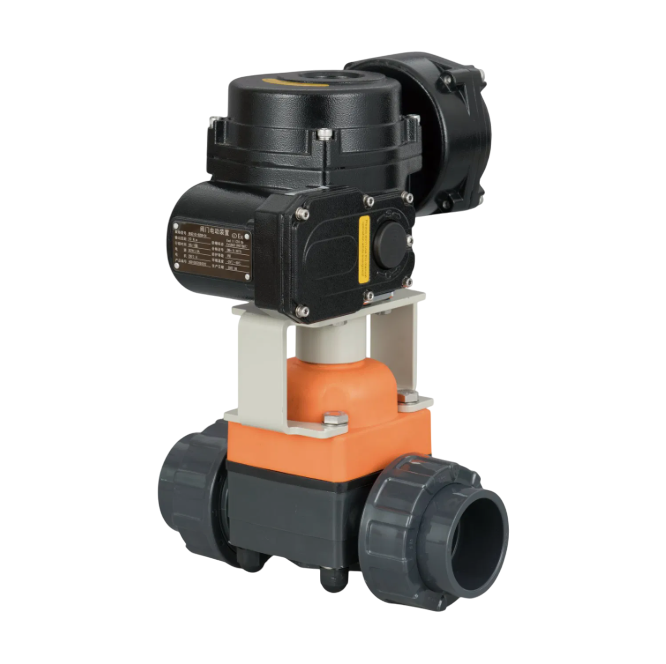
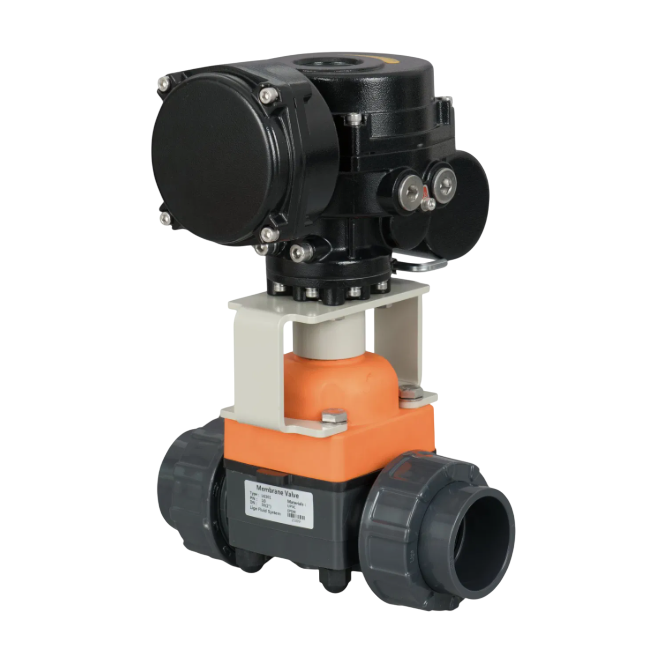
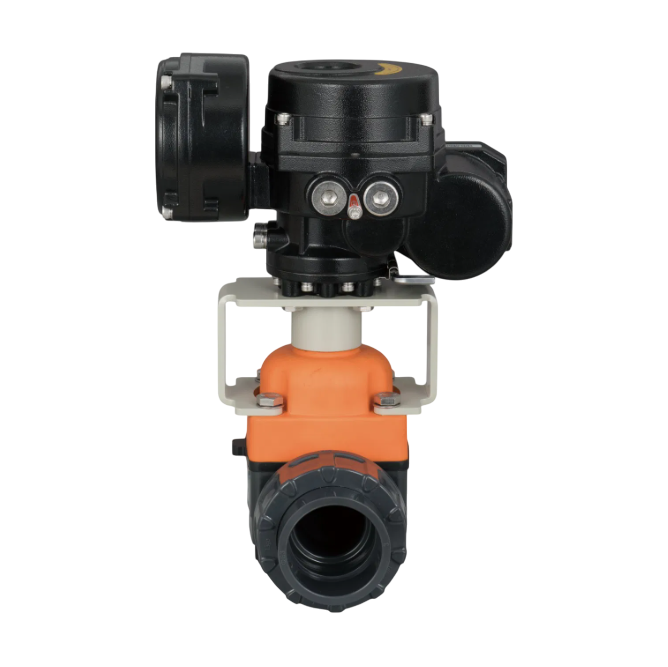
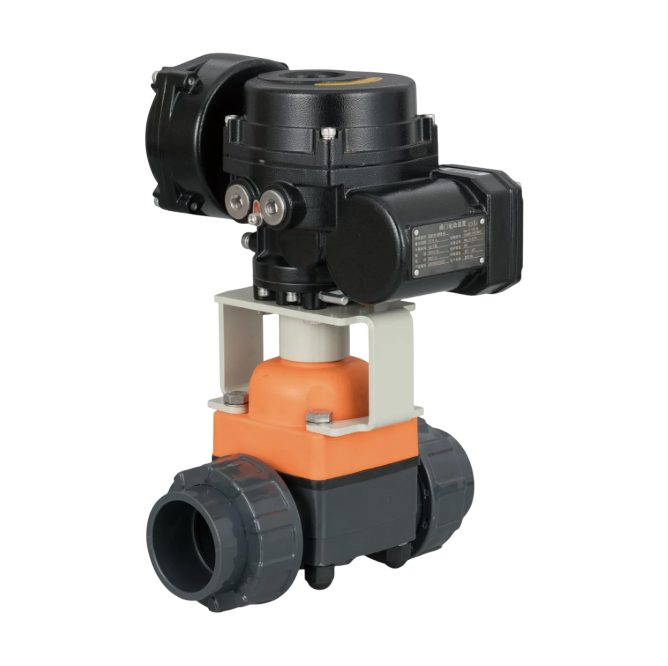
An EVA Electric Actuator UPVC Diaphragm Valve is an automated flow control device combining a durable, corrosion-resistant UPVC body with an electric actuator. This design provides precise, remote-controlled flow regulation, making it ideal for applications involving corrosive or abrasive media.
How it works
The valve consists of two main components:
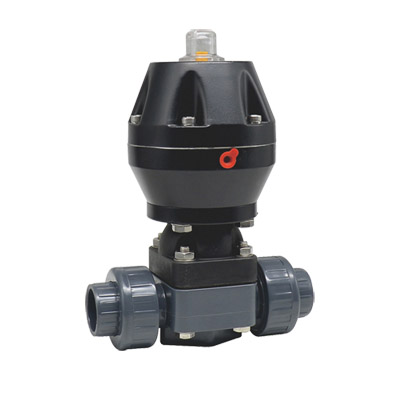
- Diaphragm valve: A flexible diaphragm, typically made of rubber or other elastomer, acts as a barrier to control flow. It seals against a weir in the valve body to stop fluid flow. This design ensures that the process fluid does not come into contact with the valve's operating components, preventing corrosion and contamination.
- Electric actuator: This unit, containing a motor and gearing, is mounted to the valve. When activated by an electrical signal, the motor rotates and moves a stem. This stem raises and lowers the diaphragm, opening or closing the valve.
Key features
- Corrosion resistance: The UPVC body and elastomer diaphragm are highly resistant to chemicals, making the valve suitable for aggressive fluid applications.
- Automated control: The electric actuator enables remote and automated operation, allowing for precise and repeatable flow control without manual intervention.
- Leak-proof sealing: The diaphragm provides a bubble-tight shut-off, crucial for preventing leakage and contamination in sensitive processes.
- High flow capacity: The weir-style body can be designed to handle high flow rates, depending on the specific model.
- Low maintenance: The simple design with minimal moving parts reduces maintenance requirements compared to more complex valve types.
- Versatility: These valves are available in various sizes and connection types, including solvent welding and flanged ends.
- Control options: Electric actuators offer multiple control modes, such as simple on/off, modulating control via 4-20mA signals for precise flow regulation, and fail-safe options.
Common applications
Electric actuator UPVC diaphragm valves are widely used across multiple industries for handling chemically aggressive, abrasive, or viscous fluids.
- Water and wastewater treatment: Used for regulating chemical dosing, filtration, and other processes where corrosive water treatment chemicals are present.
- Chemical processing: Provides a reliable shut-off and control solution for a wide range of corrosive chemicals.
- Pharmaceutical and food and beverage: The non-contaminating design makes them suitable for sanitary and sterile applications.
- Industrial automation: Used in a variety of automated processes where precise fluid control is required.