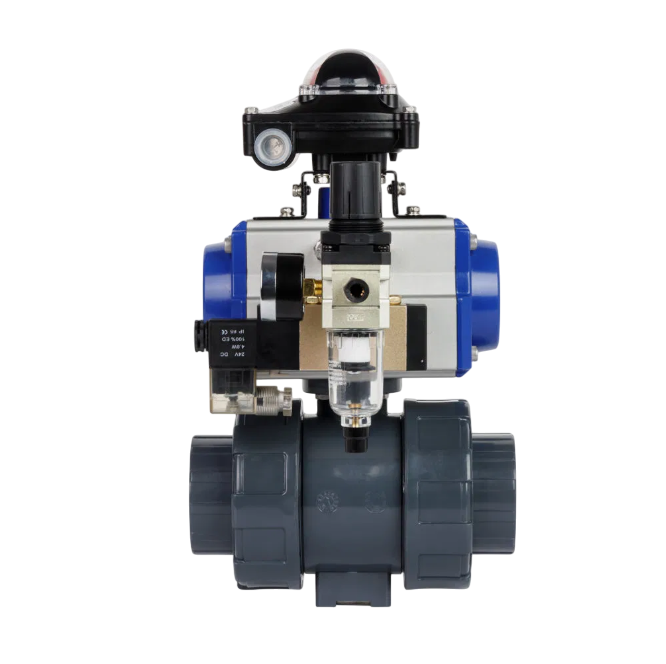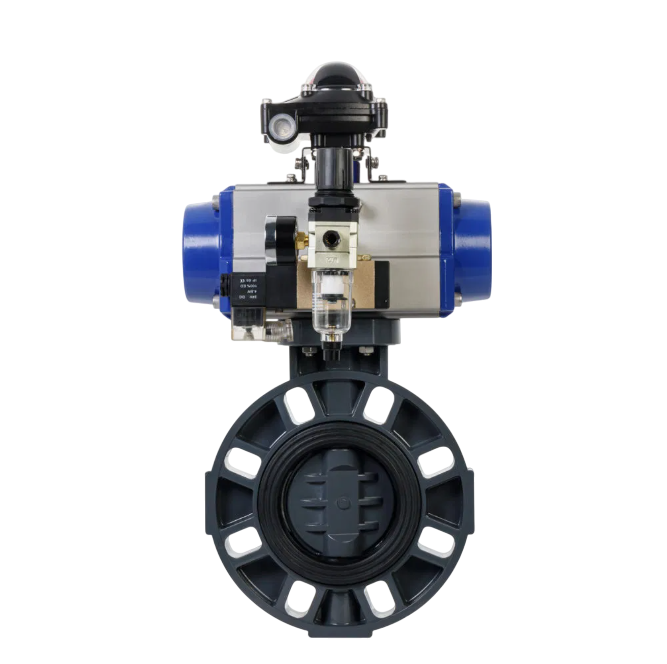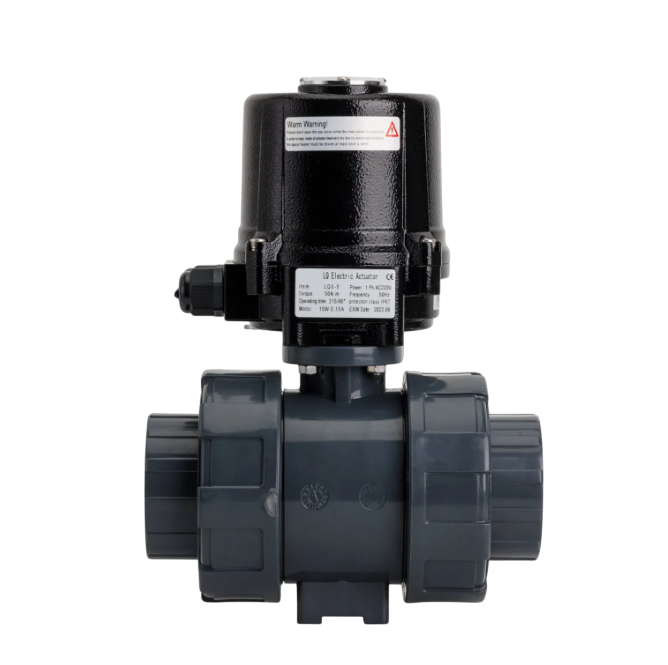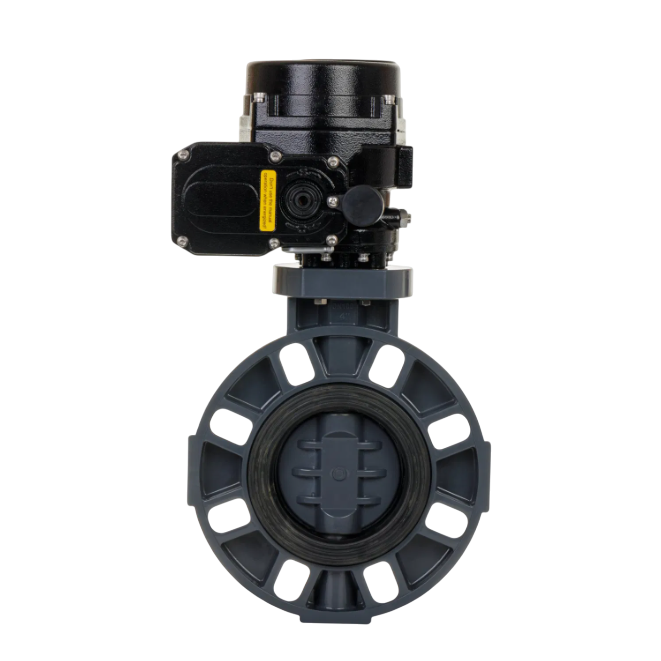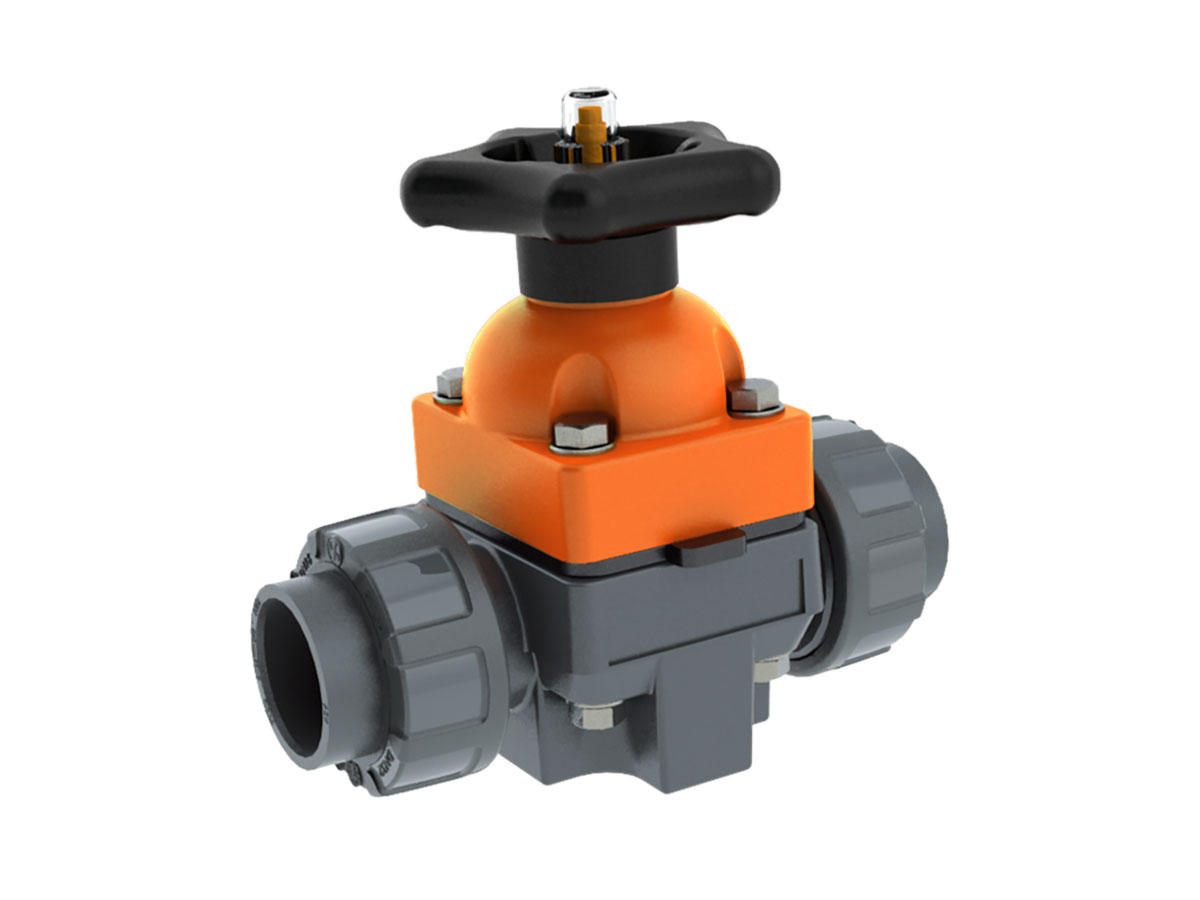
| FIG | PARTS | MATERIAL |
| 1 | Transparent Cover | PS |
| 2 | Trasparent Cover O Ring | EPDM |
| 3 | Handwheel | PP |
| 4 | Handwheel O Ring | EPDM |
| 5 | Drive Shaft | PP |
| 6 | Drive Nut | PP |
| 7 | Diaphragm | EPDM/PTFE |
| 8 | Valve Body O-Ring | EPDM/FPM |
| 9 | Indicator Rod | PP |
| 10/11/12/13 | Bolt,Nut & Washer, Rubber Sleeve | SS |
| 14 | Fastening Cover | PP |
| 15 | Connector | UPVC |
| 16 | Diaphragm Body | UPVC |

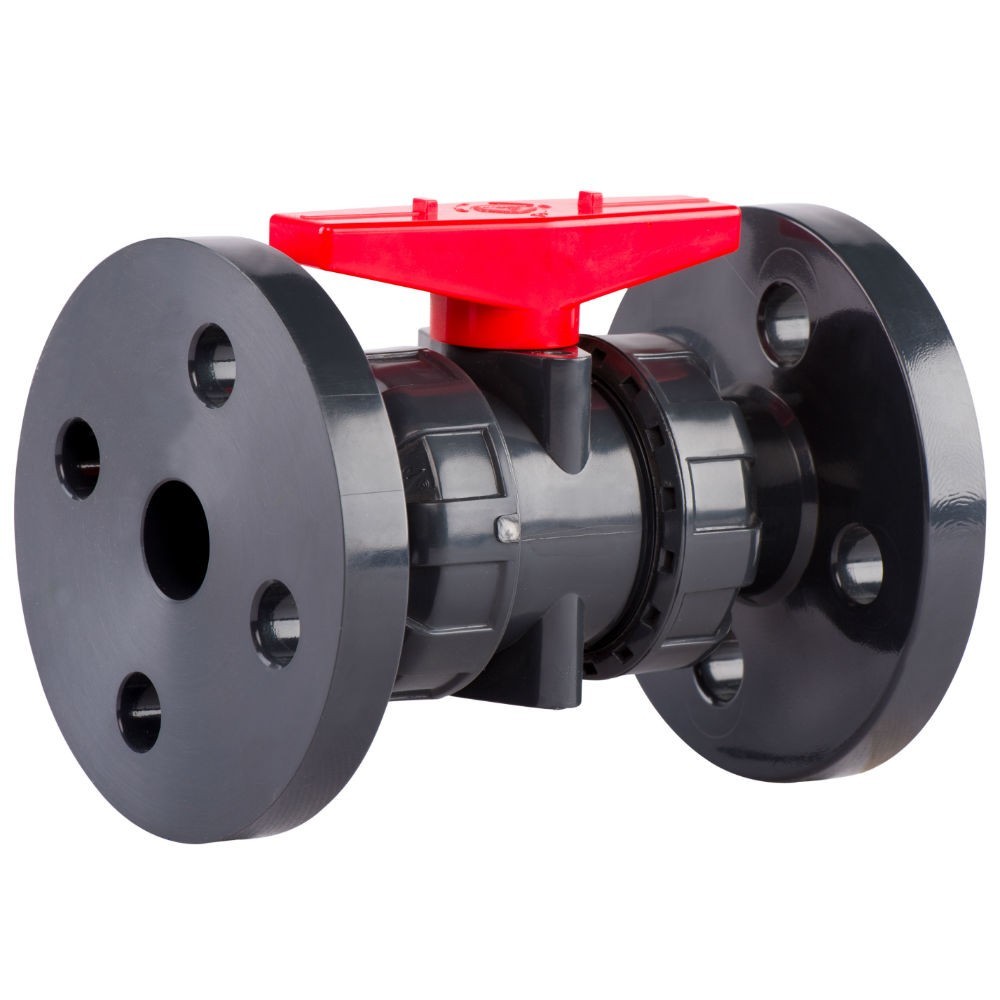
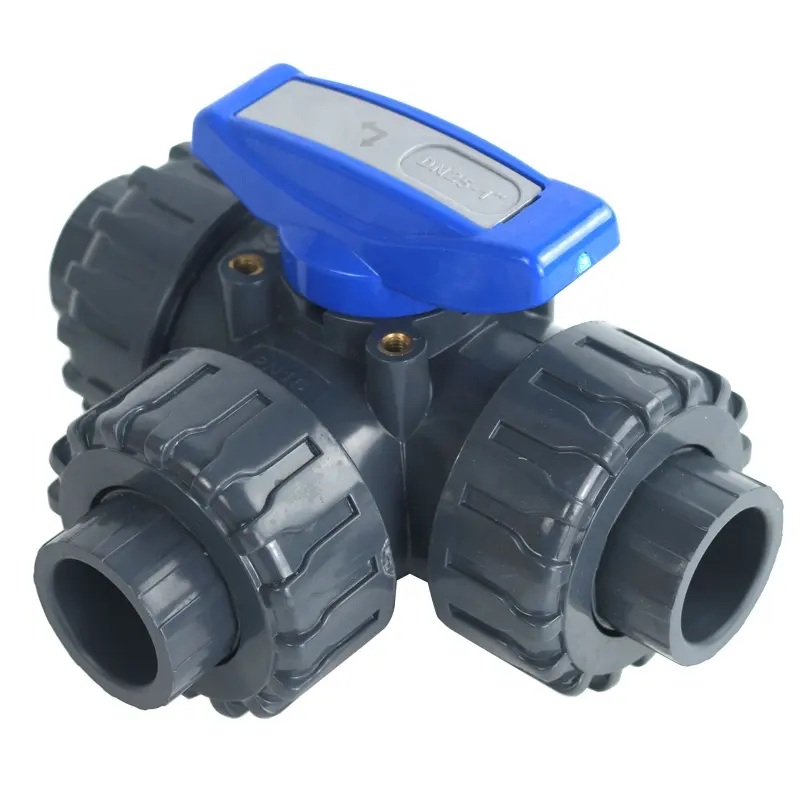
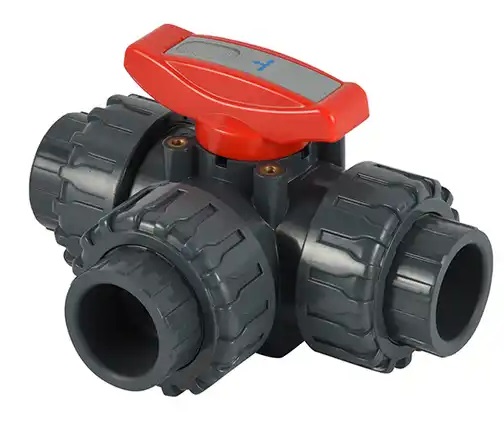
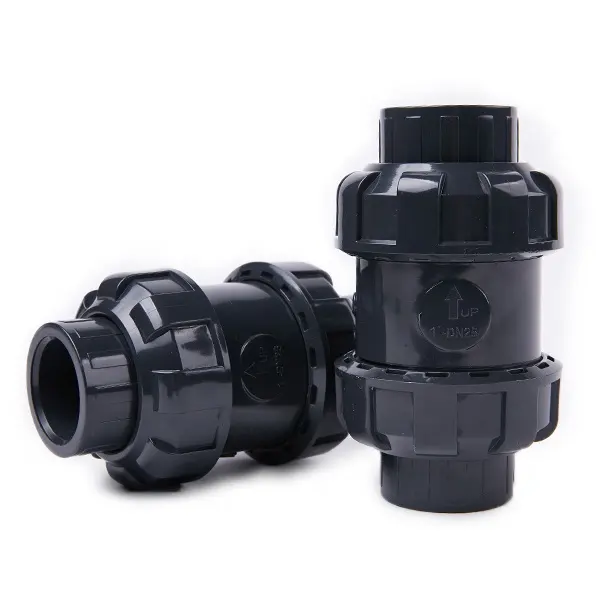
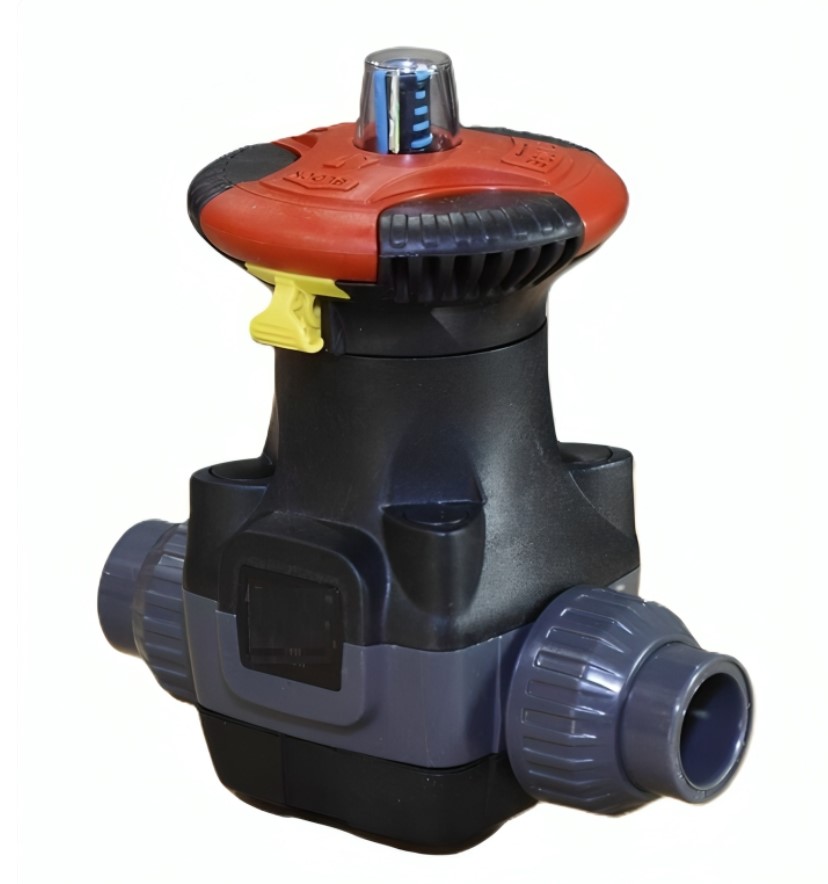
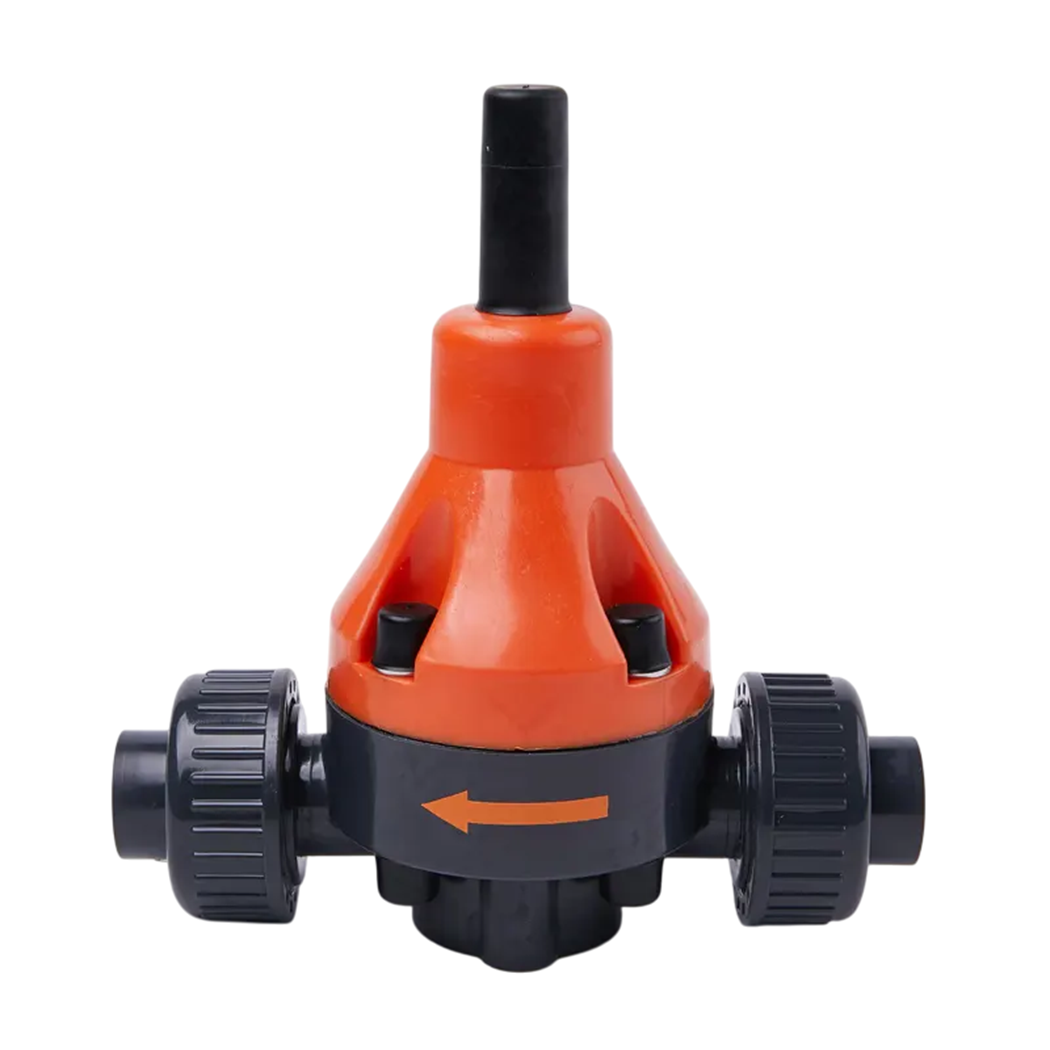
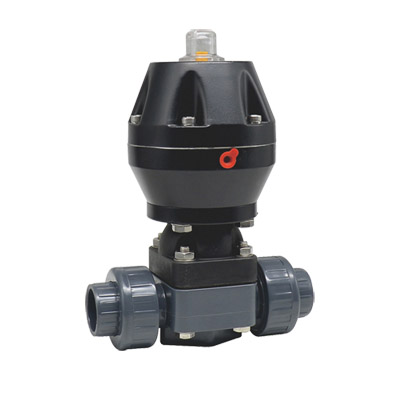
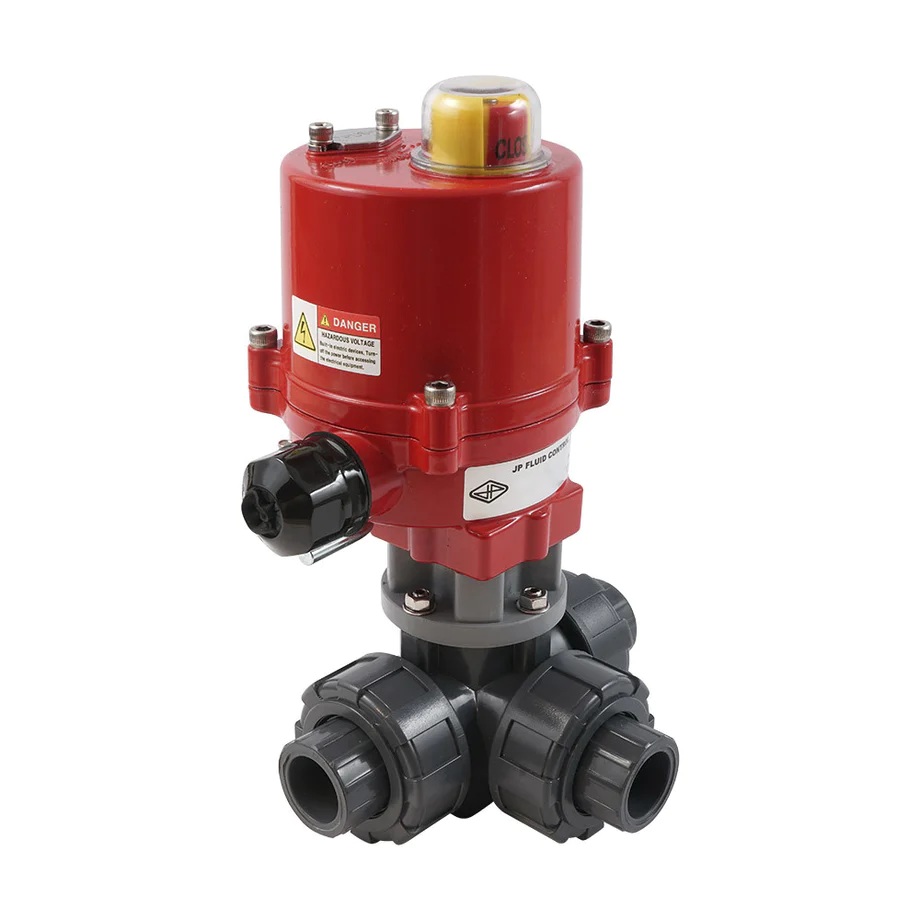
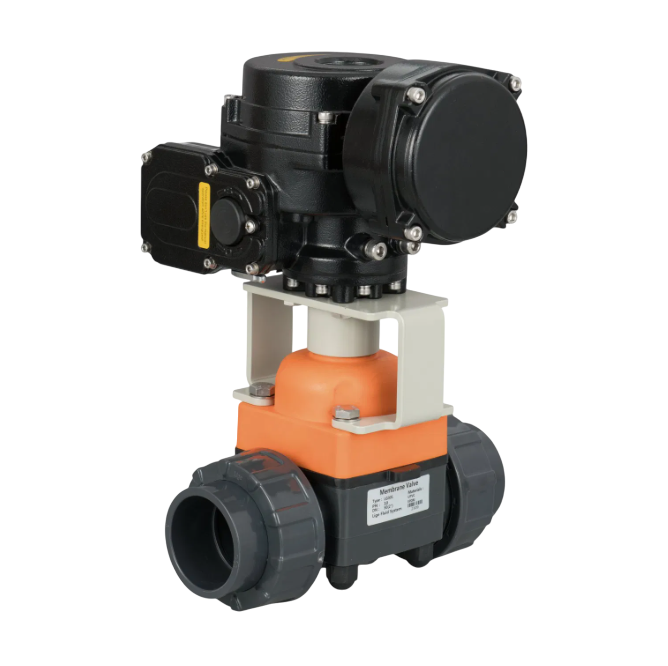
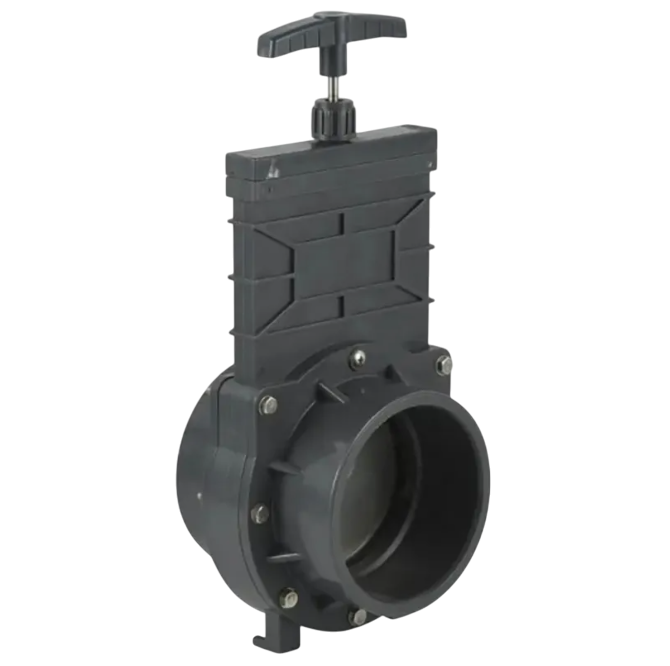
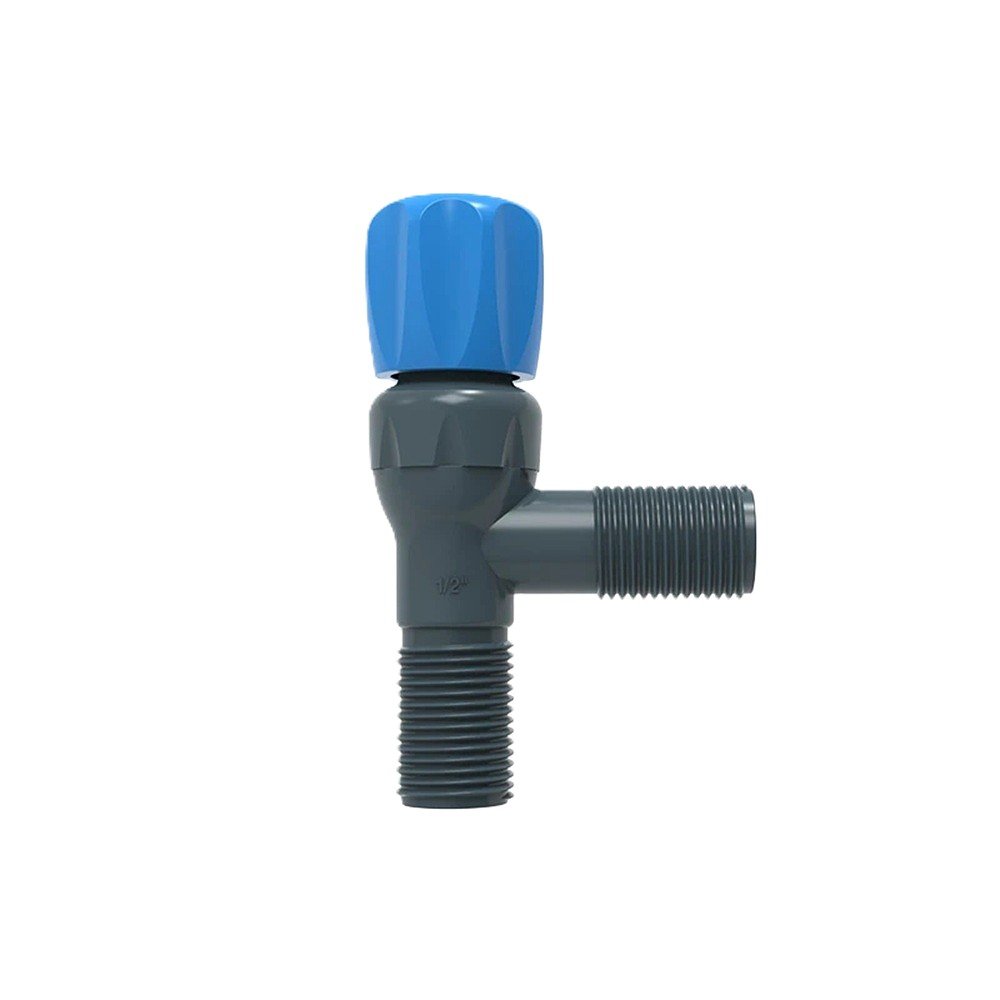
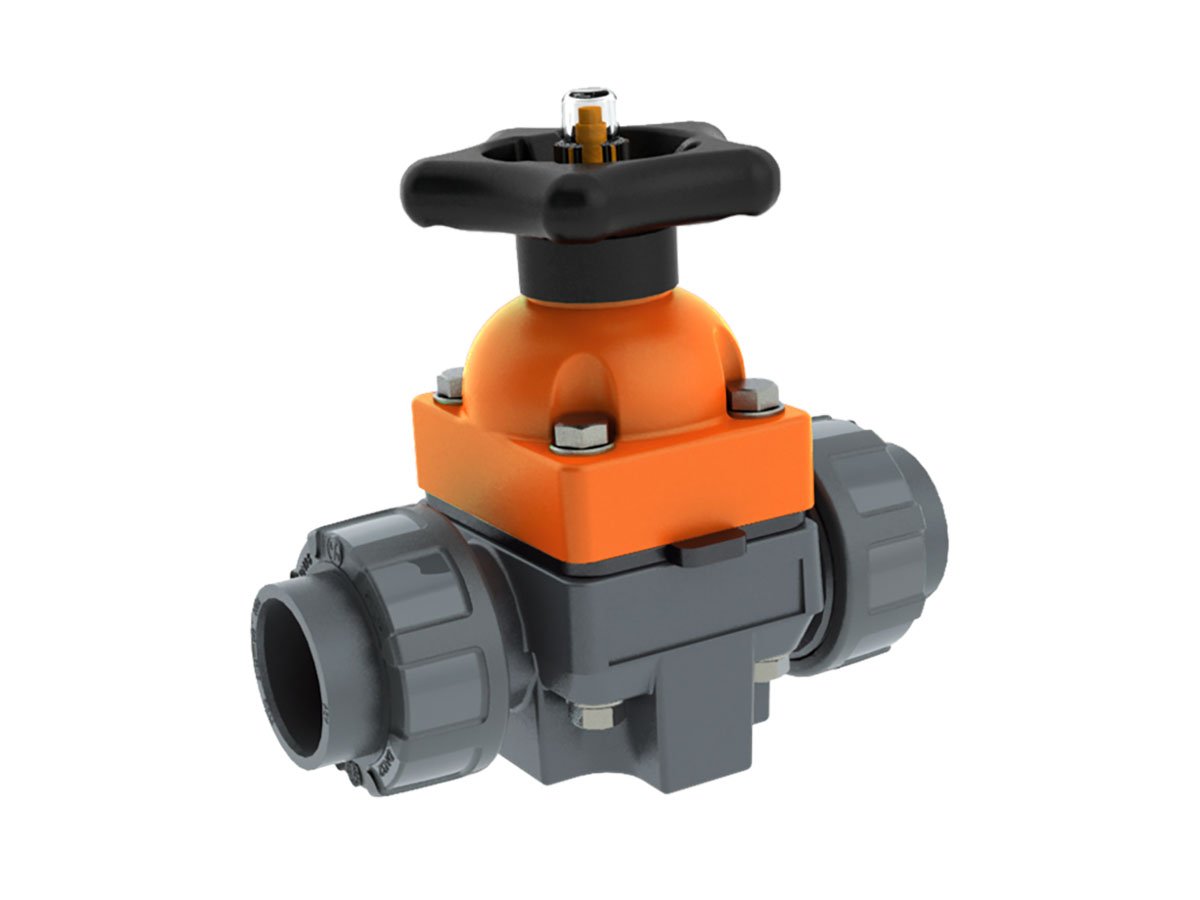
An unplasticized polyvinyl chloride (UPVC) diaphragm valve is a type of linear motion valve used to start, regulate, and stop fluid flow. The valve's key components are its flexible diaphragm, which acts as a barrier, and its corrosion-resistant UPVC body, which are well-suited for a variety of industrial and commercial applications.
How it works
The operation of a UPVC diaphragm valve is simple yet effective.
- When the valve is closed, the diaphragm is pressed against a "weir," or dam-like structure, inside the valve body to create a tight seal and block the fluid flow.
- To open the valve, an actuator or handwheel lifts the diaphragm away from the weir, allowing fluid to flow through.
- This design ensures that the working components, such as the stem and bonnet, are isolated from the fluid, preventing contamination and corrosion.
Key advantages
- High corrosion resistance: UPVC is highly resistant to a wide range of chemicals, including acids, alkalis, and salts. This makes it ideal for use in harsh and corrosive environments.
- Contamination control: The diaphragm seals the fluid from the operating mechanism, which makes it an excellent choice for sterile or high-purity applications, such as in the food and pharmaceutical industries.
- Cost-effective: UPVC valves are generally less expensive than those made from exotic metals, offering a durable solution without a high price tag.
- Lightweight: The material's low weight simplifies transportation and installation, which can lower labor costs.
- Excellent flow control: The weir-style design allows for precise, linear regulation of flow, making it suitable for throttling applications.
- Low maintenance: With minimal moving parts in contact with the fluid, diaphragm valves require less maintenance. The diaphragm can also be replaced easily without removing the entire valve from the pipeline.
Common applications
UPVC diaphragm valves are utilized in numerous industries for fluid control.
- Water treatment: Used in municipal water supply, wastewater treatment, and swimming pool filtration systems for controlling water and chemical flows.
- Chemical processing: Ideal for handling concentrated acids and other corrosive liquids.
- Pharmaceutical and food & beverage: The clean, leak-proof design and ability to prevent contamination are crucial for sterile and sanitary processes.
- Agriculture: Used in irrigation and other agricultural systems where resistance to fertilizers and other chemicals is important.
- Pulp and paper production: Effectively handles liquids with high solids content, such as slurries and sludges.