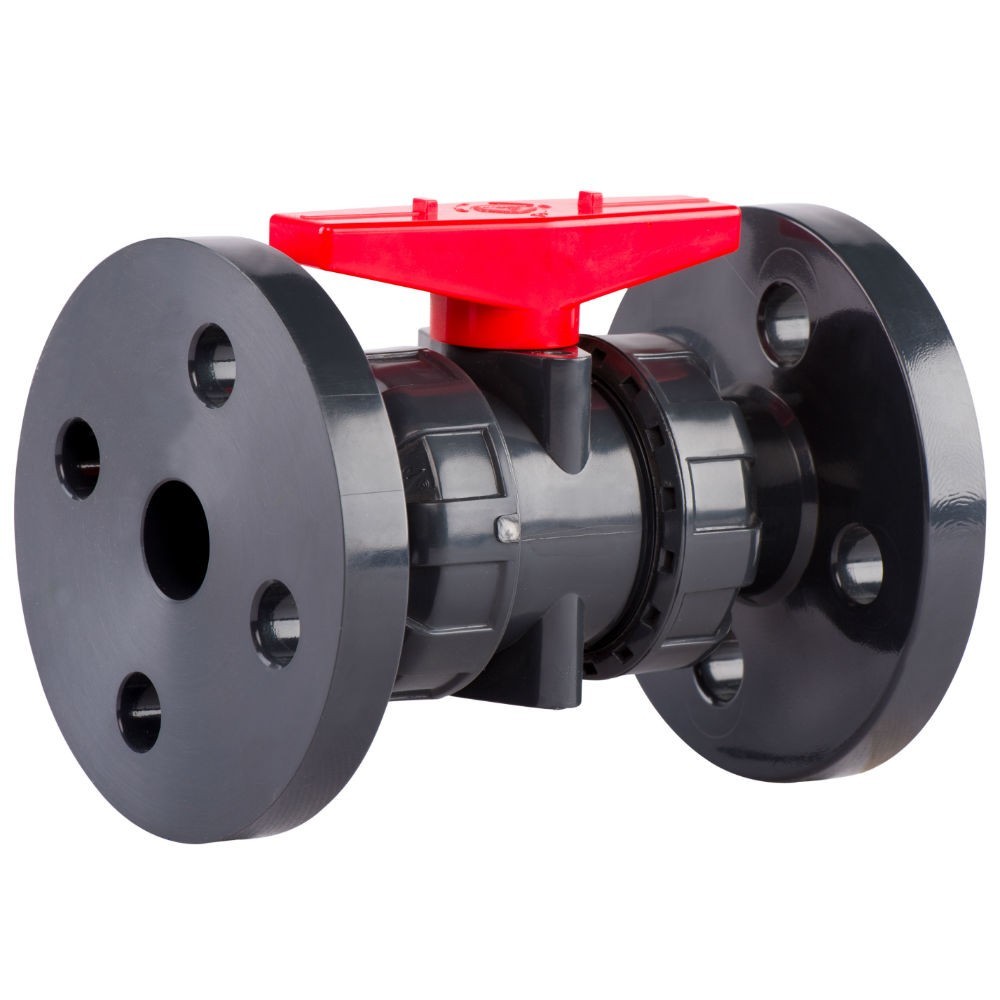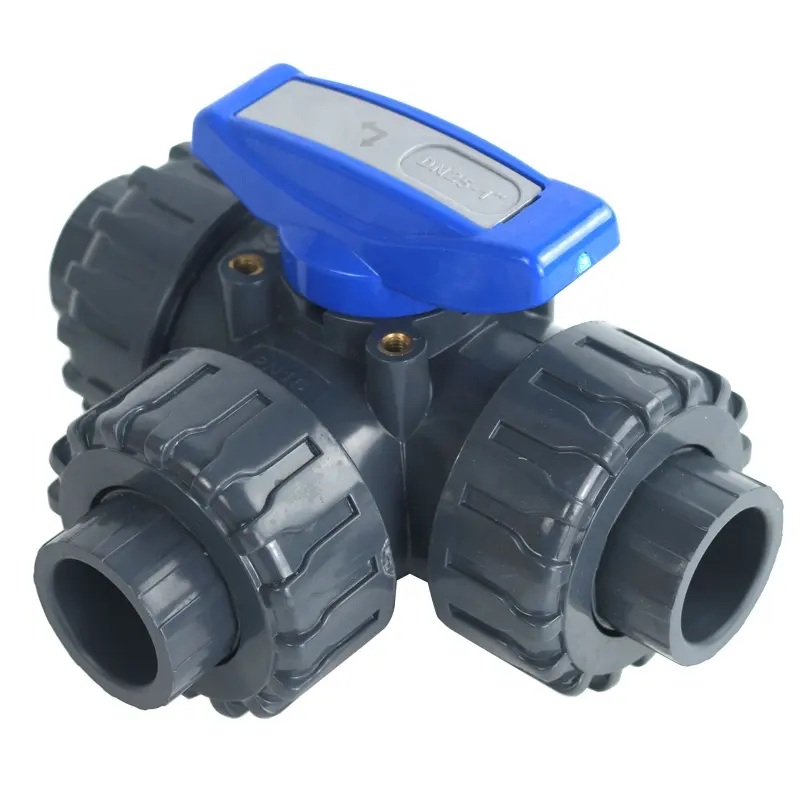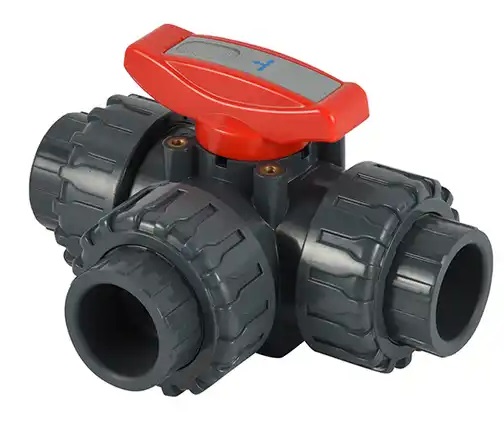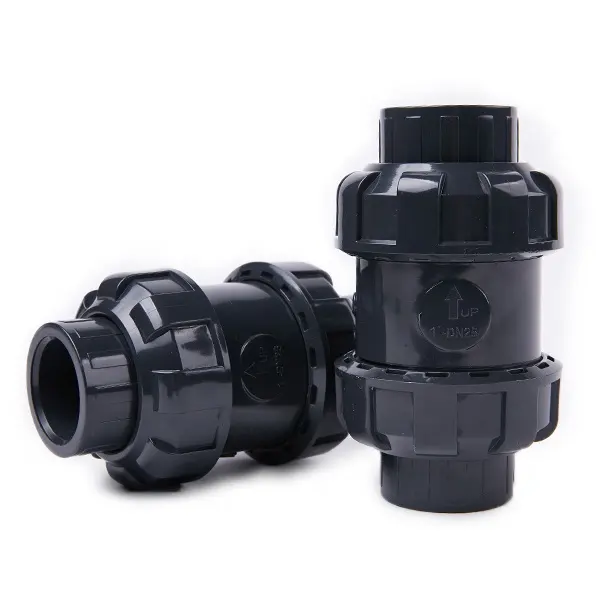
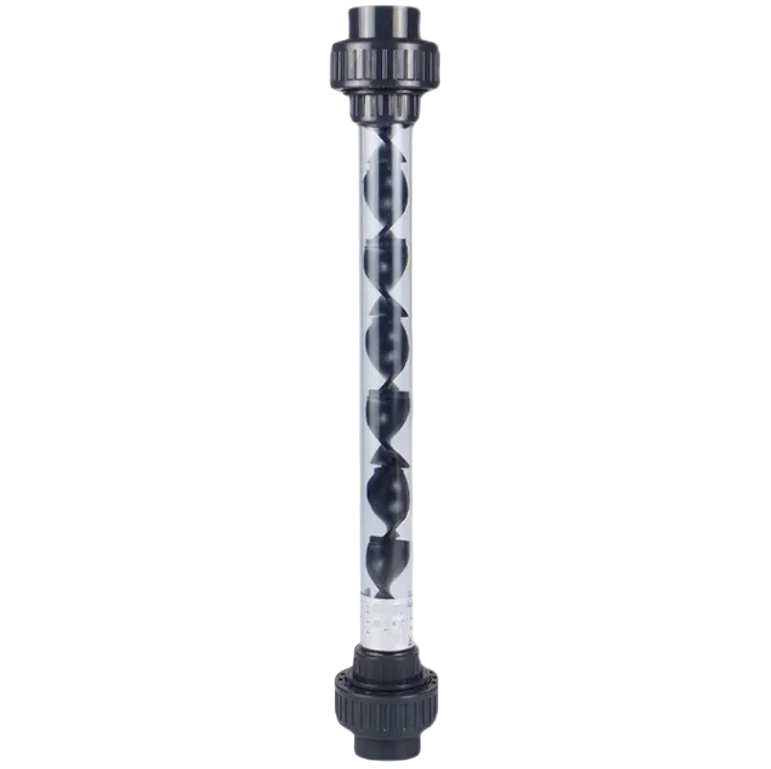
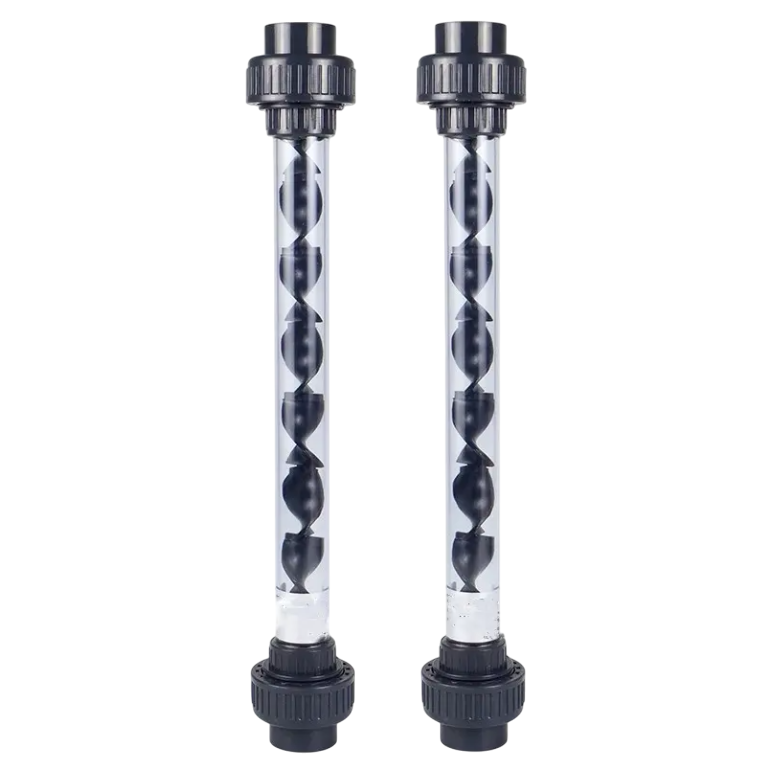
| FIG | PARTS | MATERIAL |
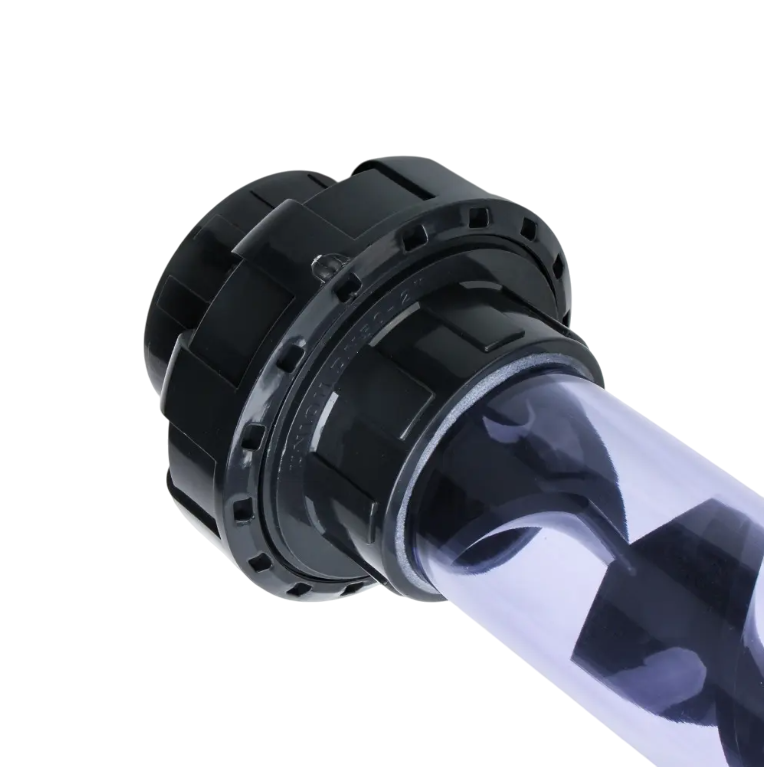
| 1 | Adapter | UPVC |
| 2 | Nut | UPVC |
| 3 | Fixed Snap | UPVC |
| 4 | O-ring | EPDM |
| 5 | Union Body | UPVC |
| 6 | Pipe | UPVC |
| 7 | Mixer | UPVC |

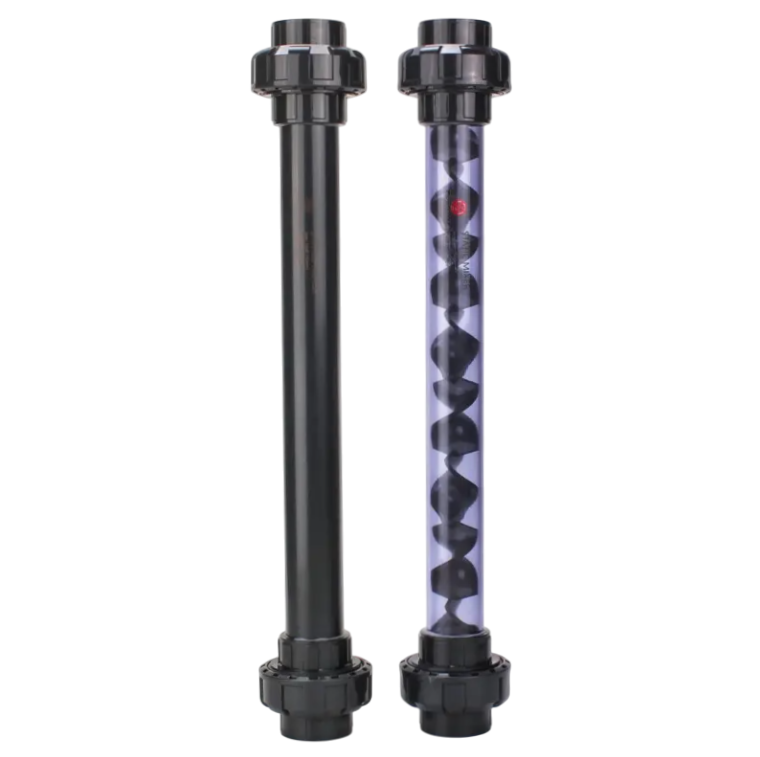
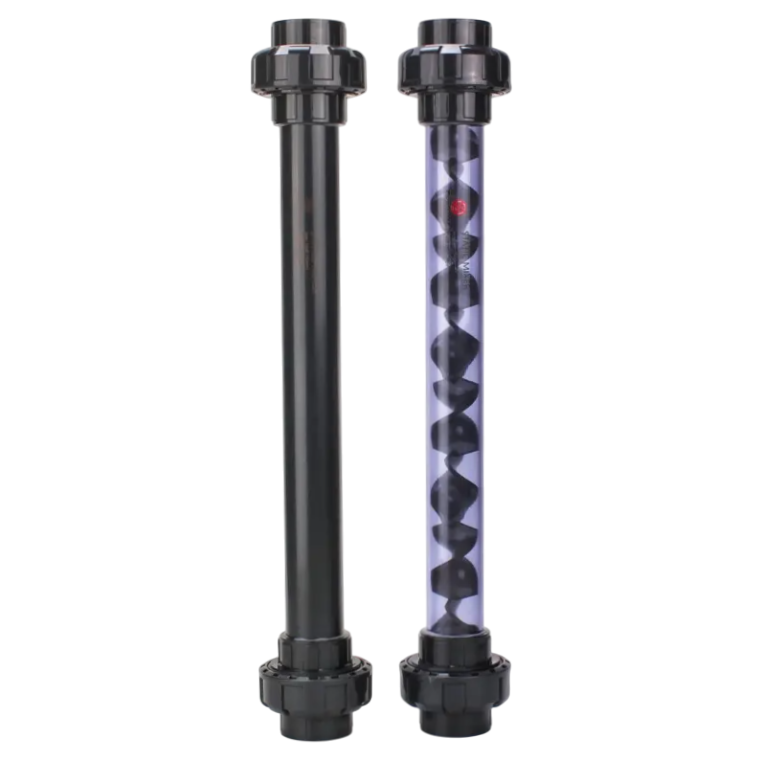
EVA UPVC static mixer is a motionless device used for mixing fluids within a pipeline, leveraging the flow energy rather than moving parts. UPVC (unplasticized polyvinyl chloride) is a common material choice due to its resistance to corrosion and chemical attack, making it suitable for various applications like water and wastewater treatment. These mixers are known for their low energy consumption, ease of installation, and minimal maintenance requirements.
Here's a more detailed explanation:
How it works: Static mixers consist of a series of fixed elements (blades or baffles) within a pipe, designed to split, extend, and re-orient the flow of fluids passing through them. This action creates turbulence and shear forces, resulting in efficient mixing without any moving parts.
Key features and benefits:
- No moving parts: Eliminates the need for maintenance and reduces the risk of mechanical failure.
- Low energy consumption: Utilizes the flow energy of the fluids, minimizing energy costs.
- Compact design: Requires minimal space compared to dynamic mixers.
- Corrosion resistance: UPVC material offers excellent resistance to chemicals and corrosion, making it suitable for a wide range of applications.
- Ease of installation: Can be easily integrated into existing pipelines.
- Cost-effective: Offers a lower total cost of ownership compared to dynamic mixers.
Common applications:
- Water and wastewater treatment: For dosing chemicals, pH adjustment, and mixing disinfectants.
- Chemical processing: For blending liquids, gases, and powders, as well as for heat transfer and reaction processes.
- Food and beverage industry: For mixing ingredients, blending liquids, and ensuring consistent product quality.
UPVC material properties:
- Corrosion resistance: UPVC is highly resistant to a wide range of chemicals and corrosive environments.
- Non-conductive: Does not conduct electricity, preventing corrosion issues.
- Smooth inner surface: Minimizes friction and pressure drop in the pipeline.
- Tasteless and odorless: Suitable for applications involving potable water and food products.
Product Overview:
- The pipeline static mixer, also known as a static mixer, is an ideal device for the instantaneous mixing of treated water and various chemicals. It has a very good effect on the dosing of various coagulants, flocculants, ozone, liquid chlorine, as well as acid-base neutralization and gas-water mixing systems.
- The product has the characteristics of fast mixing, simple structure, low energy consumption, and small footprint. Without external force, the water flows through 6 - 8 mixing units. The fluids interact and cross - split, and at the same time, the vortices rotate and exchange continuously, achieving a very good mixing effect in an instant, with a mixing efficiency as high as 90 - 95%
Materials: UPVC, PP, CPVC, PVDF, SUS304, SUS316L
Design References
- The dosing position of various chemicals should be in front of the pipeline static mixer and more than 25 cm away. It works better when used in conjunction with a jet mixer.
- The pipeline for dosing chemicals can be designed according to the water supply and drainage standards. The flow velocity in the pipeline should be greater than 0.9m/s, and the internal pressure of the pipeline should be less than 1.6MPa.
- The pipeline static mixer is designed according to specific diameters and water volumes. Once the flow rate decreases, the head loss drops significantly, thus obviously affecting the mixing effect.