
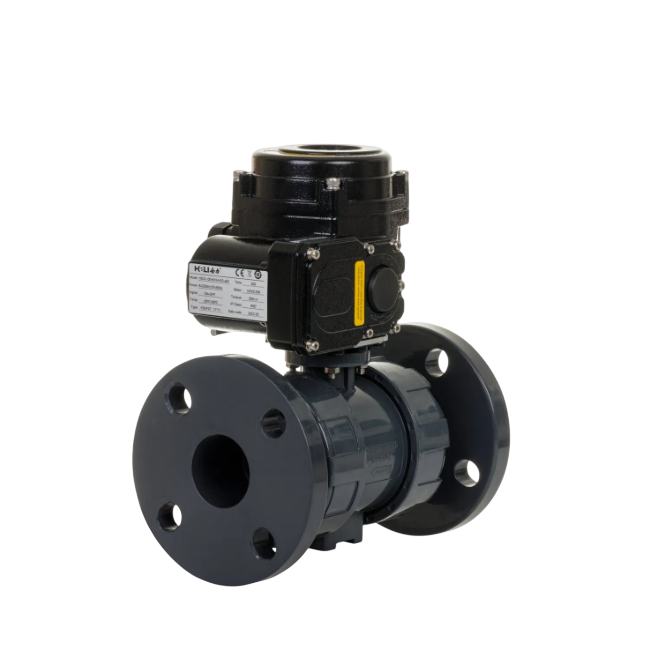

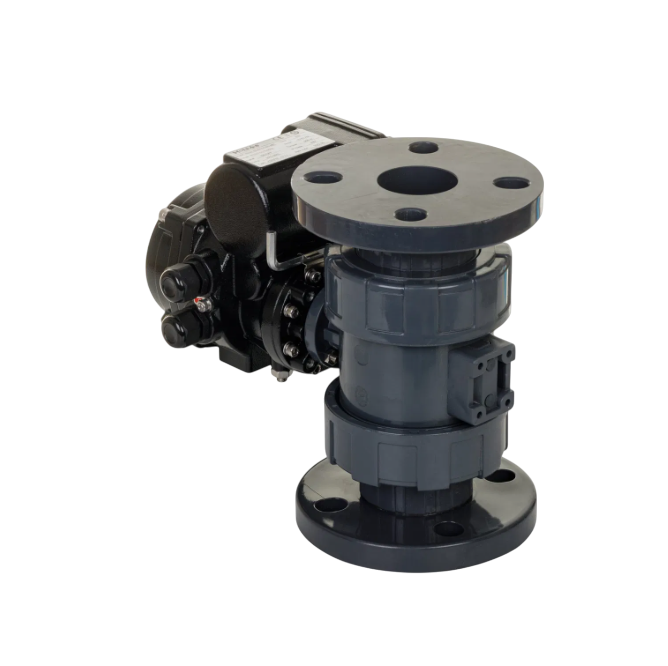
| FIG | PARTS | MATERIAL | QTY |
| 1 | Body | UPVC | 01 |
| 2 | Ball | UPVC | 01 |
| 3 | Stem | UPVC/SS | 01 |
| 4 | Ball Seat | PTFE | 02 |
| 5 | Body O Ring | EPDM/NBR | 01 |
| 6 | Body Connector "O"Ring | EPDM/NBR | 01 |
| 7 | Body Connector | UPVC | 01 |
| 8 | Connector | UPVC | 02 |
| 9 | Connector Nut | UPVC | 02 |
| 10 | Stem "O" Ring | EPDM/NBR | 01 |
| 11 | Body "O" Ring | EPDM/NBR | 01 |
| 12 | Bracket Pad | ISO 5211 | 01 |
| 13 | Actuator | Electirc | 01 |
| 14 | Flange | Std | 02 |

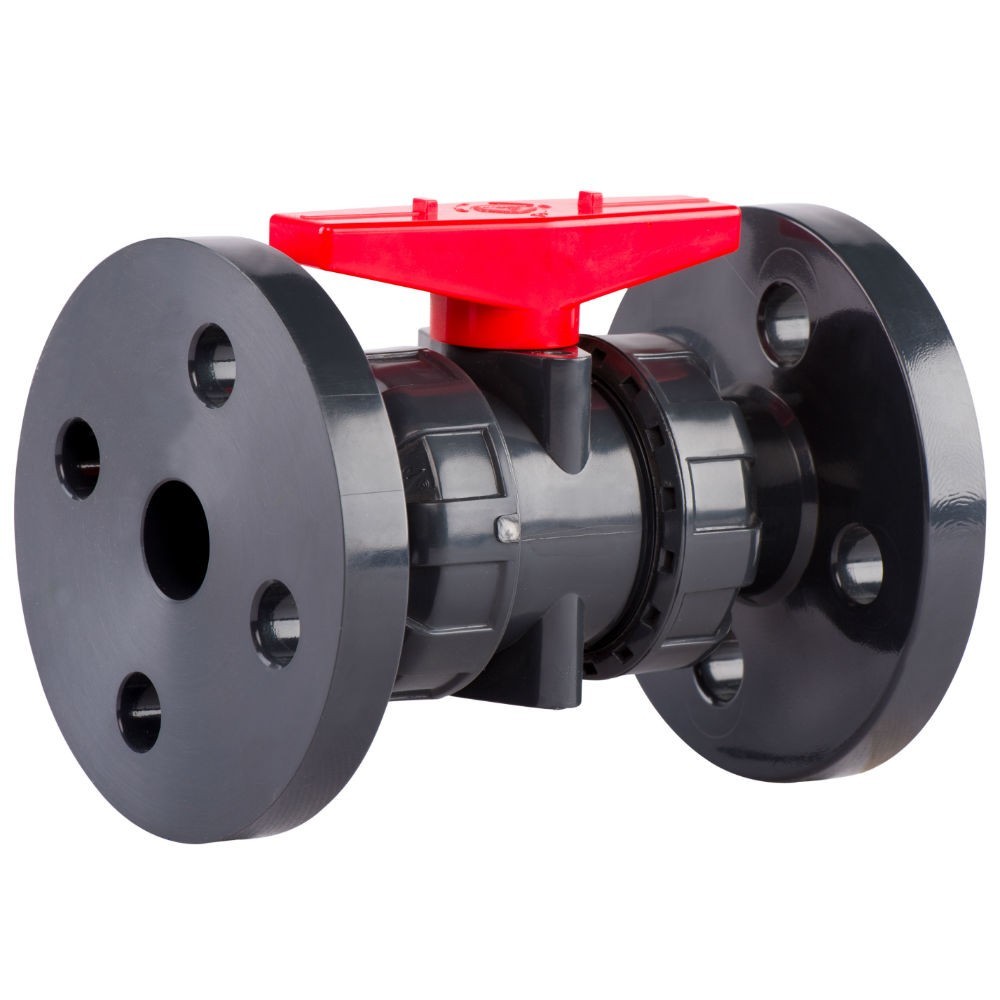
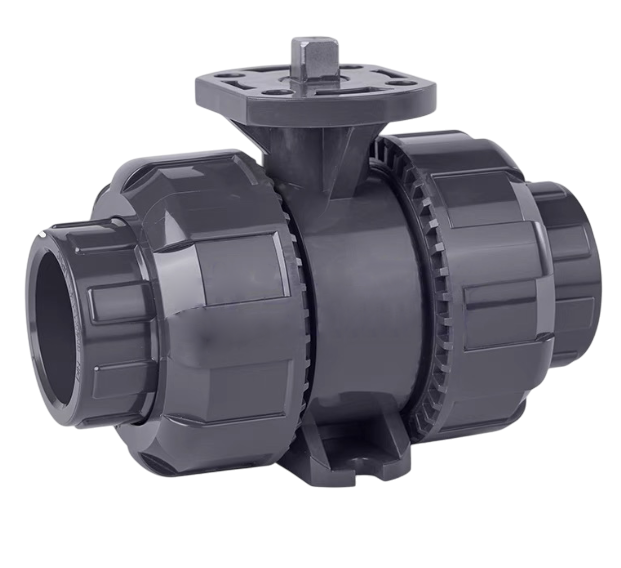
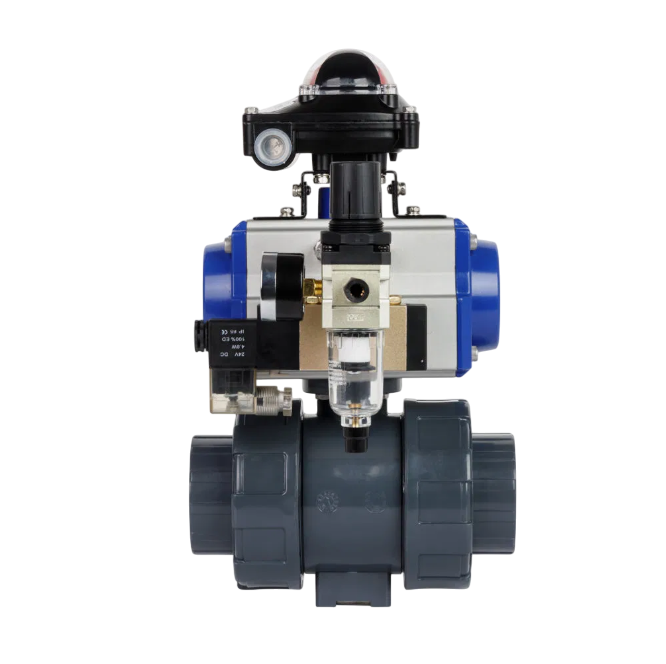
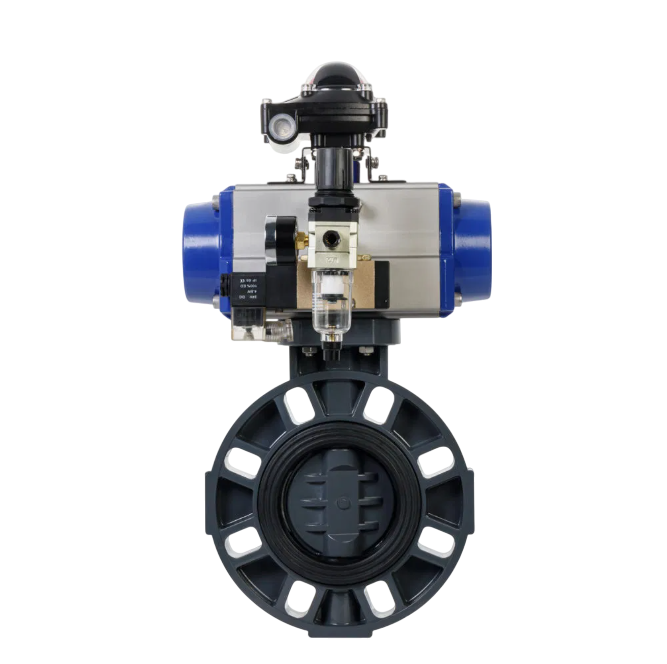
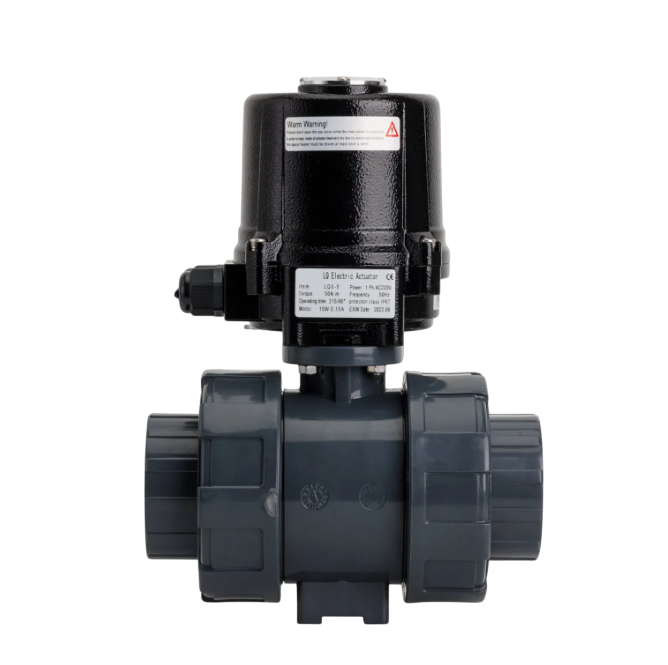
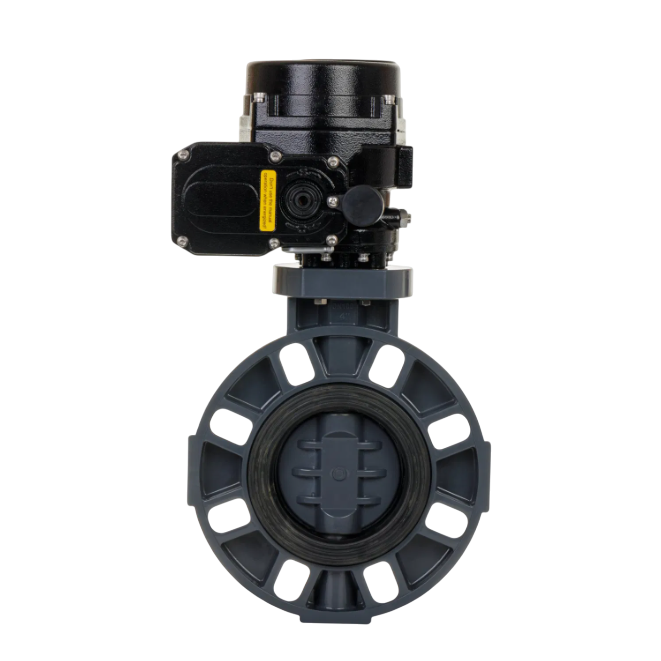
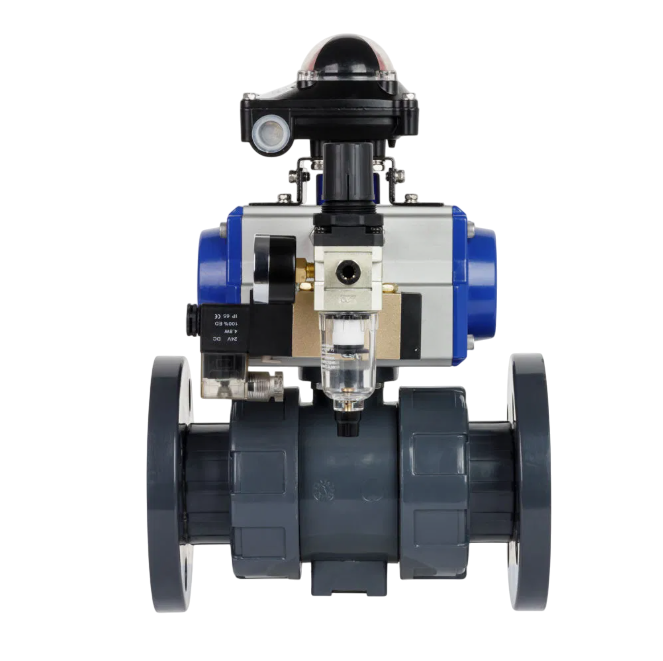
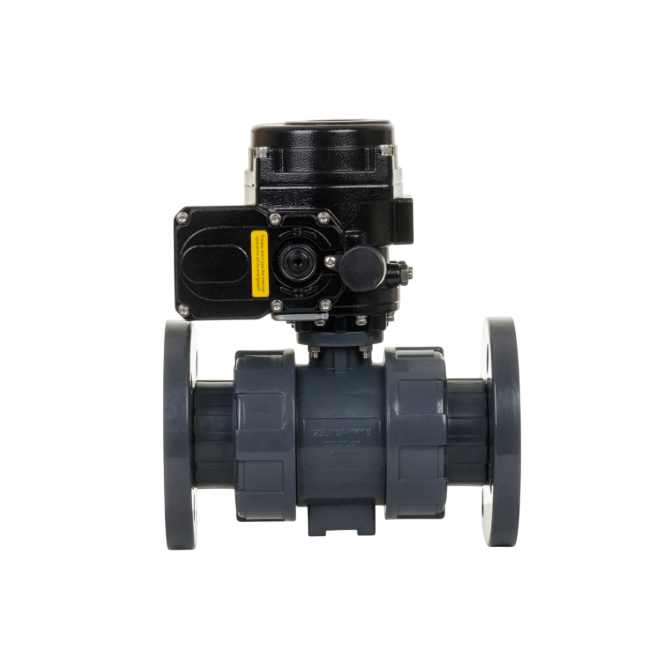
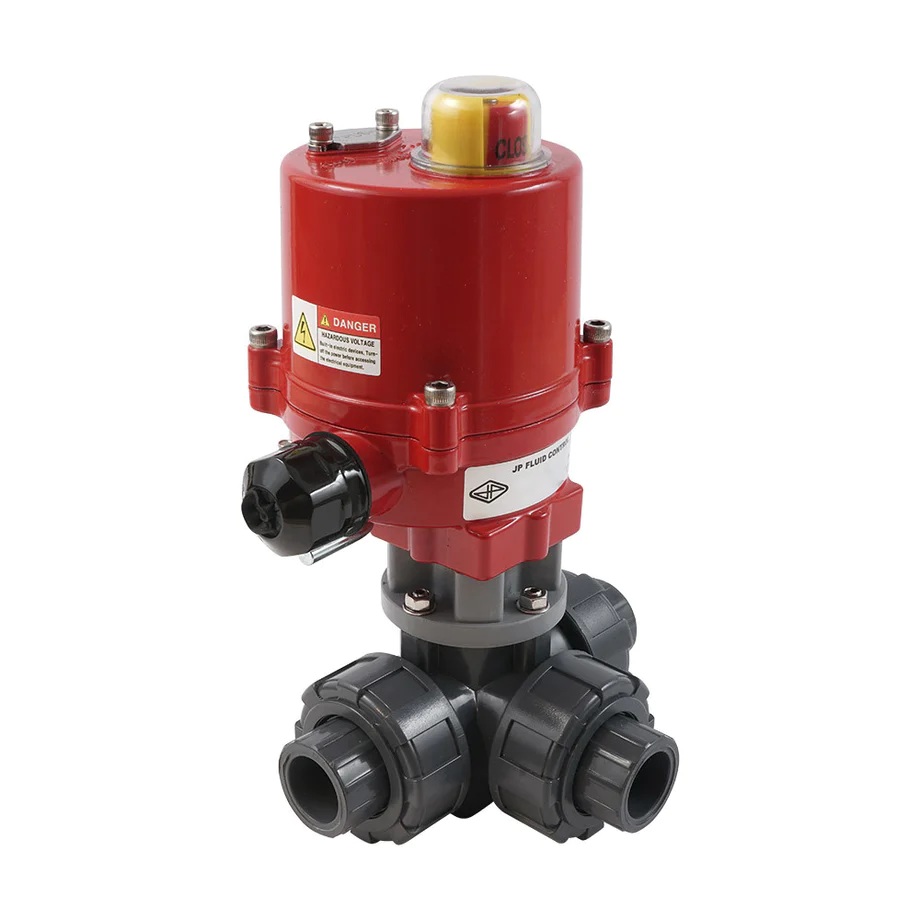
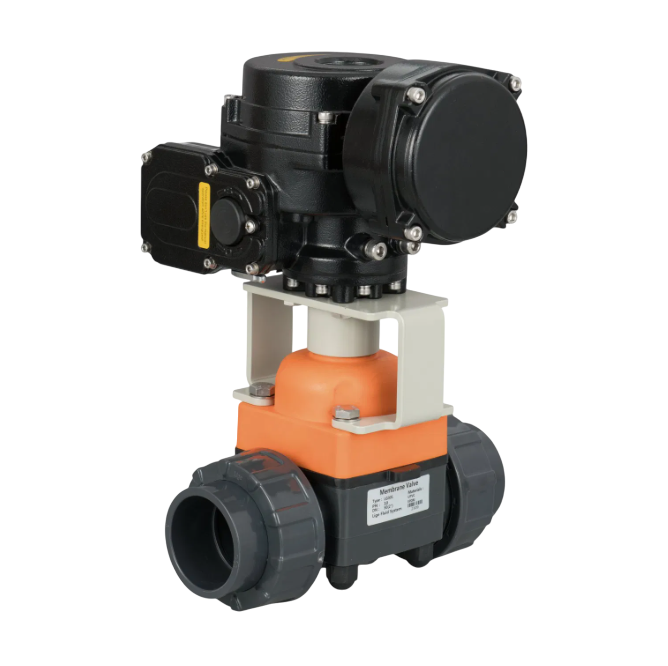
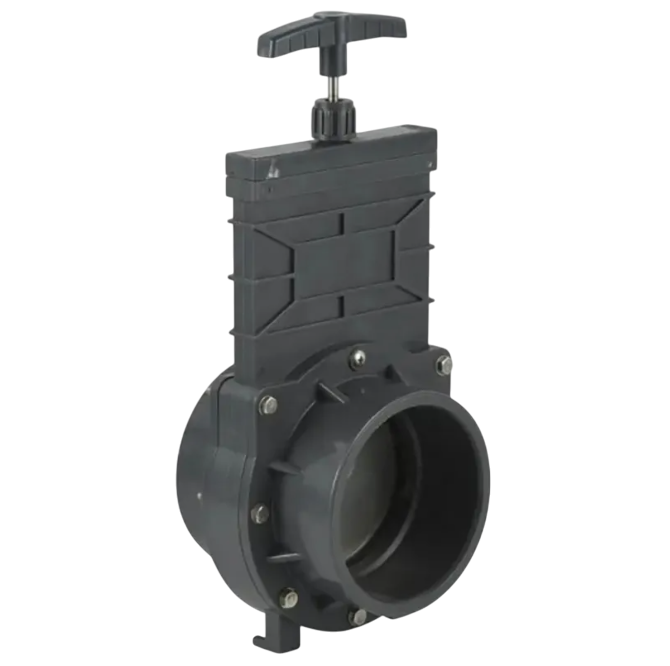
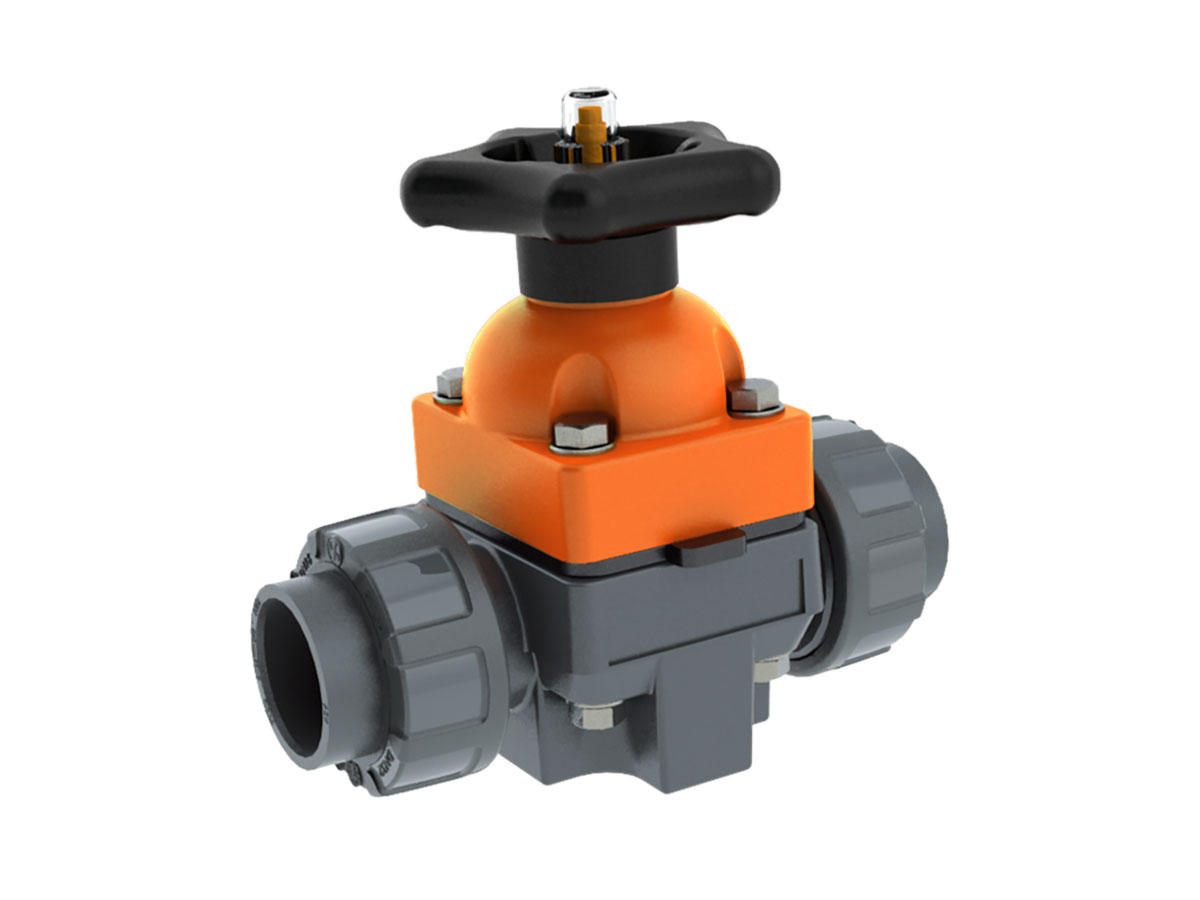
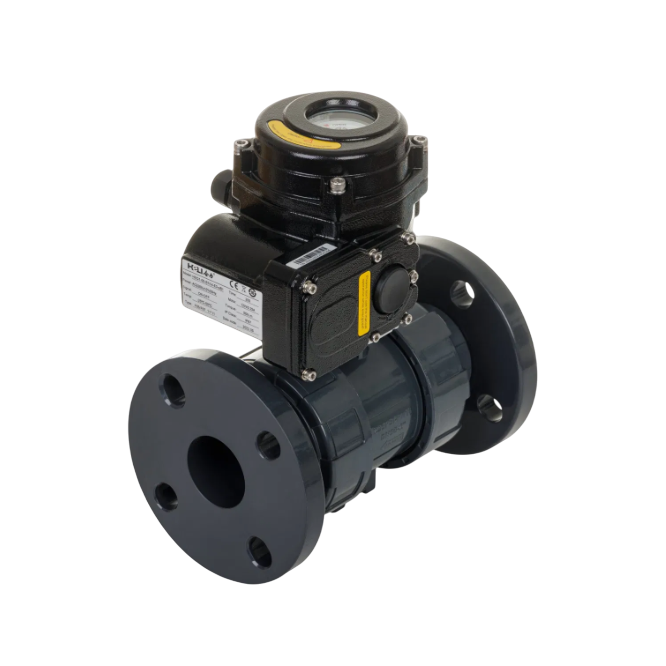
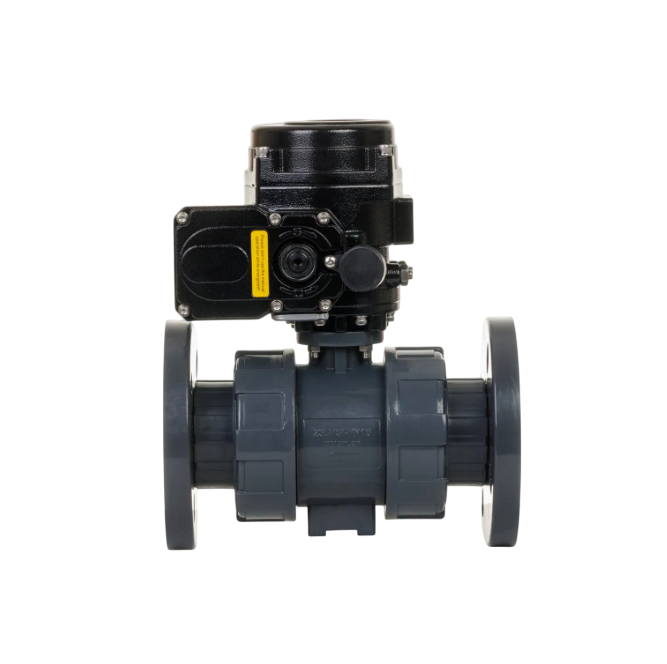
An EVA Motorised or electrically actuated UPVC true union ball valve with flanged ends is a type of valve used to control fluid flow in piping systems, particularly in applications where corrosion resistance and ease of maintenance are crucial.
Here's a breakdown of its features and applications:
Key Features
- Motorised or Electric Actuator: This allows for automatic operation, either for on/off control or modulating (fine control) applications. The electric actuator allows for remote control and precise operation, enhancing system efficiency and reducing manual intervention.
-
- Control Types: Electric actuators can be controlled in various ways, including:
- On/Off: Fully open or fully closed operation.
- Modulating: Allowing for intermediate positions and precise flow control.
- Power Supply: Available in various voltage options, such as 12V DC, 24V DC, and 220V AC.
- Manual Override: Many actuators include a manual override mechanism (e.g., a key type or wheel type) for manual operation in case of power failure or emergency.
- Enclosure: Electric actuators are available with weatherproof and flameproof enclosures,
- Control Types: Electric actuators can be controlled in various ways, including:
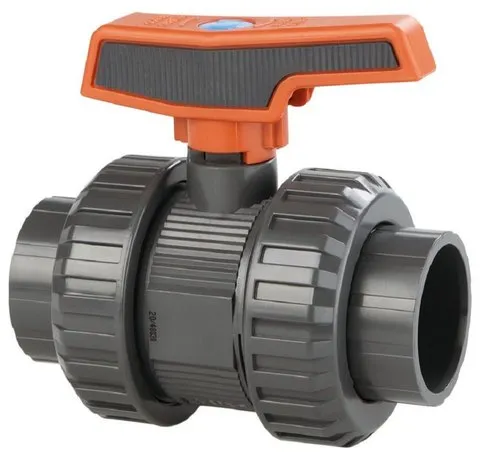
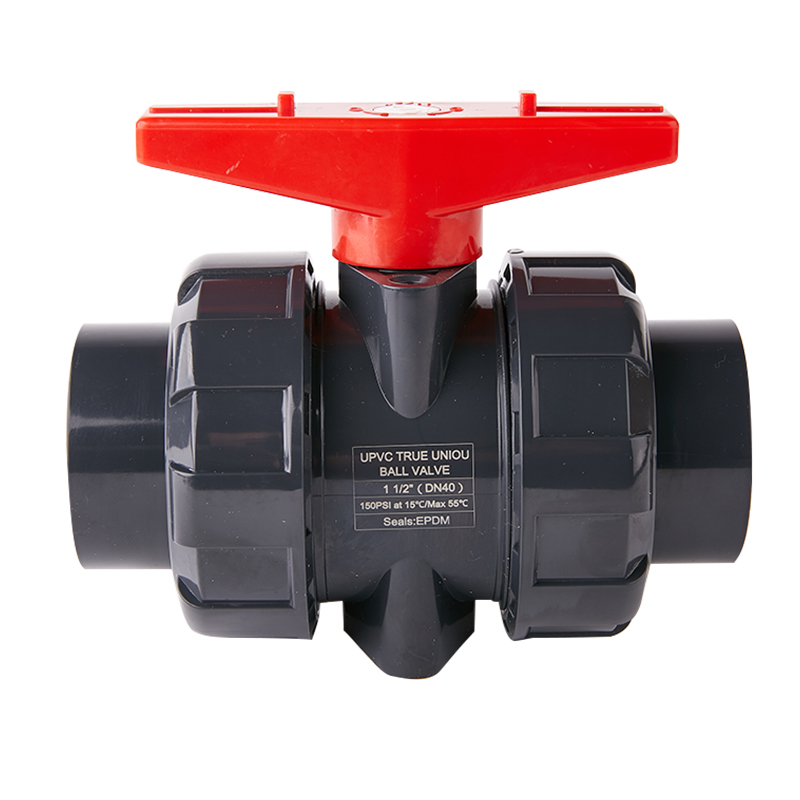
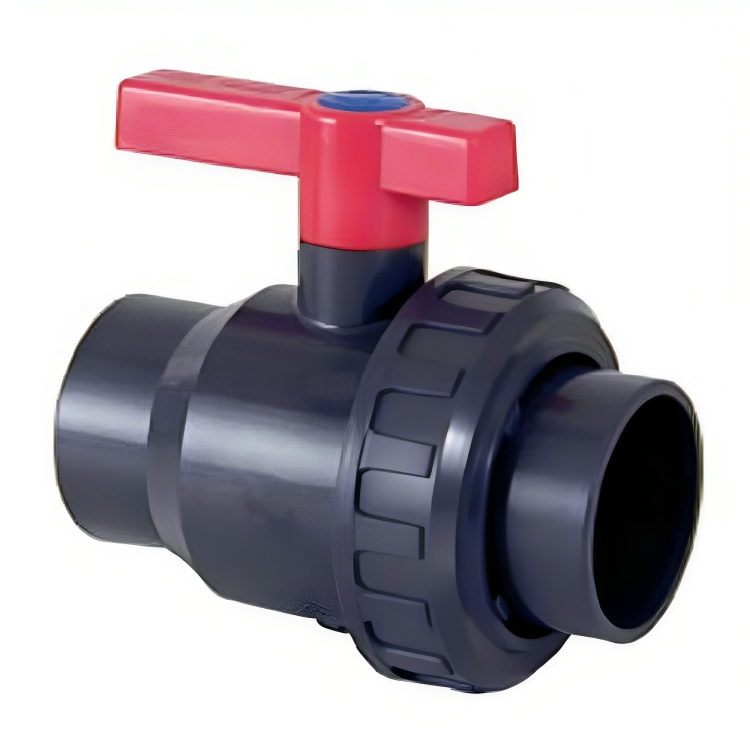
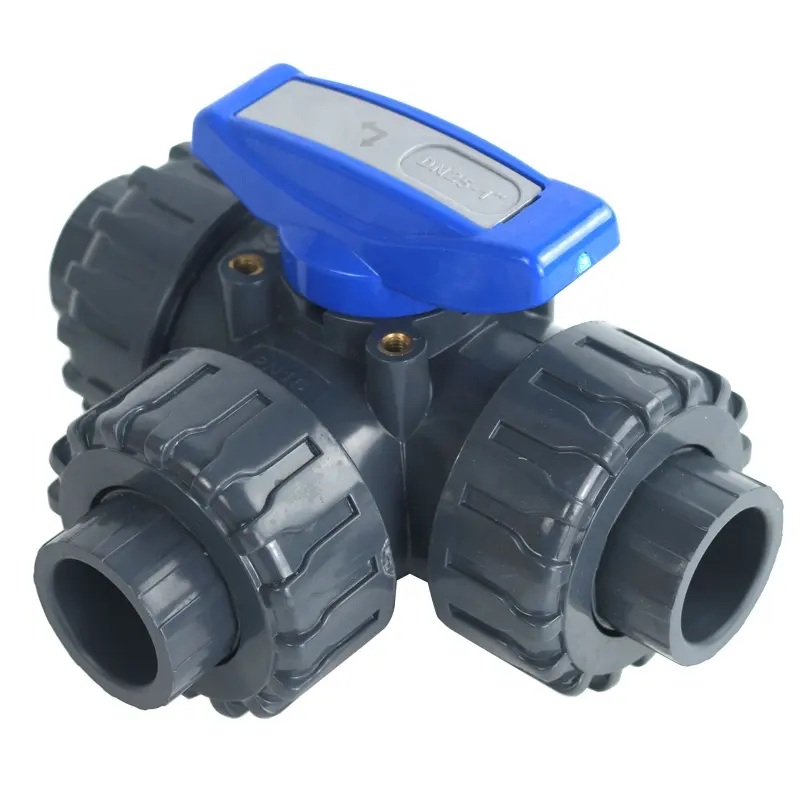
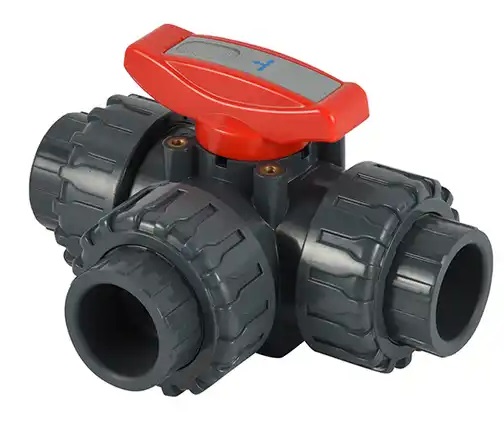
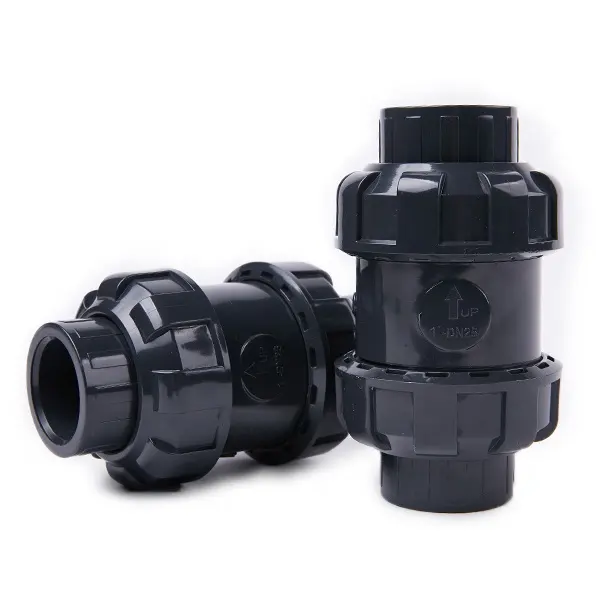
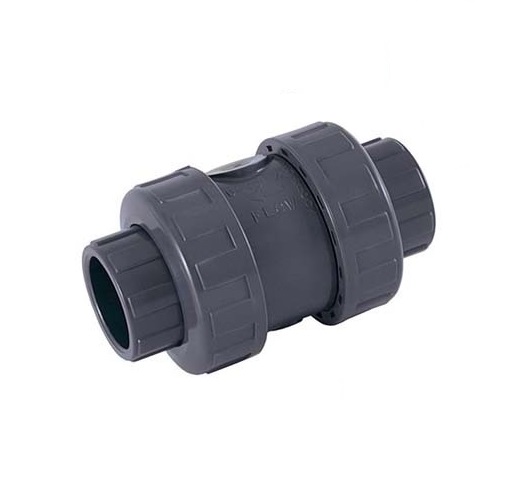
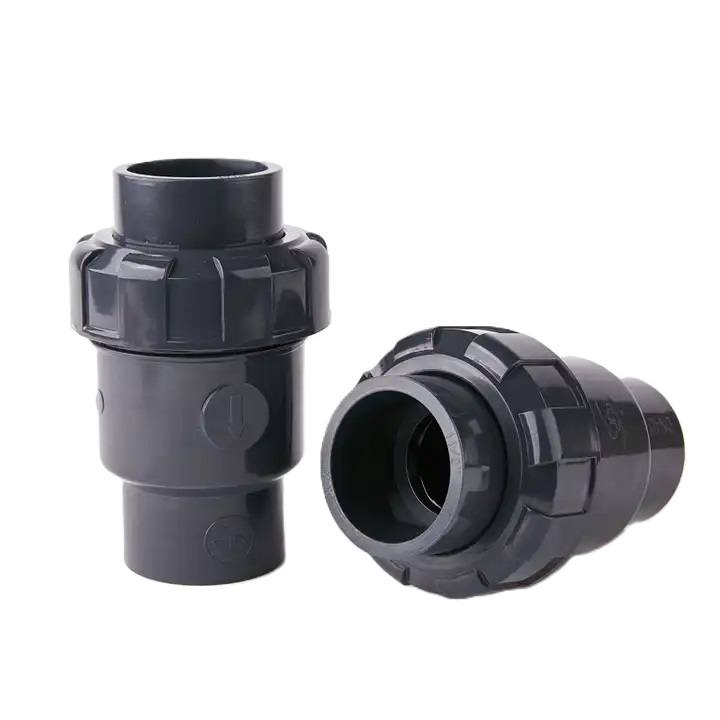
- True Union Design: This design facilitates easy installation, removal, and maintenance without cutting the pipeline, minimizing downtime. It consists of two halves connected by a union nut, allowing for convenient disassembly.
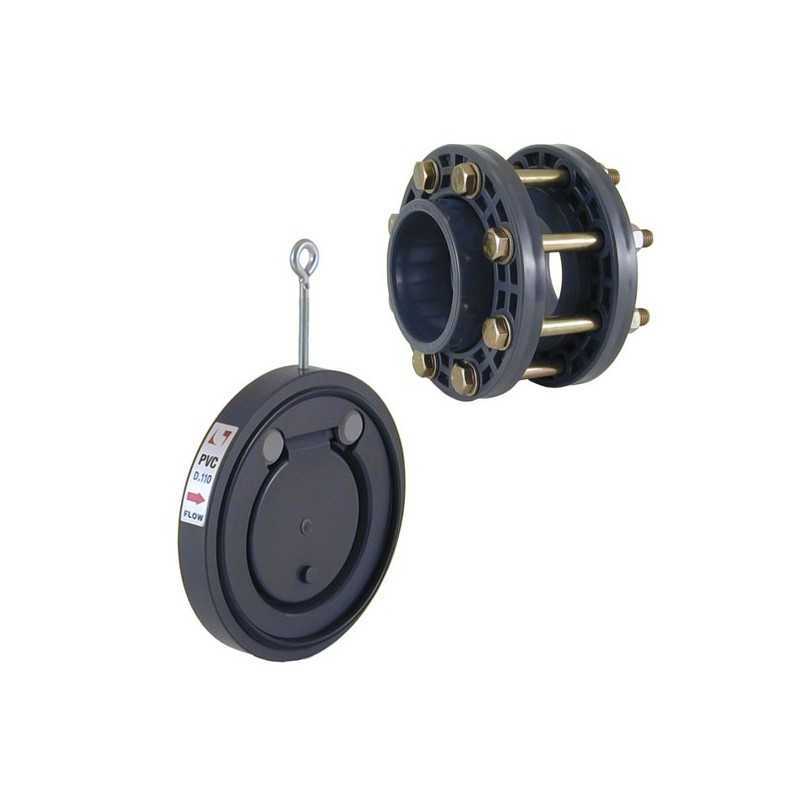
- Flanged Ends: Flanged ends provide a secure and leak-proof connection to other flanged components in the pipeline system, common in industrial settings and larger piping systems. These ends often adhere to standards like ANSI, DIN, or JIS.
- UPVC Material: Unplasticized polyvinyl chloride (UPVC) provides excellent corrosion and chemical resistance, making the valve suitable for a wide range of liquids and gases. Some manufacturers specifically mention using ASTM D1784 virgin UPVC resin.
- Durable and Reliable: These valves are designed for durability and a long service life, even in demanding environments. They are often 100% factory tested and designed for low operating torque.
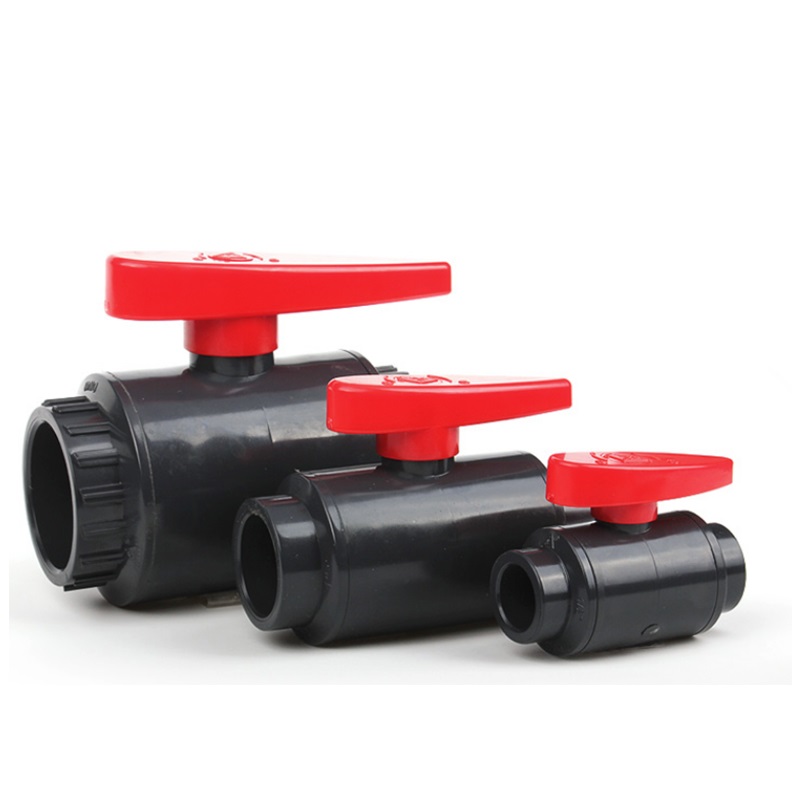
- Available Sizes: These valves are available in a variety of sizes to suit diverse piping requirements, from small diameters (e.g., ½" or 20mm) to larger diameters (e.g., 4" or 110mm).
- Pressure Ratings: The valves are designed to withstand a range of operating pressures, including PN10 and PN16 versions
- Temperature Range: They have specific temperature ratings depending on the material. For example, PVC can handle temperatures up to 55°C, CPVC up to 95°C, and PP up to 120°C.
- O-Rings and Ball Seat: O-Rings may be made of food-grade EPDM or Viton®, while the ball seat can be made from HDPE or PTFE.
- Minimal Pressure Drop: They are designed to allow for maximum flow and minimum pressure drop or turbulence.
Applications
These valves are widely used in a variety of applications due to their durability, corrosion resistance, and ease of maintenance. Some common applications include:
- Water treatment and RO systems
- Chemical and pharmaceutical industries
- HVAC and building automation
- Irrigation and agriculture
- Food and beverage processing
- Industrial automation
- Swimming pools and aquaculture
- General fluid control
- Power generation plants
- Sewage and waste water treatment
Advantages
- Corrosion Resistance: UPVC construction provides excellent resistance to chemicals and corrosion.
- Ease of Maintenance: The true union design simplifies maintenance and replacement procedures.
- Automated Control: Electric actuators enable remote and automated operation, enhancing efficiency and reducing manual labor.
- Cost-Effectiveness: UPVC valves are generally lighter in weight and more cost-effective compared to metallic valves.
- Leakage Reduction: Reliable sealing helps minimize leakage risks.
In summary, electrically actuated UPVC true union ball valves offer a reliable, efficient, and cost-effective solution for automated fluid control in various applications requiring corrosion resistance and ease of maintenance.